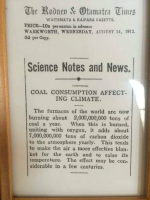
Anthropogenic Global Warming ... how hot is it ?

Historic Wildfire Season Highlights Nationwide Vulnerability


Extreme heat, wind, and drought conditions have set the stage for a historically severe 2026 wildfire season, bringing the peril to areas beyond those traditionally considered most exposed to the risk. A new Triple-I Issues Brief explores the evolving weather patterns and demographic trends behind the shift, particularly as urban areas become more vulnerable.

During the first half of 2026, more than 35,000 fires burned over 3 million acres across the United States, far exceeding the 10-year averages for fires and acres burned during the same period, according to the National Interagency Fire Center. Much of the activity occurred in ....
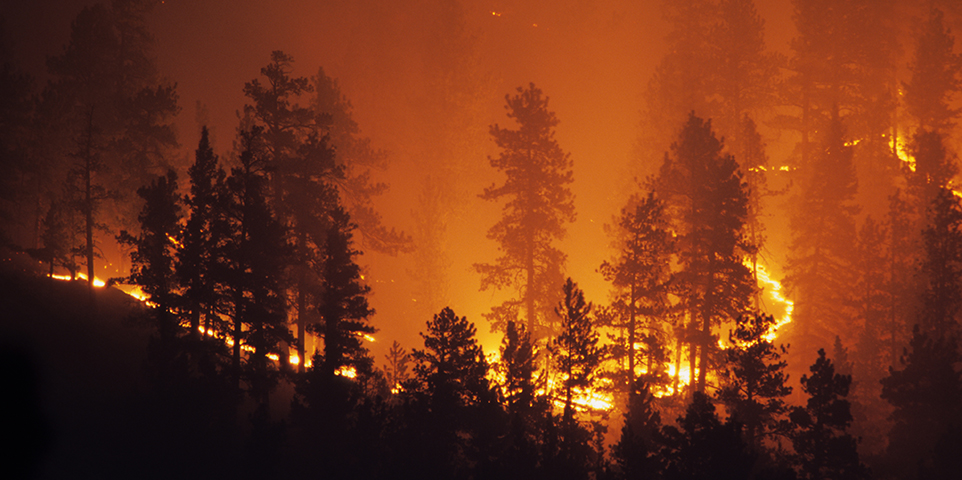

Wildfire risk expanding beyond the West as national exposure grows, Triple-I finds


Wildfire risk in the US is no longer confined to Western states, according to a new members-only Issues Brief from the Insurance Information Institute (Triple-I), which found that extreme heat, drought conditions and continued population growth in wildfire-prone areas are driving elevated wildland fire exposure across ...


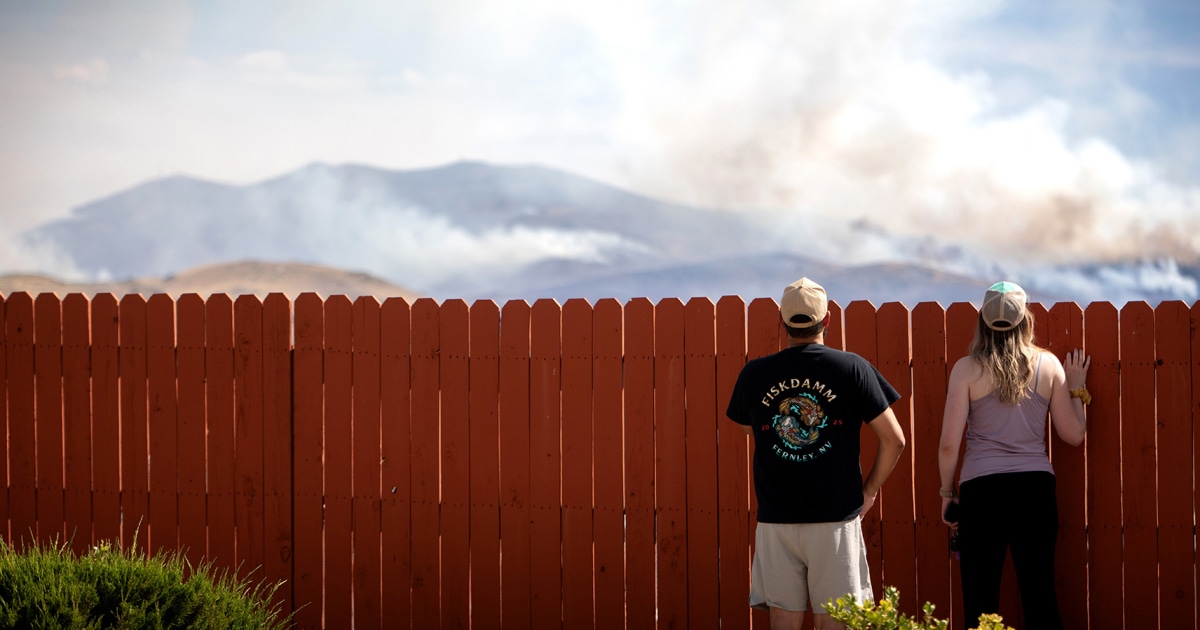
Wildfires burn across western US and Canada as residents are evacuated

Wildfires are burning across the western U.S. and Canada, leaving some residents keeping a wary eye out for possible evacuation orders

 
Last edited:
Contiguous US breaks its record for hottest month ever, NOAA says

The contiguous United States sizzled to its hottest month ever last month, according to the National Oceanic and Atmospheric Administration.

July averaged 76.89 degrees Fahrenheit (24.94 degrees Celsius) across the Lower 48 states, eclipsing the Dust Bowl’s July 1936 by an eighth of a degree. Records go back to 1895.

“It’s not good when you’re breaking records from the Dust Bowl, which we are in this ....


Hoover Dam is losing power. Inside the 'slowest-moving train wreck in history'


FROM THE RIM of Lake Powell, you can’t see the danger line. There isn’t a flashing gauge or a chart on the canyon wall that warns visitors when one of the most important machines in America begins to fail. There’s only an invisible number: 3,490 feet above sea level.

Engineers call it “minimum power pool.” Above that elevation, Lake Powell can still push water through Glen Canyon Dam’s massive penstocks, spin its turbines, and send electricity across the Southwest with no trouble. Below it, the dam ....


Southwest Reservoirs Reach Record Low Levels


The largest water reservoir in the United States is emptier than ever before. Last week, the water level in Lake Mead dropped to its lowest level since its creation 90 years ago. The reservoir was formed in the 1930s when the U.S. government built the Hoover Dam on the Colorado River.

“It’s extremely significant and extremely concerning,” says J.B. Hamby, chairman of the Colorado River Board of California.

The Colorado River is nicknamed the “Lifeline of the Southwest.” It provides water for 40 million people across seven states. Its current powers several major hydroelectric plants.

The river usually flows 1,450 miles from its source in the Colorado Rocky Mountains to its mouth in northwestern Mexico.

But in recent decades, the river dries up before it reaches the sea. Droughts have .....

 
1786649473353.png

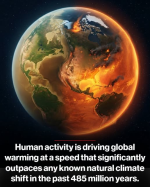
Human activity is driving global warming at a speed that significantly outpaces any known natural climate shift in the past 485 million years.

Extensive paleoclimate research reconstructing Earth's temperature history throughout the Phanerozoic eon demonstrates that while the planet has experienced major climatic transitions including shifts between hothouse and icehouse states these changes typically progressed over millennia or longer periods.

Geological evidence drawn from marine sediments isotopic compositions of fossils and other proxies shows that natural forcings such as variations in solar radiation volcanic activity and continental configurations produced gradual temperature adjustments.

In stark contrast anthropogenic emissions of greenhouse gases primarily from fossil fuel combustion have elevated atmospheric carbon dioxide concentrations and global temperatures at an extraordinary pace since the Industrial Revolution.

The observed rise of approximately 1.1 degrees Celsius over the past century and a half far exceeds the rates of warming associated with even the most abrupt natural events in the deep past.

This accelerated trajectory challenges the adaptive capacity of ecosystems and amplifies risks of extreme weather biodiversity loss and sea level rise.

Rigorous scientific analysis confirms the anthropogenic origin and unprecedented velocity of the current climatic shift relative to the entire 485 million year record of Earth history with profound consequences.

Source: Judd et al., Science, “A 485-million-year history of Earth’s surface temperature.”

SOURCE
The actual paper cited https://www.science.org/doi/10.1126/science.adk3705
 
Back
Top