You are using an out of date browser. It may not display this or other websites correctly.
You should upgrade or use an alternative browser.
You should upgrade or use an alternative browser.
Uvalde - the followup
- Thread starter Shiftless2
- Start date
I still agree with voting blue, but gun control laws clearly are not a solution to violence, and actually make it worse.
Since school shootings are almost always suicidal, the problem is actually one of mental health, and that society is vastly too stressful and hostile.
There is way too much emphasis on competition.
Shiftless2
Well-known member
Funny that if you look north of the border to Canada there have been comparatively few school shootings. Or mass shootings of any kind.I still agree with voting blue, but gun control laws clearly are not a solution to violence, and actually make it worse.
Since school shootings are almost always suicidal, the problem is actually one of mental health, and that society is vastly too stressful and hostile.
There is way too much emphasis on competition.
List of school shootings in Canada - Wikipedia
As for mass shootings
List of mass shootings in Canada - Wikipedia
That said, I'd really like to know how you conclude that gun control laws make violence worse.
Shiftless2
Well-known member
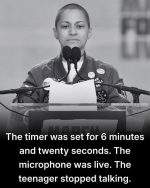
A teenager stood before a massive Washington D.C. crowd and stopped talking. The Emma Gonzalez speech didn’t end. The microphone remained live.
It was March 24, 2018. Thirty-nine days earlier, a nineteen-year-old gunman walked into Building 12 of Marjory Stoneman Douglas High School in Parkland, Florida. He carried a legally purchased Smith & Wesson M&P15 semi-automatic rifle in a black canvas bag. He entered the east stairwell at 2:21 in the afternoon. He pulled the fire alarm.
When students stepped out of their classrooms into the hallway, he raised the rifle. He fired one hundred and thirty-nine rounds.
He shot through the glass windows of classroom doors. He fired down the length of the corridor. He killed seventeen people. He wounded seventeen more.
From the moment the first shot echoed in the first-floor hallway to the moment the shooter dropped his weapon in the third-floor stairwell and blended in with the fleeing students, exactly six minutes and twenty seconds passed.
Since the 1999 Columbine shooting, mass school shootings had become a normalized rhythm in American life. The legislative response was almost always identical: thoughts, prayers, and gridlock.
Now, thirty-nine days after the massacre, a crowd of eight hundred thousand people stood shoulder to shoulder on Pennsylvania Avenue. They had come to hear the Parkland shooting survivors at the March for Our Lives rally. It was one of the largest youth-led protests in American history. The crowd expected demands for legislation. They expected policy proposals. They expected anger.
Gonzalez walked to the podium wearing a military-green jacket. The right sleeve was sewn with patches: a Cuban flag, a peace sign, a patch that read "We Call B.S." They pulled a folded piece of paper from their pocket.
They leaned into the microphone and began by reading the names of the dead. They didn’t just read the names; they read the mundane, ordinary things those people would never do again because of a bullet.
Carmen Schentrup would never complain about piano practice.
Aaron Feis would never call Kyra "sweet pea."
Joaquin Oliver would never play basketball with Sam or Dylan.
Meadow Pollack would never smile in the hallways.
Luke Hoyer would never.
Cara Loughran would never.
Martin Duque would never.
The list took less than two minutes to read.
Then, Gonzalez stopped speaking. They looked out at the sea of people stretching down toward the Capitol building. They pressed their lips together. They closed their eyes for a second, then opened them. They just stood there.
The timer on the podium kept running.
At the time, federal broadcasting guidelines and network algorithms were built on a single, rigid premise: dead air is a failure. Television anchors are trained to step in and fill silence within three seconds to prevent viewers from changing the channel. Silence on television signals a lost satellite feed or a broken microphone. When the silence on the National Mall passed the two-minute mark, network control rooms faced a technical contradiction. They were broadcasting live to millions of American homes, transmitting nothing but the sound of .....
CONTINUED with comments