Why Do Some Ships Have Bulbous Bows?
Mark Cowley Sat, October 24, 2026 at 5:15 PM GMT-5
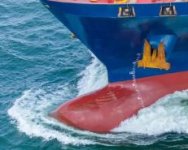
Modern ships come in a huge array of shapes and sizes, but aside from some
super-specialized ships that look different from almost anything else, many of them have a few shared characteristics. One of those is a bulbous bow, which can be seen around the ship's waterline and usually protrudes from the main hull. Bulbous bows have been used for decades because they can improve a ship's efficiency by reducing drag.
Assuming that a ship is traveling sufficiently fast, the bulbous bow creates a separate wave from the one that is generated by the ship's hull. When the two waves interact, they will be out of phase, and they can either partially or totally cancel each other out. A reduced or canceled-out wave reduces resistance on the ship as it travels through the water, which in turn can help make it more efficient. Depending on the ship's speed, the design of the bulb, and the shape of the hull, the efficiency gains can vary significantly. The type of conditions the ship is operating in can also make a big difference, with ships navigating icy waters gaining an extra advantage because the bow can tip ice floes to slide more easily along the side of the hull.
Some ships have a strange, rounded protrusion at the waterline called a bulbous bow, but others don't. The difference has more to do with function than style.

www.yahoo.com
Note:
Similar story on airliner winglets.
Airliners encounter 2 forms of aerodynamic drag:
a) parasitic
b) induced
a) Parasitic drag may be the more obvious, it's friction the atmosphere imposes on the aircraft.
Flying at 36,000' altitude means lower air density. That means reduced parasitic drag.
This high altitude efficiency gain justifies both the energy consumed by the aircraft climbing to that altitude,
plus the pressurized cabin to keep most passengers conscious at cruise altitude.
b) Induced drag includes the vortex the wing generates at the wingtip.
Energy is required to generate these vortices. Jet fuel is the source of that energy.
Reducing the vortex reduces induced drag, which reduces fuel consumption, which increases $profits.





 www.nbcnews.com


 www.foxnews.com