- trivia -


"I'm not gunna cut Social Security like every other Republican. I'm not gunna cut Medicare or Medicaid." Candidate Donald Trump 15/05/26

"I am going to take care of everybody. I don't care if it costs me votes or not. Everybody's gunna be taken care of much better than they're taken care of now." Candidate Trump 15/09/27 to CBS Scott Pelly

"You're going to have such great healthcare at a tiny fraction of the cost."candidate Trump 16/10/25 from campaign podium
 
1791639298778.png

Jonathan Kozol had been teaching for six months when he decided to read his students a Langston Hughes poem. By the following morning, Boston Public Schools had ended his career over a single classroom decision.

Kozol was 28 years old in the spring of 1965. A Harvard graduate and Rhodes Scholar, he had come to Roxbury by choice, taking a substitute position in a neighborhood that most young teachers from his background would never have sought out.

His class was fourth grade. The students were Black children in a Boston school system that was, at that moment, one of the most racially divided in the northern United States.

On a day in May, Kozol read them "The Ballad of the Landlord" by Langston Hughes. The poem, published in 1940, takes the voice of a tenant demanding repairs from a landlord who refuses to fix a broken stoop and a leaking roof. When the tenant protests, he is arrested. The poem was not on the approved reading list.

That was enough.

The school principal reported the incident. The district reviewed it. Kozol was told he had used "curriculum materials offensive to the community" and was dismissed. He had been in that classroom for one day of that particular assignment.

The firing might have disappeared quietly. Instead, Kozol refused to go quietly.

He wrote about what had happened, about the schools in Roxbury, about the condition of the buildings and the thinness of the resources and the way the system sorted children before they had any say in the matter. That writing eventually became a book, published in 1967, called "Death at an Early Age."

It won the National Book Award.

The poem that cost him his job. The classroom that the district wanted forgotten. The children the system had already decided were not worth the best of what a teacher could offer.

None of it stayed quiet.

Jonathan Kozol. Fired for reading Langston Hughes to a fourth-grade class in Roxbury. The teacher Boston tried to silence, and the book that made sure it didn't work.

SOURCE with comments

 
Hardly trivial to those affected

Hunger grips a rural community hit by Trump’s cuts​

Those on the front lines of feeding their neighbors in West Virginia’s coal country say they face unprecedented challenges brought on by Washington.

 
"Hardly trivial to those affected

Hunger grips a rural community hit by Trump’s cuts​

Those on the front lines of feeding their neighbors in West Virginia’s coal country say they face unprecedented challenges brought on by Washington." S2 #268
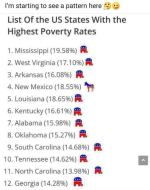
West Virginia, a "red" State? Voted for Trump?
 
1792580297441.png

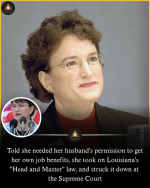
In the mid-1970s, after graduating from law school and taking a position at a Louisiana insurance company, Kim Gandy went to enroll in her employee benefit plans.

To her shock, the human resources department informed her that state law required her husband's written consent before she could receive her own employee benefits.
Investigating the matter further, Gandy uncovered a shocking legal reality buried inside Louisiana's civil code: the state's archaic "Head and Master" law.

Under this century-old doctrine, a husband was designated as the sole, absolute controller of all joint marital property. He possessed the unilateral legal right to sell the family home, empty shared bank accounts, or mortgage property without his wife's knowledge, consent, or signature, effectively reducing married women to the legal status of minors.

Gandy refused to submit to the policy. Joining forces with grassroots activists and the National Organization for Women (NOW), she used her legal training to organize public campaigns, build legislative strategies, and challenge the law in court.

Despite fierce opposition from conservative lawmakers who claimed altering the code would undermine traditional family structures, the mounting legal and public pressure forced Louisiana to officially repeal its "Head and Master" law in 1979.

Two years later, in the 1981 landmark case Kirchberg v. Feenstra, the U.S. Supreme Court struck down the remaining remnants of such laws nationwide, ruling the "Head and Master" doctrine unconstitutional under the Equal Protection Clause.

Gandy later served as the national president of NOW from 2001 to 2009, continuing a career dedicated to institutional reform and equal rights under the law.

SOURCE with comments
 
Back
Top