I often get this strange feeling from wars, that they are totally fake.
Staged just to impress and scare everyone.
Especially true in this case since it makes absolutely no sense at all.


View attachment 6361
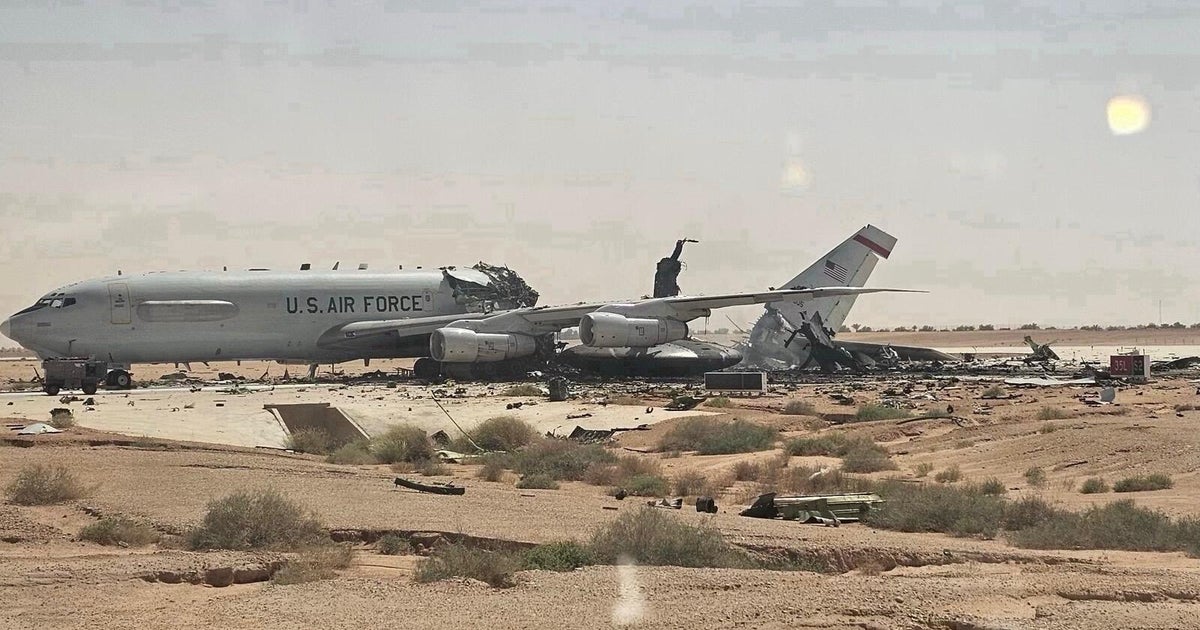
She had already lost her husband, but then came another question she never expected to ask: if he died serving in combat, why would the government say some of the benefits connected to that service did not apply? Libby Klinner, the widow of U.S. Air Force Maj. John “Alex” Klinner, turned to social media in late August after saying she was told by a military officer assisting her family that certain combat-related benefits were unavailable because the United States had not formally declared war. Alex Klinner, 33, was one of six airmen killed when a KC-135 refueling aircraft crashed in western Iraq on March 12 while supporting U.S. operations against Iran. His death left Libby raising their three young children.
Her post quickly spread, bringing national attention to a painful dispute over military classifications, pay, and what families are entitled to after a service member dies. The benefits in question included combat-related hazard pay and tax treatment. But the story took another turn when Air Force officials contacted Klinner and began reviewing her husband’s pay. The Department of the Air Force later said that all eligible combat-theater benefits had been included in the pay he received, while Klinner said officials acknowledged that she had initially been given inaccurate information and that some of the benefits had been incorrectly itemized. In other words, the viral claim that her family had ultimately been denied those benefits was not the final outcome.
Yet the story left behind something larger than a dispute over a paycheck. For a grieving family, understanding military benefits can already be overwhelming; being told that complicated terminology might determine what they receive only adds another burden. After the review, Klinner said she hoped speaking publicly would make the process clearer for other families who might someday face the same devastating circumstances. Her husband’s final mission ended with his death, but his family’s experience opened a wider conversation about how clearly the military communicates with those left behind.
When a service member gives everything for his country, shouldn’t the family he leaves behind be able to understand exactly what they are entitled to without having to fight for the answer?


 www.pbs.org

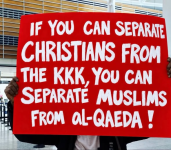
My perception of Islam would be substantially less grim if the ostensible majority of Muslims of good conscience worldwide stood up in unity and forcefully, vehemently condemned the lawless violence of the implied malicious minority, al Qaeda, ISIL, the Taliban, etc."If you can separate Christians from the KKK, you can separate Muslims from al-Qaeda !" #425
"Saudi Arabia has few options as it faces mounting threats from Iran and its allies" S2 #426
"You can't un-ring the bell." sear
My perception of Islam would be substantially less grim if the ostensible majority of Muslims of good conscience worldwide stood up in unity and forcefully, vehemently condemned the lawless violence of the implied malicious minority, al Qaeda, ISIL, the Taliban, etc.
They do not.
Why do they not?
Two plausible explanations:
a) Perhaps they do NOT support any such message of condemnation, tacet approval of the carnage. That would surely explain it. BUT ! It's not the only plausible explanation.
b) Perhaps the more obvious, they are cowed into silence by the violent thugs that make the headlines.
That too would explain it. BUT !!
If there's significant truth to either of these explanations, doesn't it validate the distrust of Islam challenged by meme #425?
"Humpty Dumpty sat on a wall," By Mother Goose
Humpty Dumpty sat on a wall,
Humpty Dumpty had a great fall;
All the king's horses and all the king's men
Couldn't put Humpty together again.
https://www.poetryfoundation.org/poems/46951/humpty-dumpty-sat-on-a-wall
Can you cite an authoritative source to corroborate this?"What should make everyone suspicious of ISIS is that they do not have a single cleric supporter." R5 #428
Bitter experience over the generations has informed / persuaded me either position can be supported by holy scripture."And they did things like incinerate that Jordanian pilot, when no Moslem would do that since it is forbidden by the Quran." R5 #428
It hasn't stopped the carnage, so it's not enough."And in fact, all Moslem clerics do condemn ISIS.
{...
Roughly 1.5 million Muslims signed petitions condemning ISIS after 70,000 Muslim clerics declared that the terrorist group is not an Islamic organization. The India-based clerics also condemned the Taliban and al-Qaeda as non-Islamic.
...}
https://ing.org/resources/answers-t...nd-muslims/global-condemnations-of-isis-isil/ " R5 #428
Can you cite an authoritative source to corroborate this?
Bitter experience over the generations has informed / persuaded me either position can be supported by holy scripture.
Obvious example: "an eye for an eye" vs "turn the other cheek".
The Holy Qur'an?
"...slay the infidels wherever ye find them..." Holy Qur'an: Sura 9 Verse 5
Reportedly Shia justify murdering Sunni, and vice versa, citing this divine guidance as justification.
iirc you've already addressed this in years past. BUT ! The carnage persists.
It hasn't stopped the carnage, so it's not enough.
Standing safely on the sideline and whining ineffectually about it accomplishes little if anything.
The Taliban in Afghanistan is a useful illustration.
If these ruthless tyrants were a minuscule minority, why does not the vast majority stand up and put a stop to this? Allow little girls to attend school openly, etc? [Malala Yousafzai]
The most recent report I've seen of this, within the past month or two, indicates some Afghani female children are being schooled secretly
to avoid the notice of the Taliban.
And it seems the Taliban in Afghanistan thrives, much as it did before the U.S.' longest war there. What did our expenditure of U.S. blood & treasure accomplish there?
Even if you're right, it's immaterial."I disagree.
The Quran quote about "slay infidels wherever you find them" refers to first trying to make peace treaties, and only after being betrayed TWICE, are they to be killed." R5 #431
"Religion is regarded by the common people as true, by the wise as false, and by rulers as useful." sometimes attributed to Seneca the Younger(c.3 BCE - CE 65) *
Even if you're right, it's immaterial.
The issue here is not "original intent" of the Holy Qur'an's authors.
Instead it's whatever misinterpretation today's blood-thirsty charlatans pretend that it means, to facilitate their homicidal agenda, bogus divine imprimatur and all.
And while an objective scholar might recognize the swindle, there are many that accept the misinterpretation, because they support / favor the illicit objectives
however contrary to the teachings of the prophet Muhammad they may be.
* I know this quote is commonly attributed to Seneca, but it is mistakenly attributed to him. How do I know this? In Volume 1 of "The Decline and Fall of the Roman Empire", written by Edward Gibbon, he writes, "“The various modes of worship which prevailed in the Roman world were all considered by the people as equally true; by the philosopher as equally false; and by the magistrate as equally useful. And thus toleration produced not only mutual indulgence, but even religious concord."
making sense Administrator Rob W. Case https://makingsense.proboards.com/thread/720/young-boys-search-god

 www.facebook.com
Not that anything will happen but this is from inside the GOP
BREAKING: Rep. Massie (R-KY) brings forward a resolution to impeach Pete Hegseth for high crimes and misdemeanors | MeidasTouch | Facebook
BREAKING: Rep. Massie (R-KY) brings forward a resolution to impeach Pete Hegseth for high crimes and misdemeanors
"Someone should pay " R5 #435
 www.cbsnews.com
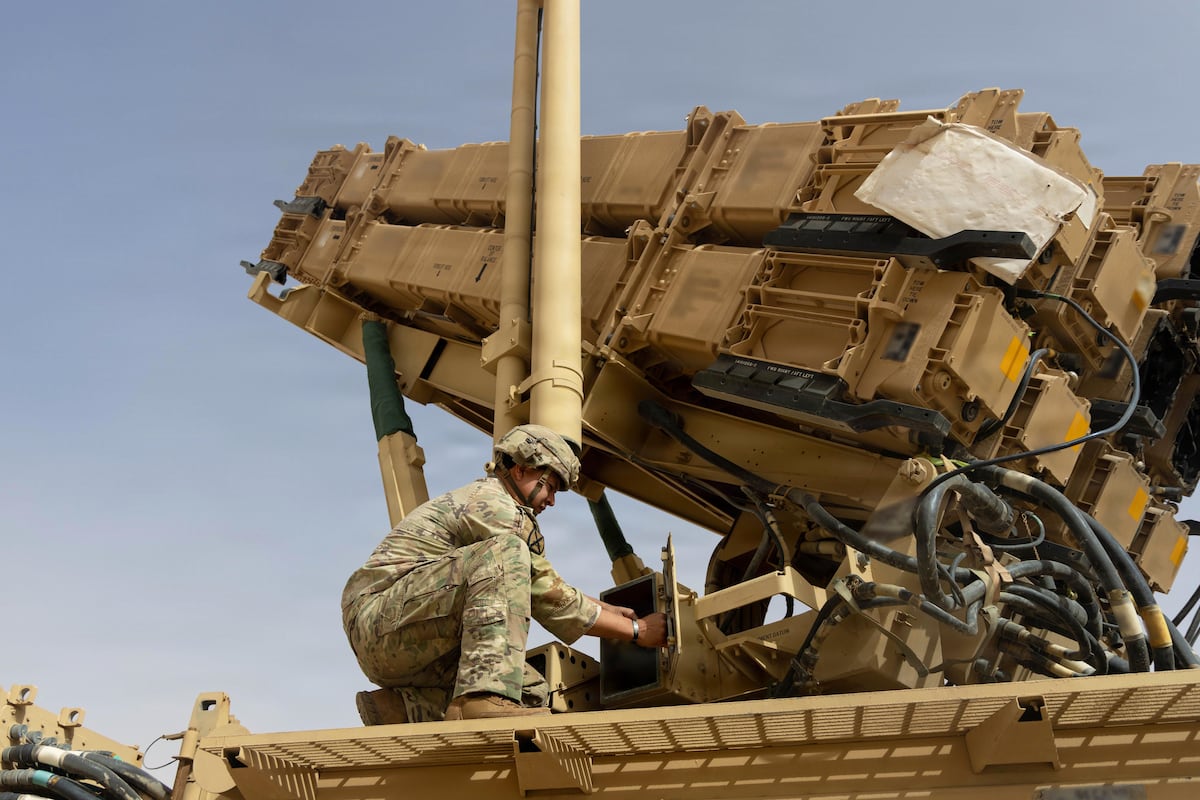
 www.militarytimes.com

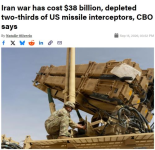
a)$38 billion "If that's what they're reporting the actual cost is probably a multiple of that " S2 #437

 Republican forces Congress to hold impeachment vote for Pete Hegseth
 Trump administration plans $2.8bn sale of 2,000-pound bombs to Israel
a)
b) There's now a $backlash in congressGOP.
View attachment 6446 Republican forces Congress to hold impeachment vote for Pete Hegseth
United States Representative Thomas Massie is forcing fellow Republicans to vote whether to impeach Secretary of Defense
Published On 16 Sep 202616 Sep 2026
c) And the Israeli / US carnage in Palestine continues.
View attachment 6447 Trump administration plans $2.8bn sale of 2,000-pound bombs to Israel
Trump administration pushes $2.8bn bomb sale to Israel amid criticism over mass targeting of civilians in the region.
Published On 16 Sep 202616 Sep 2026
Don't forget the $150 trillion funding shortfall for Social Security and Medicare. Those bills will become due in the relatively near future.When the US is $40 trillion national debt is just on the verge of bankrupting the US.