
You are using an out of date browser. It may not display this or other websites correctly.
You should upgrade or use an alternative browser.
You should upgrade or use an alternative browser.
The Second Term of Donald J. Trump as President of the United States of America
- Thread starter sear
- Start date
Shiftless2
Well-known member
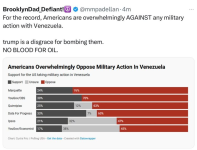
Not only that but the Armed Forces appear to have thrown their oaths out the window as well.
Shiftless2
Well-known member
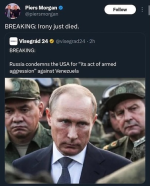
And he's stopped pretending it's about drugs ....
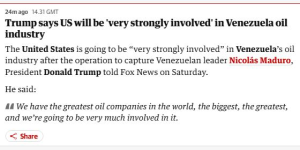
Next time around this guy should tell us what he really feels. No holding back.
View attachment 3624
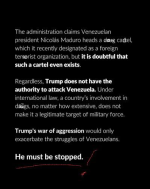
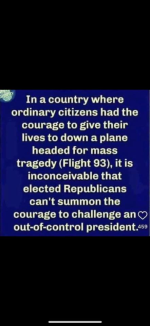
How dare you implicate over 75,000,000 true Americans in your international terrorism! Fuck you! Fuck Hegseth! And fuck every traitor to the Constitution that voted for you, assisted you in the destruction of the US, assisted you in the ILLEGAL invasion of Venezuela, assisted you in the KIDNAPPING of US citizens, protected souls on US soil, assisted in protecting you from your crimes against children and who now assist you in the KIDNAPPING of the leader of a sovereign nation.
I cannot wait for the trials to begin for you and everyone who enabled you.
With their assistance in the genocide in Gaza, their reluctance to support Ukraine and now with the invasion of Venezuela, The Republican party is now an international terrorist group.
I agree.
The whole drug connection to Venezuela I believe is a lie, and even if true, does not make the attack by the US legal.
Shiftless2
Well-known member
Hell has frozen over. Rigby and I agree on something!!
Shiftless2
Well-known member
Shiftless2
Well-known member
Interesting - Venezuela and a little historical perspective

 www.facebook.com
550K views · 29K reactions | Venezuela became a problem the moment it stopped being convenient. Canada could be next. ✅ Get my free newsletter: newsletter.todmaffin.com ☕ Help support my work: support.todmaffin.com 🔗 Follow me on social: links.todma
Venezuela became a problem the moment it stopped being convenient. Canada could be next. ✅ Get my free newsletter: newsletter.todmaffin.com ☕ Help support my work: support.todmaffin.com 🔗 Follow me...
www.facebook.com
Shiftless2
Well-known member
Shiftless2
Well-known member
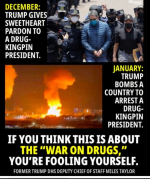
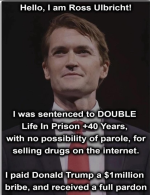
Trump doesn't actually give a fuck about drug trafficking. And its beyond being ridiculously naive to think he does.
Shiftless2
Well-known member
And back to those pesky Epstein files

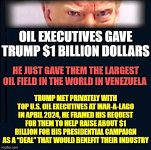
"Trump ... raise about $1 Billion ... benefit their industry" #2,246

This is hardly innovative politics.
Candidates and office-holders have been making deals with special interests for generations. *
Who here can name a more self-serving example than #2,246 ?
Differing political objectives aside, U.S. presidents have generally seemed to be working for the betterment of the People,"Trump doesn't actually give a ..." S2
"If you think this is about the "war on drugs," you're fooling yourself." Taylor #2,249
except perhaps for Bill Hank.
* It's not uncommon for K-street lobbyists to actually write the statutory language specially tailored to suit the lobby. Members of congress (MOC) then introduce it as a bill, and then vote it into law.
William Henry Harrison (February 9, 1773 – April 4, 1841) was the ninth president of the United States, serving from March 4 to April 4, 1841, the shortest presidency in U.S. history. He was also the first U.S. president to die in office ... More from Wikipedia
K Street is a major thoroughfare in the United States capital of Washington, D.C., known as a center for lobbying and the location of numerous advocacy groups, law firms, trade associations, and think tanks. In political discourse, "K Street" has become a metonym for lobbying in the United States ... More from Wikipedia
Both civilian and military U.S. government officials report this was an extensive operation.US launches strikes on Venezuela, captures President Maduro and ... #2,240
It's been over 24 hours.
If it was an operation the scale the Trump administration presents it to be, there are often U.S. casualties. So far, no reports.
Any U.S. service members injured or killed? In either the operation itself, or in the training / preparation?
Shiftless2
Well-known member
As long as I've been following politics I've always thought that, with one exception, they all thought their actions were for the good of America and Americans. Doesn't mean I agreed with them or even approved of their actions but I've always felt that they thought they were doing "the right thing". BTW that included Nixon - as unethical (and illegal) as his actions were I always thought he believed he was doing the right thing for America. That exception - Donnie - he's only interested in doing things that benefit him personally (even if only indirectly) and that includes the billionaires he supports.Differing political objectives aside, U.S. presidents have generally seemed to be working for the betterment of the People,
except perhaps for Bill Hank.
* It's not uncommon for K-street lobbyists to actually write the statutory language specially tailored to suit the lobby. Members of congress (MOC) then introduce it as a bill, and then vote it into law.
Don't know about the lobbyists but it's a given that Congressmen don't write the laws - they don't necessarily read the laws they're voting on - that's a job for staffers.
- uugghh - !"... Congressmen don't write the laws - they don't necessarily read the laws they're voting on - that's a job for staffers." S2 #2,253
It's neither as simple nor as pure as I imagined before my application to nursery school was accepted.
P U !
Trump doesn't actually give a fuck about drug trafficking. And its beyond being ridiculously naive to think he does.
View attachment 3635
View attachment 3636
Just like slavery and Prohibition, all drug laws are actually inherently illegal in a republic.
If people want to do something risky like drugs, there is no legal way to stop them in a republic.
Aristotle characterized friendship as "A single soul dwelling in two bodies."
We're apparently cyber-friends on this issue, among many others.
My #2,256 may seem priggish, not intentionally so.
It's intended as encouragement toward precision, clarity.
Can we consider laws to maintain pharmaceutical production within antiseptic / non-poisonous limits "drug laws"?
Prohibition laws are generally a bad idea, for they insinuate, replace external government control for the sound judgement of individual citizens.
The premise of Drug War is that recreational drug use is bad. BUT !!
Bad though it ostensibly is, despite many a ceremonial champagne toast at U.S. State white house dinners,
Drug War demonstrates the martial oppressors think it's bad, but not quite bad enough. That the penalty, the detriment has to be artificially augmented with fines and jail.
Drug War is also antithetical to both liberal and conservative political philosophies.
Yet Drug War charges ever onward.
re·pub·lic (rĭ-pŭblĭk)
n.
1.
a. A political order whose head of state is not a monarch and in modern times is usually a president.
b. A nation that has such a political order.
2.
a. A political order in which the supreme power lies in a body of citizens who are entitled to vote for officers and representatives responsible to them.
b. A nation that has such a political order.
3. often Republic A specific republican government of a nation: the Fourth Republic of France.
4. An autonomous or partially autonomous political and territorial unit belonging to a sovereign federation.
5. A group of people working as equals in the same sphere or field: the republic of letters.
[French république, from Old French, from Latin rēspūblica : rēs, thing; see rē- in the Appendix of Indo-European roots + pūblica, feminine of pūblicus, of the people; see PUBLIC.]
The American Heritage® Dictionary of the English Language, Fifth Edition copyright ©2022 by HarperCollins Publishers. All rights reserved.
We're apparently cyber-friends on this issue, among many others.
R5,"Just like slavery and Prohibition, all drug laws are actually inherently illegal in a republic." R5 #2,255
My #2,256 may seem priggish, not intentionally so.
It's intended as encouragement toward precision, clarity.
Can we consider laws to maintain pharmaceutical production within antiseptic / non-poisonous limits "drug laws"?
Prohibition laws are generally a bad idea, for they insinuate, replace external government control for the sound judgement of individual citizens.
Thomas Jefferson phrased it:"If people want to do something risky like drugs, there is no legal way to stop them in a republic." R5 #2,255
There's an intrinsic hypocrisy to Drug War."The policy of the American government is to leave their citizens free, neither restraining nor aiding them in their pursuits." Thomas Jefferson
The premise of Drug War is that recreational drug use is bad. BUT !!
Bad though it ostensibly is, despite many a ceremonial champagne toast at U.S. State white house dinners,
Drug War demonstrates the martial oppressors think it's bad, but not quite bad enough. That the penalty, the detriment has to be artificially augmented with fines and jail.
Drug War is also antithetical to both liberal and conservative political philosophies.
Yet Drug War charges ever onward.
re·pub·lic (rĭ-pŭblĭk)
n.
1.
a. A political order whose head of state is not a monarch and in modern times is usually a president.
b. A nation that has such a political order.
2.
a. A political order in which the supreme power lies in a body of citizens who are entitled to vote for officers and representatives responsible to them.
b. A nation that has such a political order.
3. often Republic A specific republican government of a nation: the Fourth Republic of France.
4. An autonomous or partially autonomous political and territorial unit belonging to a sovereign federation.
5. A group of people working as equals in the same sphere or field: the republic of letters.
[French république, from Old French, from Latin rēspūblica : rēs, thing; see rē- in the Appendix of Indo-European roots + pūblica, feminine of pūblicus, of the people; see PUBLIC.]
The American Heritage® Dictionary of the English Language, Fifth Edition copyright ©2022 by HarperCollins Publishers. All rights reserved.
Aristotle characterized friendship as "A single soul dwelling in two bodies."
We're apparently cyber-friends on this issue, among many others.
R5,
My #2,256 may seem priggish, not intentionally so.
It's intended as encouragement toward precision, clarity.
Can we consider laws to maintain pharmaceutical production within antiseptic / non-poisonous limits "drug laws"?
Prohibition laws are generally a bad idea, for they insinuate, replace external government control for the sound judgement of individual citizens.
Thomas Jefferson phrased it:
There's an intrinsic hypocrisy to Drug War.
The premise of Drug War is that recreational drug use is bad. BUT !!
Bad though it ostensibly is, despite many a ceremonial champagne toast at U.S. State white house dinners,
Drug War demonstrates the martial oppressors think it's bad, but not quite bad enough. That the penalty, the detriment has to be artificially augmented with fines and jail.
Drug War is also antithetical to both liberal and conservative political philosophies.
Yet Drug War charges ever onward.
re·pub·lic (rĭ-pŭblĭk)
n.
1.
a. A political order whose head of state is not a monarch and in modern times is usually a president.
b. A nation that has such a political order.
2.
a. A political order in which the supreme power lies in a body of citizens who are entitled to vote for officers and representatives responsible to them.
b. A nation that has such a political order.
3. often Republic A specific republican government of a nation: the Fourth Republic of France.
4. An autonomous or partially autonomous political and territorial unit belonging to a sovereign federation.
5. A group of people working as equals in the same sphere or field: the republic of letters.
[French république, from Old French, from Latin rēspūblica : rēs, thing; see rē- in the Appendix of Indo-European roots + pūblica, feminine of pūblicus, of the people; see PUBLIC.]
The American Heritage® Dictionary of the English Language, Fifth Edition copyright ©2022 by HarperCollins Publishers. All rights reserved.
Its not that I think drugs are a good idea either, but what I have seen is the war on drugs destroying families by imprisoning breadwinners, causing massive poverty.
When the alternative of treating drug abuse as a medical problem instead, would cost far less and get people back to work much sooner.
My take on a "republic" is that there is no central source of authority, so people are supposed to be able to do whatever they want, until there a clash with the rights of others.
And only then does the delegated authority from the defense of the rights of others, cause government to have any say.
The caution alarm should sound with government notions of "good idea" regarding citizen conduct."Its not that I think drugs are a good idea either, but ..." R5 #2,257
I agree, citizens are quite capable of doing that without government assistance."... what I have seen is the war on drugs destroying families by imprisoning breadwinners, causing massive poverty." R5 #2,257
My character string search for "central" & "authority" in the definition in post #2,256 got zero hit."My take on a "republic" is that there is no central source of authority" R5 #2,257
In the United States our Constitution is (according to the Constitution) "the Supreme law of the land" [Art.6 Sect.2].
Not "central" enough?
Without government dispute resolution, we live in a lawless frontier." so people are supposed to be able to do whatever they want, until there a clash with the rights of others." R5 #2,257
Liquor store owners are rarely reported to settle disputes with gunfire.
But during Prohibition turf battles were more common.
"I know of no safe depository of the ultimate powers of society but the people themselves, and if we think them not enlightened enough to exercise control with a wholesome discretion, the remedy is not to take it from them, but to inform their discretion." Thomas Jefferson
The caution alarm should sound with government notions of "good idea" regarding citizen conduct.
I agree, citizens are quite capable of doing that without government assistance.
My character string search for "central" & "authority" in the definition in post #2,256 got zero hit.
In the United States our Constitution is (according to the Constitution) "the Supreme law of the land" [Art.6 Sect.2].
Not "central" enough?
Without government dispute resolution, we live in a lawless frontier.
Liquor store owners are rarely reported to settle disputes with gunfire.
But during Prohibition turf battles were more common.
Yes, I agree with Jefferson that a republic can't criminalize drugs but just try to educate people as to the dangers.
Shiftless2
Well-known member
Re 2,254
In the day, the K-Street firms we interviewed tended to fall in two categories - those who actually knew something about the industry in question and those who focused entirely on their connections.
In the day, the K-Street firms we interviewed tended to fall in two categories - those who actually knew something about the industry in question and those who focused entirely on their connections.