Just a little humor

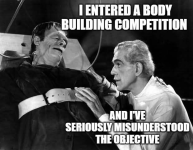
[prig] Contrary to popular misconception, Frankenstein is the one on the right, Doctor Frankenstein.
The one on the left is "Frankenstein's monster". [/prig]

Why are graveyards noisy?​

Because of all of the coffin.
 
694593083_1279117581096506_7823298819504281988_n.jpg
 
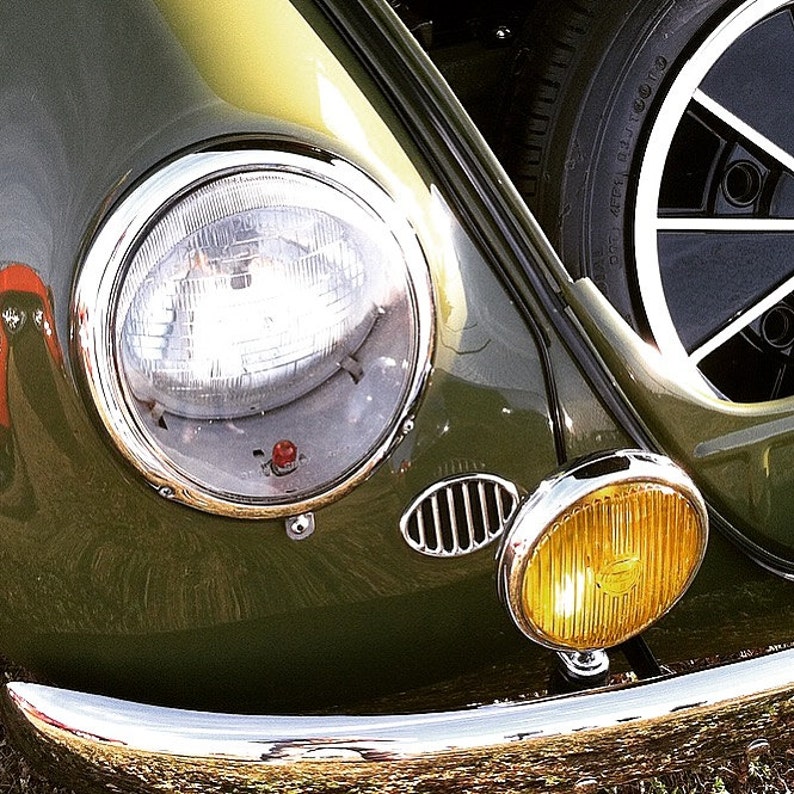
"A real classic. The year is 1967 or older, from the bumber." R5 #1,312
The VW beetles exported to the U.S. switched from 6V to 12V in 1967 model year, though the VW beetles in West Germany remained 6V a while longer.

The headlights look like the 6V configuration. The switch to 12 VDC accompanied an upgrade to sealed beam, without the additional headlight lens cover.

I suspect that Batmobeetle is a '65 or so.
 
The VW beetles exported to the U.S. switched from 6V to 12V in 1967 model year, though the VW beetles in West Germany remained 6V a while longer.

The headlights look like the 6V configuration. The switch to 12 VDC accompanied an upgrade to sealed beam, without the additional headlight lens cover.

I suspect that Batmobeetle is a '65 or so.

I should remember better since I worked at several VW dealerships in the 70's.
But I think you are remembering better than I, that the 67 was the first switch to 12 volt.
And that also meant sealed beam headlights.
And I think before sealed beams, the lens was recessed slightly?
il_794xN.1047857777_4au0.jpg
 
I should remember better since I worked at several VW dealerships in the 70's.
But I think you are remembering better than I, that the 67 was the first switch to 12 volt.
And that also meant sealed beam headlights.
And I think before sealed beams, the lens was recessed slightly?" #1,315
It's the additional lens over each headlight that tipped me off it was a 6V bug.
When VW upgraded the bug to 12V, that extra layer of glass on each headlight went away.

R5:
What absolutely baffles me about that is:
though society was fluid, the VW beetle became a reliable, recognizable standard.
It developed not only brand loyalty for VW, but model loyalty as well.
Certainly there were "improvements" as the model years progressed. BUT !!
VW did not do as automakers tend to do today, and increase a model's size from one year to the next.

Not only did VW save a fortune on R&D for unworthwhile, gratuitous changes.
Though VW automobiles had longevity superior to many competing brands, the stability of the VW beetle
was enough to establish repeat customers.

It's not merely tragic, but baffling that some other automaker doesn't enlighten their own marketing to this -everyone wins except the competition- formula.

PS
I never tried it, though I push-started a VW minivan around 1:AM on a school night in my miss-spent youth.
Reportedly those old ~40hp air-cooled horizontally opposed 4 cyl VW engines could be started even if the battery was too dead to turn the engine over.
The report said, jack up one of the rear tires off the ground.
The VW transaxel wasn't posi-, so leaving the opposite rear tire down left the fly-wheel directly connected to the engine with the transmission in gear.
The report said, leave the transmission in a gear, 2nd or 3rd I imagine, and manually twirl the rear tire that's off the ground.
Again, I never tried it, but the suggestion is, in a pinch, it can get the engine running.

PPS
Volkswagen in English means people car.
Kübelwagen in English means bucket-seat car. The KW was used off road, rough terrain, & therefore was equipped with bucket seats to help keep passengers aboard.

 
It's the additional lens over each headlight that tipped me off it was a 6V bug.
When VW upgraded the bug to 12V, that extra layer of glass on each headlight went away.

R5:
What absolutely baffles me about that is:
though society was fluid, the VW beetle became a reliable, recognizable standard.
It developed not only brand loyalty for VW, but model loyalty as well.
Certainly there were "improvements" as the model years progressed. BUT !!
VW did not do as automakers tend to do today, and increase a model's size from one year to the next.

Not only did VW save a fortune on R&D for unworthwhile, gratuitous changes.
Though VW automobiles had longevity superior to many competing brands, the stability of the VW beetle
was enough to establish repeat customers.

It's not merely tragic, but baffling that some other automaker doesn't enlighten their own marketing to this -everyone wins except the competition- formula.

PS
I never tried it, though I push-started a VW minivan around 1:AM on a school night in my miss-spent youth.
Reportedly those old ~40hp air-cooled horizontally opposed 4 cyl VW engines could be started even if the battery was too dead to turn the engine over.
The report said, jack up one of the rear tires off the ground.
The VW transaxel wasn't posi-, so leaving the opposite rear tire down left the fly-wheel directly connected to the engine with the transmission in gear.
The report said, leave the transmission in a gear, 2nd or 3rd I imagine, and manually twirl the rear tire that's off the ground.
Again, I never tried it, but the suggestion is, in a pinch, it can get the engine running.

PPS
Volkswagen in English means people car.
Kübelwagen in English means bucket-seat car. The KW was used off road, rough terrain, & therefore was equipped with bucket seats to help keep passengers aboard.

The VW bug was incredibly easy to build and maintain.
The only reason it was forced out was that air cooling produces a slightly higher % of NOx missions than a colder engine.
There is no reason to believe NOx is even a problem.
But the tiny VW engine got 40 mpg so it was a crime the EPA forced its demise.
It was the US car makers using the EPA to kill competition that were better made and had fewer emissions.
Happened again with the VW TDI diesel.
It was allowed in when it got only 29 mpg, but when they heated it up and got 46 mpg, the EPA sued them.
 
Last edited:
"The VW bug was incredibly easy to build and maintain.
The only reason it was forced out was that air cooling produces a slightly higher % of missions than a colder engine." R5 #1,317
I'm surprised.
I'd have thought higher heat would have been better for emissions pollution reduction.
In carburetor days, a cold engine needed choke on the carb.
Once the engine reached operating temperature, the mixture could be leaned out (no choke). I figured that meant cleaner-burning.

It's not a perfect comparison, but higher heat is what helps catalytic converters operate correctly.

"But the tiny VW engine got 40 mpg so it was a crime the EPA forced its demise." R5
I had a few regular VW beetles, and a few dune-buggies, including a Meyers Manx. Fabulous car.

"It was the US car makers using the EPA to kill competition that were better made and had fewer emissions.
Happened again with the VW TDI diesel.
It was allowed in when it got only 29 mpg, but when they heated it up and got 46 mpg, the EPA sued them." R5 #1,317
I'm not surprised a corporate boardroom can out-maneuver congress.
After all, lobbyists write the laws, and members in corporate boardrooms are $rewarded for good performance. MOC, not so much.
 
I'm surprised.
I'd have thought higher heat would have been better for emissions pollution reduction.
In carburetor days, a cold engine needed choke on the carb.
Once the engine reached operating temperature, the mixture could be leaned out (no choke). I figured that meant cleaner-burning.

It's not a perfect comparison, but higher heat is what helps catalytic converters operate correctly.


I had a few regular VW beetles, and a few dune-buggies, including a Meyers Manx. Fabulous car.


I'm not surprised a corporate boardroom can out-maneuver congress.
After all, lobbyists write the laws, and members in corporate boardrooms are $rewarded for good performance. MOC, not so much.

While there are lots of real emissions, like CO, CO2, sulfates, etc.
The one that is generated by heat alone, is NOx.
Which essentially is the same laughing gas dentists use.
And it should not be counted because it breaks down and goes away is less than an hour.
You get more NOx from a gas stove than you do from a VW car.
It was just a tool for US makers to use against foreign competition.
 
Back
Top