NASA’s Simulated Mars Crew Marks One Year Inside Habitat
Oct 19, 2026
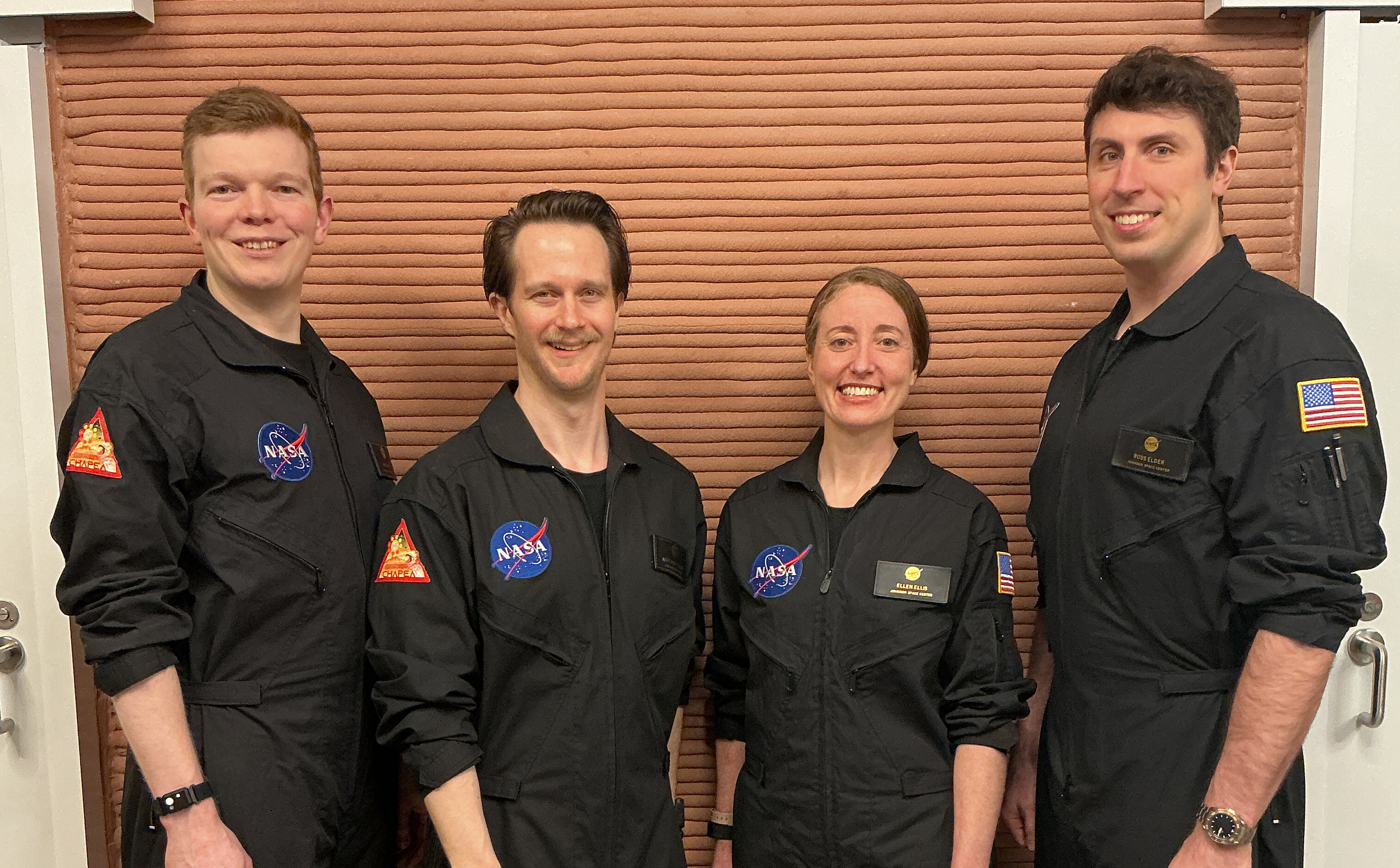
The four crew members in NASA’s simulated Mars mission have spent the past year living and working in isolation in a confined habitat at NASA’s Johnson Space Center in Houston. For the past 365 days, the Crew Health and Performance Exploration Analog (
CHAPEA) Mission 2 crew members have operated as though they were on the Red Planet, growing crops, managing limited resources, navigating communication delays, and conducting suited extravehicular activities on a simulated Martian surface.
Crew members include Ross Elder, mission commander; Ellen Ellis, medical officer; Matthew Montgomery, science officer; and James Spicer, flight engineer. They entered their 1,700 square foot 3D-printed
habitat Oct. 19, 2025. Leading up to the one-year mark of their 378‑day mission, science teams at NASA prepared to process health and performance data collected on the crew. This critical data can help NASA balance priorities and develop methods that counter spaceflight risks during future long-duration missions on Mars.
“We are extremely proud of the crew for their commitment and achievements over the last year on such a fast-paced, highly demanding mission,” said Grace Douglas, CHAPEA principal investigator. “The entire CHAPEA team is excited to congratulate the crew in person.”
The crew will exit their habitat on Saturday, Oct. 31, to conclude their mission. They will have a chance to reconnect with their families, who they’ve only spoken with via email over the course of their mission with a Mars-like communication delay. The crew will then begin two weeks of post-mission evaluations and debriefs with NASA scientists.
The four crew members in NASA’s simulated Mars mission have spent the past year living and working in isolation in a confined habitat at NASA’s Johnson Space Center in Houston.

www.nasa.gov
Sending humans to Mars is a bad idea.


S2 #640