Below The Fold ...

"What I do not understand is who is paying for these data center that get so hot they need water cooling?
I do ask the AI a few questions once in a while, but there is never any mention of getting billed?
If they charged, I would not do it.
So I do not get the financial model?" R5 #440
Good question.
I can't find a link to the information, but it seems Google ran at a $loss before they figured out the revenue angle of advertising, subsequently reportedly with earnings exceeding any OPEC nation, or Apple.

The threshold, the change that will transform A.I. forever will occur when humans are rendered extraneous to A.I. operation.
That does not mean humans will be out of the loop, forfeit control.
Instead merely that human slowness and other limitations will no longer handicap artificial intelligence.

Katie bar the door?
 
intro:
Assassination of Charlie Kirk
2025 assassination in Orem, Utah, U.S.
Charlie Kirk, an American right-wing political activist, was assassinated at Utah Valley University in Orem, Utah, on September 10, 2025, while speaking at an outdoor campus debate planned by Turning Point USA, the conservative youth organization he co-founded and led. Kirk was a close ally of US president Donald Trump and a highly influential figure in the MAGA movement. Wikipedia

headline:

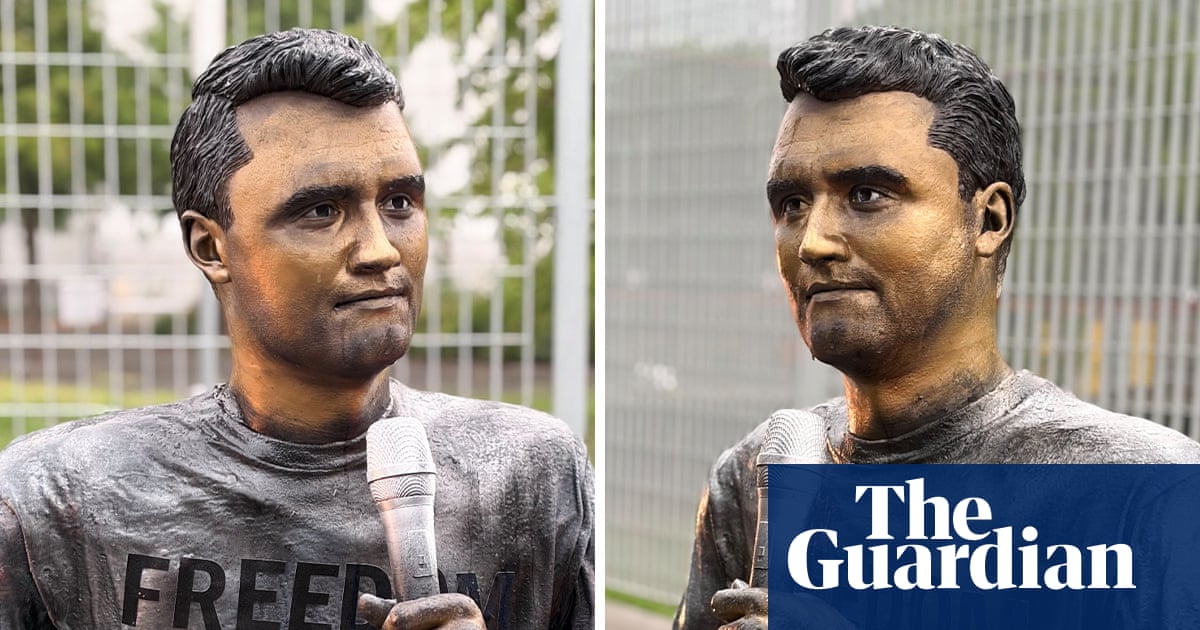
New York sculptor spent $100,000 to make a Charlie Kirk statue no one wants to buy​

Sergio Furnari said he thought the lifesize sculpture – which no one commissioned – would raise ‘millions’ of dollars
Adam Gabbatt / Mon 20 Jul 2026 06.00 EDT
A New York sculptor has been left furious after spending $100,000 of his own money to build a lifesize statue of Charlie Kirk, only to find that no one wants to buy it.
Sergio Furnari, originally from Italy, had hoped the statue of the deceased far-right activist, which he intends to display in Times Square, would raise “millions” of dollars. Instead, he said he has been inundated by messages from people saying they intend to urinate on the sculpture.
 

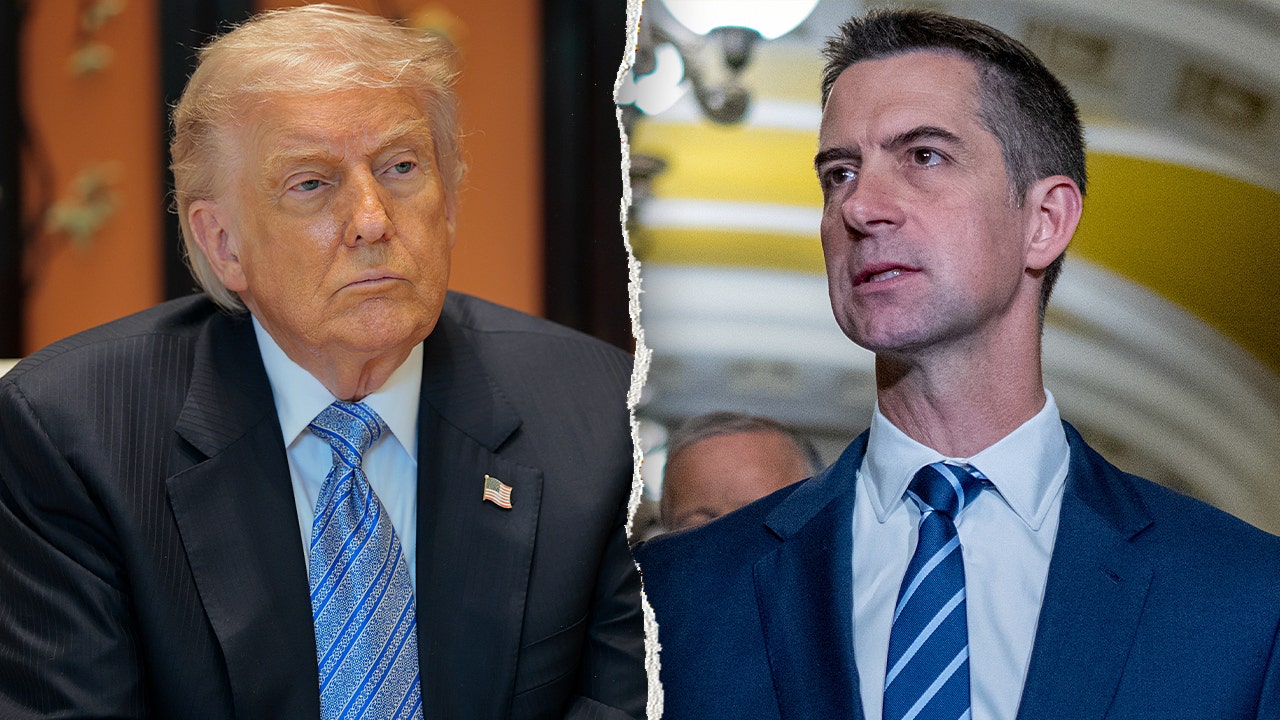
Trump faces Republican rebellion over Daylight Saving Time as Senate bill nears dead end​

GOP Sens Tom Cotton, Mike Rounds and James Lankford are among those pushing back on permanent Daylight Saving Time​

By Alex Miller Fox News / Published July 21, 2026 10:02am EDT

US House passes the Sunshine Protection Act

President Donald Trump wants Congress to pass legislation that would give Americans a break from a twice-yearly nuisance, but the sun will likely set on the push in the Senate, where the issue is deeper than politics.
The House passed its bill, the Sunshine Protection Act, last week to allow states to voluntarily observe Daylight Saving Time year-round, but the legislation is hitting a brick wall in the Senate.
And it’s not the party aisle that’s defining the debate, it’s a horizontal line running through the United States that divides northern states versus southern states.

Is "Spring forward / Fall back" the way Americans should live? - OR -

Should we at long last give Trump something to be victorious about?
 

Trump faces Republican rebellion over Daylight Saving Time as Senate bill nears dead end​

GOP Sens Tom Cotton, Mike Rounds and James Lankford are among those pushing back on permanent Daylight Saving Time​

By Alex Miller Fox News / Published July 21, 2026 10:02am EDT

US House passes the Sunshine Protection Act

President Donald Trump wants Congress to pass legislation that would give Americans a break from a twice-yearly nuisance, but the sun will likely set on the push in the Senate, where the issue is deeper than politics.
The House passed its bill, the Sunshine Protection Act, last week to allow states to voluntarily observe Daylight Saving Time year-round, but the legislation is hitting a brick wall in the Senate.
And it’s not the party aisle that’s defining the debate, it’s a horizontal line running through the United States that divides northern states versus southern states.

Is "Spring forward / Fall back" the way Americans should live? - OR -

Should we at long last give Trump something to be victorious about?

Calling it "Daylight Savings" never made any sense because daylight is simply shorter in the winter.
So there is no way to increase the daylight in winter or summer, since what you could gain on one end would be lost other the other end of the day.
I think the goal was to start the day earlier in summer so farmers could take advantage of the earlier start of the day, but that makes no sense to me since farmers can just get up sooner in the summer on their own, and don't need any clock changing.
 
"Calling it "Daylight Savings" never made any sense because ..." R5 #444
Dr. sear would like to declare your diagnosis.
You seem to have come down with a relatively uncommon affliction. Your case seems to be incurable. It's called "common sense".

Please bear in mind, it's standard politics to glamorize with euphemism. Check out what Trump is trying to do with his "Save America Act".
Ronald Reagan called MIRV ICBM "peace-keepers". Doesn't that sound nice !

I'm not sure, iirc it was the U.S. railroads that brought time-zones to North America.
Problem was, "noon" is when the sun reaches zenith each day, and that happens at a million points from coast to coast each day.
By segmenting North America into four time zones, it made it much easier to rail passengers to plan / schedule.

"daylight is simply shorter in the winter.
So there is no way to increase the daylight in winter or summer, since what you could gain on one end would be lost other the other end of the day." R5 #444
Many people think that daylight saving time was conceived to give farmers an extra hour of sunlight to till their fields, but this is a common misconception. In fact, farmers have long been opposed to springing forward and falling back, because it throws off their usual harvesting schedule.
The real reasons for daylight saving are based on energy conservation and a desire to match daylight hours to the times when most people are awake. https://www.history.com/articles/why-do-we-have-daylight-saving-time
"Energy conservation" only matters in Winter?
 
1784715986937.png

A Christian church is refusing tribal orders to leave a Wyoming reservation — and scientific data reveals that the Native American rituals the Church is attacking literally save lives.

A major clash on Wyoming’s Wind River Reservation has put a spotlight on the life-saving role of Indigenous cultural traditions. After Sarah Lucas, a pastor at the Foundations For Nations Church, publicly condemned traditional Native American rituals as 'demonic' and 'idol worship,' tribal leaders demanded the church leave the reservation.

While the church remains defiant and refuses to leave or retract its claims, scientific data highlights that these very ceremonies are vital to public health.

Decades of research show a direct link between cultural continuity and community survival, proving that the preservation of Indigenous traditions is not just about heritage—it is a critical matter of life and death.

The physical and psychological benefits of traditional practices are well-documented. A landmark 1998 study of First Nations communities by psychologists Michael Chandler and Christopher Lalonde revealed that Indigenous youth suicide rates dropped to zero in communities that maintained high levels of cultural continuity. Furthermore, clinical reviews confirm that traditional practices like sweat lodges, drumming, and talking circles are highly effective substance-use interventions, and are now standard complementary care in most Indian Health Service facilities.

By grounding individuals in a shared lineage, these sacred ceremonies provide the psychological continuity needed to foster hope, combat addiction, and save lives.

Want more evidence that Native American rituals help while Western influence and control of other culture harms? Fine.

Chandler, M. J., & Lalonde, C. (1998). Cultural continuity as a hedge against suicide in Canada's First Nations. Transcultural Psychiatry, 35(2), 191–219.
Chandler, M. J., & Lalonde, C. E. (2008). Cultural continuity as a protective factor against suicide in First Nations youth. Horizons, 10(1), 68–72.
Chase-Begay, D. M., Peterson, J. C., Liddell, J., & Belcourt, A. (2023). Traditional ceremonial practices as a strategy to reduce problem substance use in American Indian communities: A systematic review. Journal of Integrative and Complementary Medicine, 29(6–7), 408–419.
Dickerson, D. L., et al. (2021). Mental health, physical health, and cultural characteristics among American Indians/Alaska Natives seeking substance use treatment in an urban setting: A descriptive study. Community Mental Health Journal, 57(5), 937–947.

SOURCE with comments

 
View attachment 5776

A Christian church is refusing tribal orders to leave a Wyoming reservation — and scientific data reveals that the Native American rituals the Church is attacking literally save lives.

A major clash on Wyoming’s Wind River Reservation has put a spotlight on the life-saving role of Indigenous cultural traditions. After Sarah Lucas, a pastor at the Foundations For Nations Church, publicly condemned traditional Native American rituals as 'demonic' and 'idol worship,' tribal leaders demanded the church leave the reservation.

While the church remains defiant and refuses to leave or retract its claims, scientific data highlights that these very ceremonies are vital to public health.

Decades of research show a direct link between cultural continuity and community survival, proving that the preservation of Indigenous traditions is not just about heritage—it is a critical matter of life and death.

The physical and psychological benefits of traditional practices are well-documented. A landmark 1998 study of First Nations communities by psychologists Michael Chandler and Christopher Lalonde revealed that Indigenous youth suicide rates dropped to zero in communities that maintained high levels of cultural continuity. Furthermore, clinical reviews confirm that traditional practices like sweat lodges, drumming, and talking circles are highly effective substance-use interventions, and are now standard complementary care in most Indian Health Service facilities.

By grounding individuals in a shared lineage, these sacred ceremonies provide the psychological continuity needed to foster hope, combat addiction, and save lives.

Want more evidence that Native American rituals help while Western influence and control of other culture harms? Fine.

Chandler, M. J., & Lalonde, C. (1998). Cultural continuity as a hedge against suicide in Canada's First Nations. Transcultural Psychiatry, 35(2), 191–219.
Chandler, M. J., & Lalonde, C. E. (2008). Cultural continuity as a protective factor against suicide in First Nations youth. Horizons, 10(1), 68–72.
Chase-Begay, D. M., Peterson, J. C., Liddell, J., & Belcourt, A. (2023). Traditional ceremonial practices as a strategy to reduce problem substance use in American Indian communities: A systematic review. Journal of Integrative and Complementary Medicine, 29(6–7), 408–419.
Dickerson, D. L., et al. (2021). Mental health, physical health, and cultural characteristics among American Indians/Alaska Natives seeking substance use treatment in an urban setting: A descriptive study. Community Mental Health Journal, 57(5), 937–947.

SOURCE with comments

While I do not dislike the general idea of Christian charities and such, it is very bad for churches to not support native culture.
Any church that does not support sweat lodges, drumming, and talking circles, is harmful.
 
Not really a headline but a story worth telling

1784766295141.png

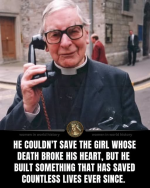
Few people realize that one of the world's first s*icide crisis hotlines exists because of a tragedy so heartbreaking it changed how millions of people receive help.

It began with a 14-year-old girl who believed her life was over.

She had just started menstruating for the first time. No one had explained what was happening to her body. Instead, she became convinced she had contracted a sexually transmitted disease. Terrified of the shame she imagined awaited her and unable to ask anyone for help, she took her own life.

Her death stunned an Anglican priest in London named Chad Varah. As he conducted the funeral, one question refused to leave him: how many other people were carrying unbearable fears simply because they had no one they felt safe enough to tell?

The more he thought about it, the more disturbing the answer became. Britain in the early 1950s was filled with silence around sex, mental health, pregnancy, family conflict, and despair. People were expected to cope quietly. Many never did.

So Varah did something radical.

In 1953, he placed a newspaper advertisement offering a telephone number and a simple promise: before making a final decision, talk to someone. He expected a handful of calls.

Instead, the phone rang almost nonstop.

Volunteers soon had to be recruited just to keep up. That small room with a single telephone grew into Samaritans, one of the world's first crisis hotline organizations, proving that sometimes the difference between life and death is not a miracle or a medicine, but another human being willing to listen without judgment.

The identity of the young girl has never been publicly confirmed, and some details of the story have faded into history. What remains undeniable is that her death inspired a movement that has answered millions of desperate calls around the world, a reminder that silence can be fatal, while a single conversation can change the course of a life forever.

SOURCE with comments
 
Not really a headline but a story worth telling

View attachment 5785

Few people realize that one of the world's first s*icide crisis hotlines exists because of a tragedy so heartbreaking it changed how millions of people receive help.

It began with a 14-year-old girl who believed her life was over.

She had just started menstruating for the first time. No one had explained what was happening to her body. Instead, she became convinced she had contracted a sexually transmitted disease. Terrified of the shame she imagined awaited her and unable to ask anyone for help, she took her own life.

Her death stunned an Anglican priest in London named Chad Varah. As he conducted the funeral, one question refused to leave him: how many other people were carrying unbearable fears simply because they had no one they felt safe enough to tell?

The more he thought about it, the more disturbing the answer became. Britain in the early 1950s was filled with silence around sex, mental health, pregnancy, family conflict, and despair. People were expected to cope quietly. Many never did.

So Varah did something radical.

In 1953, he placed a newspaper advertisement offering a telephone number and a simple promise: before making a final decision, talk to someone. He expected a handful of calls.

Instead, the phone rang almost nonstop.

Volunteers soon had to be recruited just to keep up. That small room with a single telephone grew into Samaritans, one of the world's first crisis hotline organizations, proving that sometimes the difference between life and death is not a miracle or a medicine, but another human being willing to listen without judgment.

The identity of the young girl has never been publicly confirmed, and some details of the story have faded into history. What remains undeniable is that her death inspired a movement that has answered millions of desperate calls around the world, a reminder that silence can be fatal, while a single conversation can change the course of a life forever.

SOURCE with comments

Odd that parents, school, or siblings did not tell her what to expect with menstruation, since I could imagine it could be frightening?
 
Odd that parents, school, or siblings did not tell her what to expect with menstruation, since I could imagine it could be frightening?
A lot of parents won't have "the talk" with their kids and not all schools have sex ed classes. And even if they do many places allow parents to opt their kids out of them - of course they're likely to be the ones who won't have that talk.

BTW even if the school does have sex ed classes the content and quality of those varies tremendously

 
"A lot of parents won't have "the talk" with their kids and not all schools have sex ed classes. And even if they do many places allow parents to opt their kids out of them - of course they're likely to be the ones who won't have that talk.
BTW even if the school does have sex ed classes the content and quality of those varies tremendously" S2 #451
Is there a smart-phone angle to this story?

Before the smart-phone persons of this age confided in one another.
Has the pocket-sized display screen become such a social barrier that the content of teen friendships has changed this substantially?
S2 #449 may be difficult to address as anything other than an anecdote, without a reliable per capita statistical trend over decades.
 
Back
Top