In 1912, a New Zealand newspaper published a small notice explaining that coal combustion was adding carbon dioxide to the atmosphere and would eventually cause global warming significant enough to affect global climates.
1912.
In 1965, the President's Science Advisory Committee warned Lyndon Johnson that greenhouse gases from fossil fuels would modify the Earth's heat balance with potentially dangerous consequences.
In 1977, Exxon's own senior scientist told the company's management that global warming was real, human-caused, and serious.
Exxon's response was to fund over $30 million into climate denial campaigns over the following decades.
They knew. They chose profit.
They manufactured doubt.
Meanwhile, the data kept building.
97% of actively publishing climate scientists agree on the reality and cause of climate change.
That level of scientific consensus is comparable to the consensus that vaccines prevent disease and that the Earth is not flat.
We did not have a knowledge gap.
We had a carefully engineered perception gap, funded by the industries that profited from delay.
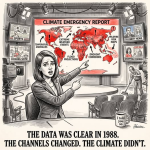
The meteorologist in this image is not fictional. She is every climate scientist who has stood before a camera, presented data, answered questions, given interviews, published papers, testified in hearings — and watched the news cycle move on to something more immediately entertaining.
James Hansen. Katharine Hayhoe. Michael Mann.
Scientists who dedicated their lives to communicating a crisis while being funded less, attacked more, and taken seriously by fewer people than the industries paying to discredit them.
The studio audience is empty not because people do not care. It is empty because caring was made to feel inconvenient, expensive, politically complicated, and personally irrelevant.
That was not an accident. That was a strategy.
And it worked. For decades.
The forecast was always accurate. The channel was always changed.
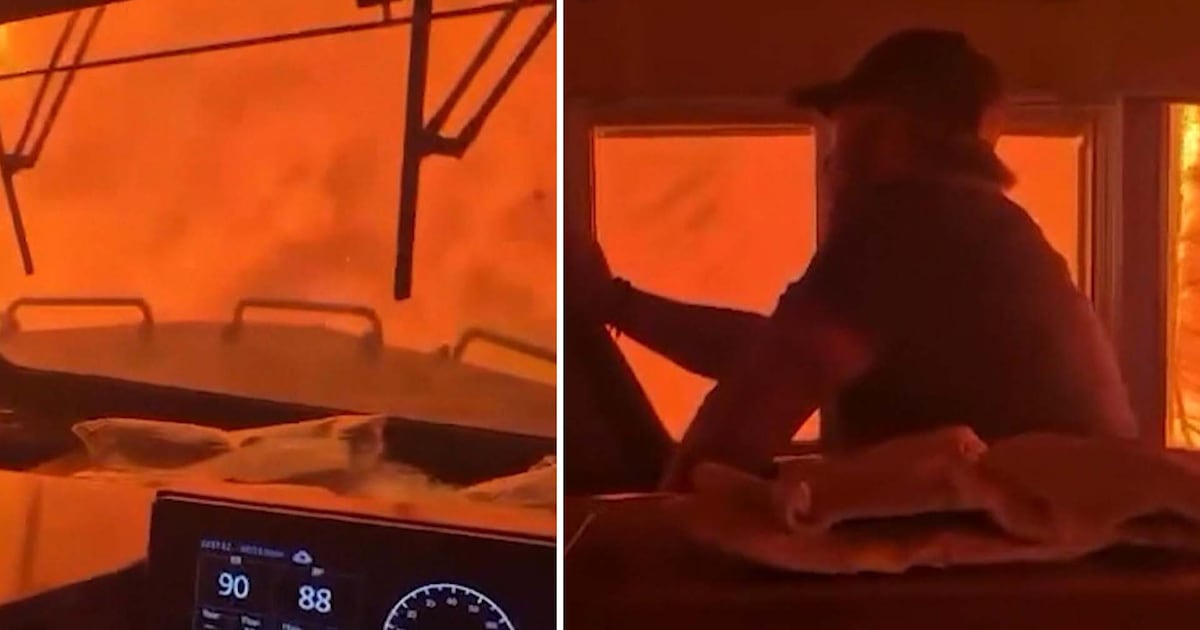
We are living now in the weather it predicted.
SOURCE with comments






/https://tf-cmsv2-smithsonianmag-media.s3.amazonaws.com/filer_public/a6/ed/a6edd465-75b5-40a0-ad71-ad4d1271eef2/river_i.jpg)