Anthropogenic Global Warming ... how hot is it ?

The palm oil angle is news to me but I've encountered reports of the following before:

This Tree Produces Pure Diesel Fuel. Yields 40 Liters A Year. Mar 9, 2026 ... fuel you can pour directly into an engine. The Copaifera langsdorffii, nicknamed the "Diesel Tree," can be tapped like a maple tree and ...


🤟🍟 righteous

{...
Palm oil is an edible vegetable oil derived from the reddish mesocarp (pulp) of the fruit of the African oil palm. The oil is used in food manufacturing, in beauty products, and as biofuel. Palm oil accounted for about 36% of global oils produced from oil crops in 2017. Palm oils are easier to stabilize and maintain quality of flavor and consistency in ultra-processed foods, so they are frequently favored by food manufacturers. Globally, humans consumed an average of 7.7 kg (17 lb) of palm oil per person in 2015. Demand has also increased for other uses, such as cosmetics and biofuels, encouraging the growth of palm oil plantations in tropical countries.

The mass production of palm oil in the tropics is a topic for substantial concern for environmental and human rights groups. The palm oil industry is a significant contributor to deforestation in the tropics where palms are grown and has been cited as a factor in social problems due to allegations of human rights violations among growers.

In 2018, a report by the International Union for Conservation of Nature acknowledged that palm oil is much more efficient than other oils in terms of land and water usage; however, deforestation causes more biodiversity loss than switching to other oils. The biggest global producers of palm oil are Indonesia, which produced 60% of it in 2022, followed by Malaysia, Thailand, and Nigeria. Indonesia produces biodiesel primarily from palm oil.
...}
https://en.wikipedia.org/wiki/Palm_oil
 
"Palm oil is an edible vegetable oil " #601
Oh.

I know of no plant, no photosynthesizer that directly produces gasoline. BUT !
When corn State senators decided mandating 10% ethanol in gasoline from corn was a good idea, the quality of our automotive fuel plummeted, and the cost of Mexican peasant food increased by about a third.

So diesel coming directly from a plant seems like a good deal. BUT !
We've already learned that splitting our food supply into both human food, and automotive fuel raises the cost of both.
 
Oh.

I know of no plant, no photosynthesizer that directly produces gasoline. BUT !
When corn State senators decided mandating 10% ethanol in gasoline from corn was a good idea, the quality of our automotive fuel plummeted, and the cost of Mexican peasant food increased by about a third.

So diesel coming directly from a plant seems like a good deal. BUT !
We've already learned that splitting our food supply into both human food, and automotive fuel raises the cost of both.

I do not know much of the details, but I believe the down side of palm oil is factory farms that are moncultures.
That is not good for wildlife and has epidemic risks for the palm trees.

The problems with ethanol are much larger because you have to ferment the corn in lots of water, over lots of time.
 
"I do not know much of the details, but I believe the down side of palm oil is factory farms that are moncultures.
That is not good for wildlife and has epidemic risks for the palm trees.

The problems with ethanol are much larger because you have to ferment the corn in lots of water, over lots of time." R5 #603
BF Skinner made the point that so many of the perceived technological "solutions" we've implemented have been the basis for a new round of technological problems (requiring a new round of technological solution).

Monsanto & others are already fiddling w/ GMO.
Bill Gates seems to be fiddling with trying to preserve a Noah's arc of our legacy seed grain. Count me a skeptic.

Whether we've passed the point of no return, I'm not sure. BUT !!
We've never been closer.
 
BF Skinner made the point that so many of the perceived technological "solutions" we've implemented have been the basis for a new round of technological problems (requiring a new round of technological solution).

Monsanto & others are already fiddling w/ GMO.
Bill Gates seems to be fiddling with trying to preserve a Noah's arc of our legacy seed grain. Count me a skeptic.

Whether we've passed the point of no return, I'm not sure. BUT !!
We've never been closer.

The trouble with GMOs is that those manipulating genes only care about profits, so don't care if the new mutation actually still has any nutritional value at all, and could instead cause allergic responses instead?
 
"The trouble with GMOs is that those manipulating genes only care about profits, so don't care if the new mutation actually still has any nutritional value at all, and could instead cause allergic responses instead?" R5 #605
Yes.
As you well know the agricultural tradition for millennia has been to save some seed from harvest for next season's planting.
Monsanto's GMO prevents that. The seed if any is sterile. If planted it will not germinate, but instead will rot. So farmers must re-purchase fresh seed for each planting season.
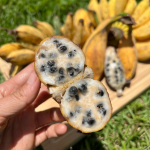
"Speaking of GMO's this is what bananas originally looked like" S2 #606
I did not know that.
At a garden party last year I had what I later deduced was seedless watermelon. I suppose I'm a traditionalist.

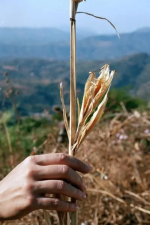
"And this is what corn originally looked like" S2 #606
When I read corn is a grass, I was inspired to wonder whether aboriginal American nations selectively planted only the largest corn seed, so over the centuries they became enormous.
 
Monsanto's GMO prevents that. The seed if any is sterile. If planted it will not germinate, but instead will rot. So farmers must re-purchase fresh seed for each planting season.
I remember reading about one of the big players (don't remember if it was Monsanto or not) suing a farmer whose fields were adjacent to one of their lots - the lawsuit had to do with the fact that pollen from the corporate fields might have landed on the farmer's fields so the farmer's crops may well incorporate the qualities of the "corporate crop" - have to say that this was just a footnote in a journal and I've never seen anything more about it.
 
Yes.
As you well know the agricultural tradition for millennia has been to save some seed from harvest for next season's planting.
Monsanto's GMO prevents that. The seed if any is sterile. If planted it will not germinate, but instead will rot. So farmers must re-purchase fresh seed for each planting season.

I did not know that.
At a garden party last year I had what I later deduced was seedless watermelon. I suppose I'm a traditionalist.


When I read corn is a grass, I was inspired to wonder whether aboriginal American nations selectively planted only the largest corn seed, so over the centuries they became enormous.

{...
https://www.bing.com/ck/a?!&&p=0d7a...zK2Nvcm4rZGV2ZWxvcGVkJmZvcm09Q1NCUkFORA&ntb=1
Corn was developed from the wild grass teosinte through thousands of years of selective breeding by ancient Mesoamerican farmers.

Origins and Domestication​

Corn, also known as maize (Zea mays), originated in southern Mexico over 9,000 years ago. Its wild ancestor, teosinte, is a grass with small, hard seeds and a branching form that looks very different from modern corn, though their genomes are nearly identical History CooperativeHistory Cooperative+2. Early Mesoamerican farmers recognized teosinte’s potential and began selective breeding, choosing plants with desirable traits such as larger kernels, exposed cobs, and upright stalks History CooperativeHistory Cooperative+1. This process gradually transformed teosinte into a more productive and edible crop.

Selective Breeding and Genetic Changes​

The domestication of corn involved targeted genetic changes. Key mutations, such as in the tb1 gene, suppressed side branching and promoted vertical growth, while other changes reduced seed casing thickness and exposed kernels, making the plant easier to harvest and process. Ancient farmers saved seeds from plants with favorable traits and replanted them, a practice that over generations produced the recognizable corn we know today pioneer.compioneer.com+1. By around 2500 BCE, corn was widely cultivated across the Americas, with indigenous peoples developing different varieties suited to local climates and uses pioneer.comp
...}
 
What does this vid have to do with the banana's shown in #606 you might ask


Ray Comfort the guy with the mustache has become known as Banana Man as a result of this clip. The guy on the right is Kirk Cameron, a former actor who played Mike Seaver on the ABC sitcom Growing Pains
 
{...

Current predictions indicate a significant risk of global temperatures rising beyond 1.5°C and potentially reaching 2°C within the next few decades due to insufficient climate action.

Current Temperature Trends​

Recent reports highlight that the first eight months of 2025 are among the warmest on record, with a 70% chance that global average temperatures will exceed 1.5°C above pre-industrial levels within the next five years. There is also a small possibility of crossing the 2°C threshold, which was previously considered unlikely The Weather ChannelThe Weather Channel.

Climate Goals and Challenges​

The Paris Agreement aims to limit global warming to well below 2°C, with efforts to restrict the increase to 1.5°C. However, a survey of climate scientists indicates that only 6% believe the 1.5°C target will be achieved, while 77% predict temperatures will rise more than 2.5°C by the year 2100. This reflects a growing concern that current national commitments to reduce greenhouse gas emissions are inadequate ResilienceResilience.

Implications of Rising Temperatures​

Exceeding these temperature thresholds poses significant risks, including severe impacts on ecosystems, biodiversity loss, and increased frequency of extreme weather events. The Future Earth organization warns that failing to meet climate targets could lead to irreversible changes in the climate system, affecting human societies and natural environments ResilienceResilience.
In summary, without substantial and immediate action to reduce greenhouse gas emissions, the Earth is on a trajectory to experience significant warming, with serious implications for the planet and its inhabitants.
...}
 

'Super' El Nino is officially here: It could 'get dire very quickly'​

A powerful El Nino has officially formed in the Pacific Ocean, with meteorologists warning Thursday that it is poised to reach historic strength and intensify extreme weather events across the globe.

The natural warming cycle is expected to exacerbate global temperatures, already elevated by fossil fuel emissions, and could supercharge severe weather patterns worldwide. The phenomenon is predicted to rival or even surpass the record-setting El Nino of 1997, which caused billions in damages through heatwaves, floods, droughts, tornadoes, and wildfires.

The U.S. National Oceanic and Atmospheric Administration formally confirmed the existence of the El Nino, a warming of the Pacific near the equator that profoundly affects global weather patterns. NOAA projects a 63% likelihood that this El Nino will become so intense by late fall and early winter that it "would rank among the largest El Nino events in the historical record going back to 1950."

Clark University climate scientist Abby Frazier explained that .....

MORE (including vid)
 
"Hybridization is fairly safe.
But with GMOs they are making changes that could not naturally occur, so then can bypass what our immune system evolved to do." R5 #609
Interesting point that has raised my doubt.
You seem to be alluding to the risk of some nefarious artificial development that results in dreadful stuff. ... Frankenstein ...
There are plants that are toxic to humans.
What I don't know, is the statistical probability of such toxicity more likely to evolve naturally? Or artificially?
We might wish to believe the engineers performing the genetic modifications are on top of that.
They're not.
They're primarily commercial operations. Their budgets may be long on development, but are likely to be short of safety testing. The consumer is the guinea pig.

There's historic precedent.
High-born Romans sipped beverages cooked in lead vessels and channeled spring water into their homes through lead pipes ...

The notion of an easily malleable metal that could be formed into water conduits must have seemed a modern miracle to the ancient Romans that could afford it.
I doubt metallic neurotoxicity occurred to them.

Fast forward a few millennia, plastic may have seemed much the same, before we learned about micro-plastics, and nano-plastics, and how they're in our body tissues.

"Origins and Domestication" R5 #610
Thanks much R5.
That's exactly what I thought.
So much so, I'm not sure I'm smart enough to have figured that out on my own, so maybe I read it, forgot where I learned it, ...
 
Interesting point that has raised my doubt.
You seem to be alluding to the risk of some nefarious artificial development that results in dreadful stuff. ... Frankenstein ...
There are plants that are toxic to humans.
What I don't know, is the statistical probability of such toxicity more likely to evolve naturally? Or artificially?
We might wish to believe the engineers performing the genetic modifications are on top of that.
They're not.
They're primarily commercial operations. Their budgets may be long on development, but are likely to be short of safety testing. The consumer is the guinea pig.

There's historic precedent.
High-born Romans sipped beverages cooked in lead vessels and channeled spring water into their homes through lead pipes ...

The notion of an easily malleable metal that could be formed into water conduits must have seemed a modern miracle to the ancient Romans that could afford it.
I doubt metallic neurotoxicity occurred to them.

Fast forward a few millennia, plastic may have seemed much the same, before we learned about micro-plastics, and nano-plastics, and how they're in our body tissues.


Thanks much R5.
That's exactly what I thought.
So much so, I'm not sure I'm smart enough to have figured that out on my own, so maybe I read it, forgot where I learned it, ...

{...

How do GMOs affect the body?​

Although there are no clinical studies on the effect of GM foods on human health, several animal studies indicate health risks associated with GM foods. These include:
  • Infertility
  • Accelerated aging
  • Immune problems
  • Changes in major organs and the gastrointestinal system
  • Faulty insulin regulation
Moreover, another safety concern is that GM foods are engineered to be able to stand toxic substances such as herbicides, meaning they are sprayed with more of these chemicals. This could ultimately lead to these foods containing trace amounts of herbicide and pesticide chemicals.
...}
https://www.medicinenet.com/what_is_bad_about_gmos/article.htm

For example, the use of GMOs have likely caused massive increases in the use of sexual hormones as herbicides and pesticides, which likely then also greatly increase transgender confusion.
 
"Although there are no clinical studies on the effect of GM foods on human health, several animal studies indicate health risks associated with GM foods. These include:" R5 #615
a) That's not good. BUT !
b) That's merely an early indication. In historic perspective (since food was first invented) GMO is a recent development, and still underway. Therefore
c) it's merely a preliminary status report, not the last word. The next "big innovation" in GMO may be the one that does us in.

"For example, the use of GMOs have likely caused massive increases in the use of sexual hormones as herbicides and pesticides, which likely then also greatly increase transgender confusion." R5 #615
I'd want to know more about the full scope of what is measured, before such introductions to our food chain are declared safe.
 
Another result of increasing temperatures

1781457765552.png

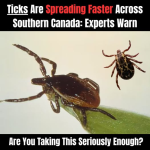
Like it or not, ticks are becoming a bigger part of life in Canada — and experts say Canadians will have to adapt.

Scientists say climate change is helping disease-carrying ticks move north from the United States at a rate of 35 to 55 kilometres per year, spreading into new habitats across southern Canada.

“Where the vast majority of the Canadian population lives, which is near the American border, are all in areas that are already climatically suitable for tick populations,” said Katie Clow, an assistant professor at the University of Guelph.

She says places that once rarely saw ticks — including areas north of Toronto and cottage country — are now seeing them more often.

“We've seen places where they've never encountered ticks before… where now ticks are a much higher burden,” Clow said. “I think that that has surprised a lot of people, because for decades they weren't there.”

Canada now has more than 40 species of ticks, according to Health Canada. Blacklegged ticks, also known as deer ticks, are a major concern because they can transmit Lyme disease. Public Health Agency of Canada data shows Lyme disease cases rising dramatically — from 144 cases in 2009 to a preliminary 7,105 cases in 2025.

Experts say the trend is not a mystery. Warmer springs and longer summers are allowing ticks to survive, feed and reproduce in places that were once too cold.

“A cold winter will unfortunately not kill off our tick populations, but our earlier springs and longer summers are allowing them to reproduce,” Clow said.

Researchers are also warning about other species, including the lone star tick, which can cause a severe red meat allergy, and the Asian longhorned tick, which could pose risks to cattle if it becomes established in Canada.

Negar Elmieh, a scientist with the B.C. Centre for Disease Control, says this is becoming the “new norm.”

“What we're seeing in general is that with climate change, you're seeing more animals migrate further northwards, and with that comes the ticks,” she said.

The message from experts is not to stop enjoying the outdoors — but to take precautions seriously.

Wear long sleeves and light-coloured clothing in tick-prone areas, tuck pants into socks, use DEET, keep clear pathways around your property, check your body after being outside, shower when you get home, and put outdoor clothes in the dryer to kill ticks that may be hiding.

So the real question is: are Canadians ready to treat tick checks like sunscreen — a normal part of going outside — or are we still underestimating how quickly this problem is spreading?

Source: CBC News

SOURCE
 
" use DEET " S2 / CBC #617
Deet is an industrial solvent.
Warnings already advise restrictions on skin contact for application of Deet to children. BUT !
Adults humans are humans too
in many cases.

Instead of skin contact, apply deet to clothing, BUT !
Beware !

Because deet is a solvent, it may dissolve clothing it is applied to, if its fibers are synthetic, soluble. SO !
When romping about in a tick infested forest or meadow, you may wish to wear cotton, which is resistant to deet exposure. BUT !
100% cotton does not protect from sunburn.
So for example a 100% cotton sun hat is ideal
for use as a door-stop.
 
a) That's not good. BUT !
b) That's merely an early indication. In historic perspective (since food was first invented) GMO is a recent development, and still underway. Therefore
c) it's merely a preliminary status report, not the last word. The next "big innovation" in GMO may be the one that does us in.


I'd want to know more about the full scope of what is measured, before such introductions to our food chain are declared safe.

This is just AI:
{...

Why Herbicides and Pesticides Are Considered “Safe” (and the Reality)​

Herbicides and pesticides are often labeled “safe” because they undergo strict regulatory review and registration before being sold or used in the United States. In the U.S., the Environmental Protection Agency (EPA) requires that any pesticide be tested for toxicity, environmental impact, and effectiveness before approval. Products must meet safety standards for human health and the environment, and manufacturers must follow label instructions for application U.S. Environmental Protection Agency.

Key reasons for the “safe” label:

  • Regulatory approval: Before a pesticide can be sold, it must pass EPA evaluation for toxicity to humans and animals, potential environmental harm, and effectiveness against target pests U.S. Environmental Protection Agency.
  • Labeling and use restrictions: Approved products come with specific instructions on how, when, and where they can be used, including protective measures for applicators and bystanders U.S. Environmental Protection Agency.
  • Residue limits: Food and water safety standards set maximum allowable pesticide residues on crops and in drinking water U.S. Environmental Protection Agency.
  • Monitoring and review: The EPA continuously monitors registered pesticides for new evidence of harm and can reevaluate or restrict them if needed U.S. Environmental Protection Agency.
However, “safe” does not mean “risk-free”:

  • Low-dose, long-term exposure can still pose health risks. The National Institute of Environmental Health Sciences notes that pesticides can enter the body through food, water, and skin contact, and some have been linked to diseases such as Parkinson’s, thyroid disorders, and certain cancers National Institute of Environmental Health Sciences (NIEHS).
  • Recent research shows that even chemicals not classified as known carcinogens can increase cancer risk when present in mixtures in the environment ScienceDaily.
  • Herbicides like glyphosate and atrazine are widely used and effective, but studies have found potential health effects, including developmental and reproductive impacts U.S. Environmental Protection Agency+1.
Bottom line:
Herbicides and pesticides are considered “safe” under current U.S. regulations because they meet strict safety and environmental standards before approval. But scientific evidence shows that no chemical is completely risk-free, and ongoing research continues to uncover potential health and environmental effects, especially from long-term or combined exposures.
...}

My personal opinion is that for these herbicides and pesticides to be so successful, they have to be much riskier than they are willing to admit.
They kill weeds and insects by preventing there being 2 genders for procreation.
That then also has to effect humans who also consume them.
 
Ticks are pretty scary.
I have seen them drop down out of trees on people walking by.
But I have personally only had a problem with them when animals get infested.
 
Back
Top