Anthropogenic Global Warming ... how hot is it ?


The only way I know of that may prevent global warming from making all life on the planet go extinct, is that it may first produce a constant cloud cover from the ocean warming.
That may keep global temperatures survivable, but constant cloud cover would have its own problems as well.
Astronomy and air travel would be greatly effected, for example.
 
The only way I know of that may prevent global warming from making all life on the planet go extinct, is that it may first produce a constant cloud cover from the ocean warming.
In the day, science fiction novels pictured Venus as an ocean planet occupied by sea monsters and who knows what else. It wasn't until relatively recently that we discovered that is not what those clouds were covering.
 
In the day, science fiction novels pictured Venus as an ocean planet occupied by sea monsters and who knows what else. It wasn't until relatively recently that we discovered that is not what those clouds were covering.

While I have not looked into the details myself, the hope clouds will reflect solar heat away enough to prevent global warming from being fatal seem slim because it did not help Venus.
Which is still over 400 degrees even with the clouds. It could be clouds make it worse, since water vapor also is a greenhouse gas?
 
No question - all I was doing was pointing out that science fiction from the 50's and 60's presented Venus as a cloud covered ocean or jungle.
 
No question - all I was doing was pointing out that science fiction from the 50's and 60's presented Venus as a cloud covered ocean or jungle.

There are some scientists who believe as the oceans warm, there will be increased cloud cover, which will increase planetary albedo, thus reflecting more solar energy, and cooling the planet.
But it is confusing.
Since water vapor is also a greenhouse gas, it could trap more heat.
Low laying clouds also trap more heat.

But since the atmosphere of Venus is 95% CO2, I agree Venus is not much like Earth.
 
You two have reminded me of the Gaia hypothesis, rather more a myth or legend than science-based perspective.

None the less the idea is, without necessarily delving into the supernatural, Earth self-regulates,
so when pollution threatens global catastrophe, Earth naturally responds somewhat the way R5 #565 suggests.

Clouds do both.
They reflect solar warmth during the day, AND
they insulate against radiational cooling at night.

The question is not which of the two. It's both. The question is, what is the NET affect.

I do not know.

"greenhouse gas?" R5 #563

For us: 🌴
grandkids: 🔥
 
You two have reminded me of the Gaia hypothesis, rather more a myth or legend than science-based perspective.

None the less the idea is, without necessarily delving into the supernatural, Earth self-regulates,
so when pollution threatens global catastrophe, Earth naturally responds somewhat the way R5 #565 suggests.

Clouds do both.
They reflect solar warmth during the day, AND
they insulate against radiational cooling at night.

The question is not which of the two. It's both. The question is, what is the NET affect.

I do not know.


For us: 🌴
grandkids: 🔥

It is very confusing to try to predict.
Some claim the increased CO2 is good for plants, and others claim that the greater CO2 makes the plants grow faster but have less value, like reduced nutrition.
 
"It is very confusing to try to predict.
Some claim the increased CO2 is good for plants, and others claim that the greater CO2 makes the plants grow faster but have less value, like reduced nutrition." R5 #567
I believe many if not most climatologists with significant professional connection to the anthropogenic global warming process already know the answer.
I deduce water vapor is generally a greenhouse gas, though H2O can manifest in a variety of forms.

I don't have data handy on the vegetation / nutrition issue.
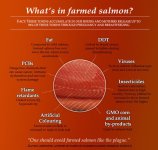
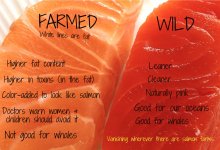
But if it's not too much of a stretch, we do have some insight into tinkering with raising other kinds of food.

salmon02.JPG salmon01.JPG
 
I believe many if not most climatologists with significant professional connection to the anthropogenic global warming process already know the answer.
I deduce water vapor is generally a greenhouse gas, though H2O can manifest in a variety of forms.

I don't have data handy on the vegetation / nutrition issue.
But if it's not too much of a stretch, we do have some insight into tinkering with raising other kinds of food.

View attachment 4091 View attachment 4090

I agree the wild salmon is much better.
I wonder if we will still have the options as the population increases?
 

How a bomb cyclone is bringing blizzard conditions to the Northeast

Blizzards can bring a ton of snow, but here’s what else they feature
By Andrea Thompson edited by Jeanna Bryner

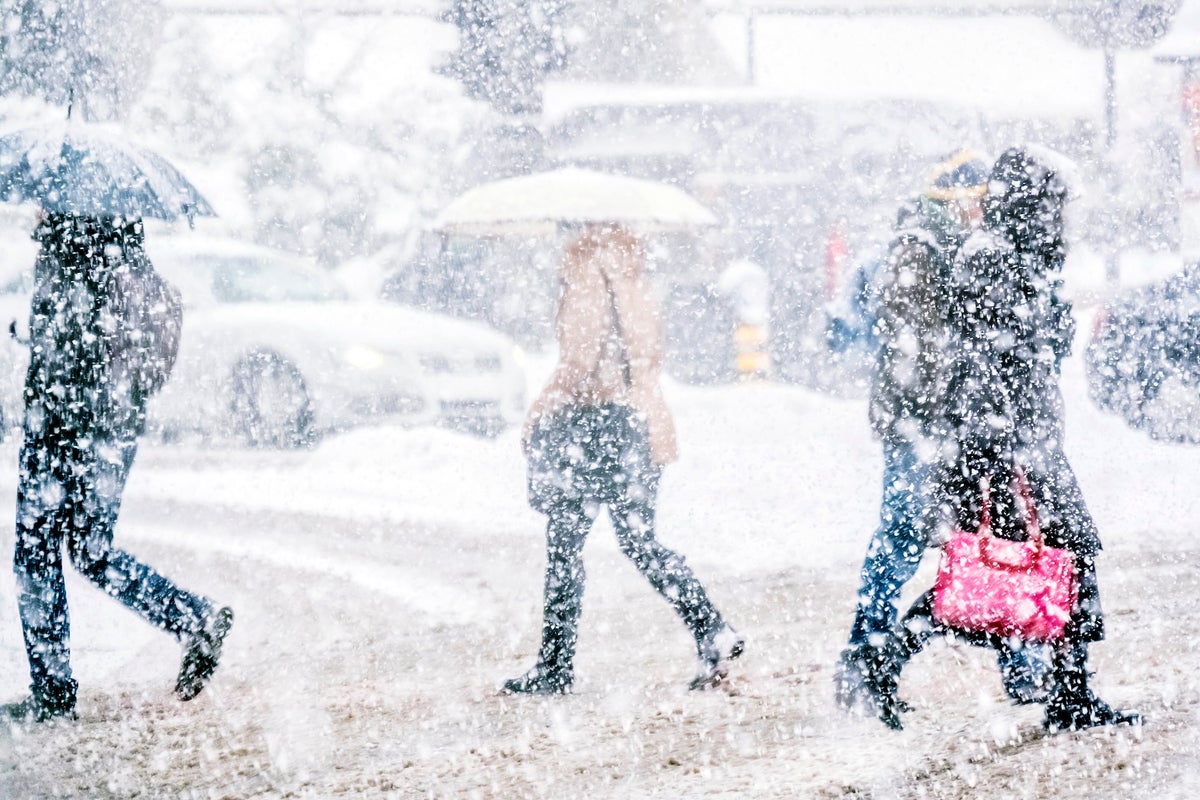
A winter bomb cyclone is expected to bring blizzard conditions across parts of the East Coast from Maryland up through southeastern New England from Sunday night into Monday morning. But what exactly is a blizzard?

A blizzard doesn’t always mean “a lot of snow,” though it can certainly bring heavy snowfalls, as this storm is expected to do along parts of the East Coast. Rather the National Weather Service defines a blizzard as a snowstorm with winds that are regularly at or above 35 miles per hour and “considerable falling” or blowing snow for at least three hours. This weekend’s storm could dump one to two feet of snow in the worst-hit areas, and snowfall rates could reach two to three inches per hour. Wind gusts could reach 40 to 70 mph along the coast from New Jersey through New England.

Blizzard conditions can reduce visibility to less than 0.25 mile, which makes travel especially hazardous. New York City has put a travel ban on its roads starting at 9 P.M. on Sunday night.

This storm’s winds and heavy, wet snow could also cause power outages by weighing down power lines and tree branches.

Blizzard conditions can develop along the northwest side of a very intense storm, as is the case with this system. This is because the major difference between the low pressure at the storm’s center and an area of higher pressure to the west creates very intense winds. This storm will likely become a bomb cyclone—what a storm is called when it undergoes “bombogenesis,” defined by a large decrease in pressure in 24 hours.


bomb cyclone Northeast AT & JB #570

A "West wind" is from the West.
A "North wind" arrives from the North. BUT !
Native New Yorkers may be familiar with violent Winter storms called "Nor'Easters.
Storms called "Nor'Easters" arrive from the Southwest.

tor·na·do (tôr-nādō)
A whirlwind or hurricane.

cy·clone (sīklōn′)
A violent rotating windstorm, especially a tornado.


The American Heritage® Dictionary of the English Language, Fifth Edition copyright ©2022 by HarperCollins Publishers. All rights reserved.
 
Back
Top