Below The Fold ...

1781224958649.png

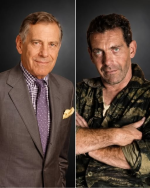
On the morning of August 3, 1965, CBS News correspondent Morley Safer was in Da Nang, Vietnam, drinking coffee with Marine officers while looking for a story to cover.

A lieutenant mentioned that his unit would be heading out on an operation the next morning and invited Safer to join them.

Safer agreed.

The destination was Cam Ne, a small village in South Vietnam that was suspected of sheltering Viet Cong fighters. Before sunrise, he and his camera crew climbed into an armored vehicle and headed toward the village.

He expected a military operation. Possibly combat. Possibly resistance.

What he found was something very different.

When the Marines entered Cam Ne, they encountered a village filled mostly with women, children, and elderly residents. There was no firefight waiting for them. No clear battlefield.

Instead, the operation moved from house to house.

As Marines questioned villagers, communication quickly broke down. Many residents did not understand English. Others could not answer the questions being asked. The tension grew, and soon the situation escalated in a direction that had nothing to do with combat.

Soldiers began setting thatched-roof homes on fire, using cigarette lighters and flamethrowers.

Families stood by as their homes burned. Elderly women pleaded to be allowed time to gather their belongings, but their requests were ignored. Rice stores were destroyed. Personal possessions were lost in the flames.

By the end of the operation, around 150 homes had been burned. Three women were injured. A baby was killed.

Four elderly men were taken into custody, reportedly because they could not understand what was being asked of them.

Throughout the entire operation, Morley Safer kept filming.

That evening, he sent the footage and narration back to New York. When CBS News president Fred Friendly and anchor Walter Cronkite reviewed the material, they immediately understood its importance.

It had to air.

On August 5, 1965, the report was broadcast on the CBS Evening News.

The reaction was immediate. Viewers flooded CBS with letters and phone calls. Some praised the reporting. Others were outraged, accusing the network of damaging the image of American troops during wartime.

Soon after, the controversy reached the highest level of government.

CBS president Frank Stanton received an early morning phone call from an angry voice on the line. According to accounts, President Lyndon B. Johnson personally expressed his anger over the broadcast.

Johnson reportedly questioned how such footage could exist and whether it had been presented with hidden intent. Investigations were launched into both Safer and the Marine officer who had allowed him to accompany the unit.

No wrongdoing was found.

The Pentagon later pushed for Safer’s removal from Vietnam and restricted his access to Marine operations. CBS refused.

The network stood by its reporter and the story.

The backlash against Safer was severe. He received threats and, at times, reportedly kept a pistol nearby for protection as criticism and hostility grew.

But the report had already done something irreversible.

It changed the conversation.

Military leadership responded to the public reaction, issuing new guidance aimed at reducing unnecessary destruction in populated areas and increasing caution around civilians during operations.

One television report had helped influence military policy.

Years later, New York University’s Department of Journalism would name the Cam Ne broadcast one of the most important works of American journalism of the twentieth century.

Morley Safer went on to spend decades at 60 Minutes, becoming one of the most respected figures in broadcast journalism.

But the story that defined his legacy did not begin in a newsroom.

It began in a small village in Vietnam.

A camera rolling.

A fire spreading through homes.

And a reporter who chose to record what was happening, even when it was not what anyone wanted to see.

He was not trying to make history.

He was simply doing his job.

And sometimes, that is exactly what changes history.

SOURCE with comments
 
August 3, 1965, CBS News correspondent Morley Safer #341
Thank you for your service Morley.

journalists01.JPG

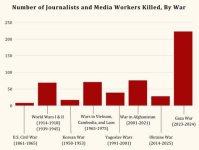
The war in Gaza has, since October 7, 2023, killed more journalists than the U.S. Civil War, World Wars I and II, the Korean War, the Vietnam War (including the conflicts in Cambodia and Laos), the wars in Yugoslavia in the 1990s and 2000s, and the post-9/11 war in Afghanistan, combined.
 
View attachment 5317

On the morning of August 3, 1965, CBS News correspondent Morley Safer was in Da Nang, Vietnam, drinking coffee with Marine officers while looking for a story to cover.

A lieutenant mentioned that his unit would be heading out on an operation the next morning and invited Safer to join them.

Safer agreed.

The destination was Cam Ne, a small village in South Vietnam that was suspected of sheltering Viet Cong fighters. Before sunrise, he and his camera crew climbed into an armored vehicle and headed toward the village.

He expected a military operation. Possibly combat. Possibly resistance.

What he found was something very different.

When the Marines entered Cam Ne, they encountered a village filled mostly with women, children, and elderly residents. There was no firefight waiting for them. No clear battlefield.

Instead, the operation moved from house to house.

As Marines questioned villagers, communication quickly broke down. Many residents did not understand English. Others could not answer the questions being asked. The tension grew, and soon the situation escalated in a direction that had nothing to do with combat.

Soldiers began setting thatched-roof homes on fire, using cigarette lighters and flamethrowers.

Families stood by as their homes burned. Elderly women pleaded to be allowed time to gather their belongings, but their requests were ignored. Rice stores were destroyed. Personal possessions were lost in the flames.

By the end of the operation, around 150 homes had been burned. Three women were injured. A baby was killed.

Four elderly men were taken into custody, reportedly because they could not understand what was being asked of them.

Throughout the entire operation, Morley Safer kept filming.

That evening, he sent the footage and narration back to New York. When CBS News president Fred Friendly and anchor Walter Cronkite reviewed the material, they immediately understood its importance.

It had to air.

On August 5, 1965, the report was broadcast on the CBS Evening News.

The reaction was immediate. Viewers flooded CBS with letters and phone calls. Some praised the reporting. Others were outraged, accusing the network of damaging the image of American troops during wartime.

Soon after, the controversy reached the highest level of government.

CBS president Frank Stanton received an early morning phone call from an angry voice on the line. According to accounts, President Lyndon B. Johnson personally expressed his anger over the broadcast.

Johnson reportedly questioned how such footage could exist and whether it had been presented with hidden intent. Investigations were launched into both Safer and the Marine officer who had allowed him to accompany the unit.

No wrongdoing was found.

The Pentagon later pushed for Safer’s removal from Vietnam and restricted his access to Marine operations. CBS refused.

The network stood by its reporter and the story.

The backlash against Safer was severe. He received threats and, at times, reportedly kept a pistol nearby for protection as criticism and hostility grew.

But the report had already done something irreversible.

It changed the conversation.

Military leadership responded to the public reaction, issuing new guidance aimed at reducing unnecessary destruction in populated areas and increasing caution around civilians during operations.

One television report had helped influence military policy.

Years later, New York University’s Department of Journalism would name the Cam Ne broadcast one of the most important works of American journalism of the twentieth century.

Morley Safer went on to spend decades at 60 Minutes, becoming one of the most respected figures in broadcast journalism.

But the story that defined his legacy did not begin in a newsroom.

It began in a small village in Vietnam.

A camera rolling.

A fire spreading through homes.

And a reporter who chose to record what was happening, even when it was not what anyone wanted to see.

He was not trying to make history.

He was simply doing his job.

And sometimes, that is exactly what changes history.

SOURCE with comments
It is surprising how long it took for people to understand how wrong the Vietnam war was.
And we are getting worse instead of better, like blowing up fastboats, murdering the Ayatollah and his wife, attacking Iran, funding genocide in Palestine, etc.
The media no longer has any independence to say anything bad.
 
Thank you for your service Morley.

View attachment 5318

The war in Gaza has, since October 7, 2023, killed more journalists than the U.S. Civil War, World Wars I and II, the Korean War, the Vietnam War (including the conflicts in Cambodia and Laos), the wars in Yugoslavia in the 1990s and 2000s, and the post-9/11 war in Afghanistan, combined.

That makes the Israelis seem pretty dumb to not realize the repercussions of attacking journalists?
 
"It is surprising how long it took for people to understand how wrong the Vietnam war was." R5 #343
The U.S. War in Vietnam was protested coast-to-coast.
Draftees complained they wouldn't be old enough to have a glass of wine with supper until they were 21, but were old enough to die for their country at age 18, U.S. military conscription. SO !
- iirc the drinking age was lowered in some States, &
- Nixon suspended U.S. military conscription. BUT !
It seems the U.S. lost its War in Vietnam not on the Southeast Asian battlefield,
but in the living rooms of U.S. TV viewers, not due to any U.S. presidential action
but due to persistent U.S. television reporting, chiefly CBS Walter Cronkite, who polled as the most trusted man in America.

"And we are getting worse instead of better, like blowing up fastboats, murdering the Ayatollah and his wife, attacking Iran, funding genocide in Palestine, etc." R5 #343
a) Yes we are.
b) I hope this is just a blip, an unrepresentative temporary shift, and not evidence of a permanent change.

"The media no longer has any independence to say anything bad." R5 #343
Not without consequence.
Jimmy Kimmel lost his job,
and soon got it back.
Stephen Colbert lost his job
and remains on vacation.

"The media no longer has any independence to say anything bad." R5 #343
Reminds me of the Billy Mumy The Twilight Zone episode It's a Good Life.
 
FOXlogo.JPG

Woman with advanced Alzheimer's regained speech and memories after taking magic mushrooms
Melissa Rudy / Tue, June 9, 2026 at 6:00 AM GMT-5

A woman with advanced Alzheimer's disease saw significant improvements in brain function after taking psilocybin-containing mushrooms.

That's according to a case report recently published in Frontiers in Neuroscience, which focused on an elderly woman who had been living with Alzheimer's disease for about 10 years.
The Japanese American woman, whose name was not shared, had experienced severe functional decline for roughly five years. The Brazilian study authors described her as having advanced dementia, with very limited speech or communication, severe cognitive impairment, urinary incontinence and reduced mobility.

She also depended on caregivers for assistance with daily living activities.

The woman received two sessions of psilocybin-containing mushrooms. The first was a 5-gram oral dose, followed by a 3-gram oral dose a month later.

A woman with advanced Alzheimer's disease saw significant improvements in brain function after taking psilocybin-containing mushrooms, according to a published case report.
After the first dose, she experienced profuse sweating and hyperthermia, followed by a prolonged sleep-like state.

Approximately 19 hours later, the patient "spontaneously initiated autobiographical conversation lasting several hours," the researchers wrote.
Over the following days and weeks, the woman experienced restored urinary continence, was able to walk independently and dress herself, and engaged in spontaneous conversation. She was also able to retrieve contextual memories, showed the ability to express emotions and maintained eye contact — smiling with others.


Might lower dose help delay Alzheimer's disease onset?
 
"Something to remember in November" S2 #347
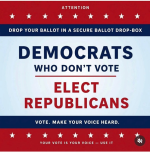
When Senator Obama was campaigning against Senator McCain Obama cited examples of issues Obama planned to address as president.
Some in the campaign crowds were heard to "BOOO!" the adversities Obama cited, in support of Obama.

Senator Obama's presidential campaign refrain became: "Don't BOOO!, Vote !!"
It seems to have worked.

PS #347
For over a year before the election public opinion polls predicted a narrow Hillary Clinton win over Republican challenger D. Trump.
This may have resulted in public believing Hillary's election to the presidency was a done deal, and so stayed home on election day.

THUS !

Ignore the polls, no matter what. VOTE !
 
For over a year before the election public opinion polls predicted a narrow Hillary Clinton win over Republican challenger D. Trump.
The articles I read predicted that Hillary would win by a huge margin - end result was that many people simply didn't vote - they figured there was no need.

Or course it didn't help that Hillary ran a terrible campaign (not to mention that her public persona was "unpleasant" to say the least) - remember telling friends that this was a time they should hold their noses and vote for the "least worst" candidate. Obviously a lot of them didn't.
 
The democrats also lost supporters supporting wars like sending Hunter Biden into the Ukraine with bribes to start a war, the false Russian Collusion claims, the bad attempts at impeachment, etc.
 
R5 #350 & #351
There's a campaign slogan that'll get public attention:

VOTE DEMOCRAT, BECAUSE THE OTHER GUY IS EVEN WORSE !

That may be as good a way as any to function as white house place-holder between Republican administrations.
 
There's a campaign slogan that'll get public attention:

VOTE DEMOCRAT, BECAUSE THE OTHER GUY IS EVEN WORSE !

That may be as good a way as any to function as white house place-holder between Republican administrations.

It often appears that both parties actually are fake, and are deliberate polarizations in order to facilitate media manipulations based on emotional responses.
I think the solution is to eliminate primaries and political parties entirely.
We could just have open elections of all candidates and let voters rank them so no run off is necessary.
 
There's a campaign slogan that'll get public attention:

VOTE DEMOCRAT, BECAUSE THE OTHER GUY IS EVEN WORSE !
That pretty much summed up the only argument I could make in support of Hillary. She was a terrible candidate - her public persona wasn't exactly appealing to anyone and the only reason she ended up on the final ballot was because the DNC was desperate to get her there - she didn't really have the support of the party - the DNC had to engineer things so that she came out on top.

So the election was no longer a question of who would be the best POTUS but rather "who would be the least worst" - and since the press kept telling us that it would be Hillary by a landslide, there was no need for anyone to hold their nose and vote for her. :cry:
 
"... rank them so no run off is necessary." R5 #353
Election reform is overdue. Ranked voting seems like a good idea to me, provided it's clear which candidate is the voter's first choice, which the second, ... etc.
"So the election was no longer a question of who would be the best POTUS but rather "who would be the least worst" - S2 #354
Nixon took a lot of heat for the U.S. War in Vietnam.
To deflect criticism about draft age being years younger than drinking age, voter eligibility dropped from 21 to 18. So I voted for the first time in the '72 election.

In an act of electoral ingratitude the very first vote in a presidential election ('72) I voted against Nixon.
I don't remember who I voted for. Didn't matter. I voted AGAINST Nixon.

He won by a landslide, was re-inaugurated, and was the only U.S. president ever to resign his presidency in disgrace.
I voted against Nixon.
 
Election reform is overdue. Ranked voting seems like a good idea to me, provided it's clear which candidate is the voter's first choice, which the second, ... etc.

Nixon took a lot of heat for the U.S. War in Vietnam.
To deflect criticism about draft age being years younger than drinking age, voter eligibility dropped from 21 to 18. So I voted for the first time in the '72 election.

In an act of electoral ingratitude the very first vote in a presidential election ('72) I voted against Nixon.
I don't remember who I voted for. Didn't matter. I voted AGAINST Nixon.

He won by a landslide, was re-inaugurated, and was the only U.S. president ever to resign his presidency in disgrace.
I voted against Nixon.

Nixon was an interesting case.
He did end the war in Vietnam, but not soon enough or in the right way.
I liked opening trade with China, but it did end up harming the US, with China producing most consumer electronics, like cellphones and TVs.
 
That pretty much summed up the only argument I could make in support of Hillary. She was a terrible candidate - her public persona wasn't exactly appealing to anyone and the only reason she ended up on the final ballot was because the DNC was desperate to get her there - she didn't really have the support of the party - the DNC had to engineer things so that she came out on top.

So the election was no longer a question of who would be the best POTUS but rather "who would be the least worst" - and since the press kept telling us that it would be Hillary by a landslide, there was no need for anyone to hold their nose and vote for her. :cry:

I suspect Hillary is at fault for the murder of Qaddafi, the bribing of the Maidan Coup in the Ukraine, the outing of Morsi in Egypt, arming the resistance against Assad, etc.
 
Another interesting concept is that partisan conflicts are fake and designed just to manipulate voters.
For example, Trump used to be sort of a liberal back in the 1990s Clinton era.
So we see a huge switch.
Obama also switched from being anti-war, to starting half a dozen new wars.
Very few politicians seem to have any fidelity, except idealists like Bernie Sanders.
 
"Nixon was an interesting case.
He did end the war in Vietnam, but not soon enough or in the right way." R5 #356
That's a gargantuan issue w/ me R5.
Dick Nixon campaigned for president in 1968 on basis that he had a "secret plan" to end the U.S. War in Vietnam.
When asked what his secret plan was Nixon said if he disclosed it, his political opponent would steal it, and would win the election.

The U.S. electorate was so desperate to end that War they voted for Nixon, electing him in '68.
A drowning man will clutch at a straw. - Sir Thomas More
And in the '72 re-election campaign, when asked about his "secret plan" to end the War Nixon said, I'm implementing it, BUT !
It's not finished yet, so you have to re-elect me. WHAT A DIRT BALL !!

The bottom line on that is, the U.S. military troops that died in Vietnam between Nixon's first inauguration in 1969, and his next in 1973,
died so Nixon could get re-elected.
Dick Nixon !
Before He Dicks YOU !
"I liked opening trade with China, but it did end up harming the US, with China producing most consumer electronics, like cellphones and TVs." R5 #356
Ralph Nader said a rising tide raises all yachts.

Seems to me that was a collective public / private decision to cede semiconductor manufacture to China, to save a few $bucks.
Nixon is enormously blame-worthy, but I believe he gets a pass on that.
The major bungling of U.S. / China relations is yet to come.

The appropriate path is shared U.S. / China global leadership. BUT !!
It's not clear to me future U.S. presidents will be intelligent enough, or skillful enough to persuade Beijing to skip Taiwan, and settle for the rest of the world.
 
Back
Top