The Second Term of Donald J. Trump as President of the United States of America

Single payer?

Could be.
Single payer is where the government foots the bill for health care, but existing private providers like hospitals, clinics, medical offices, etc. still do all the actual work.
But I would not mind if the hospitals, clinics, medical offices, etc., were also run by the government, like they were back in the 1950s.
The doctors back then had more flexibility to do what they felt was appropriate, instead of everything being judged based on cost.
 
Last edited:
But I would not mind if the hospitals, clinics, medical offices, etc., were also run by the government, like they were back in the 1950s.
The doctors back then had more flexibility to do what they felt was appropriate, instead of everything being judges based on cost.
When were those hospitals etc run by the government?

Under single payer the decision about treatments is entirely up to the patient and doctor - no arguments with an insurance company as to what's covered and what isn't.
 
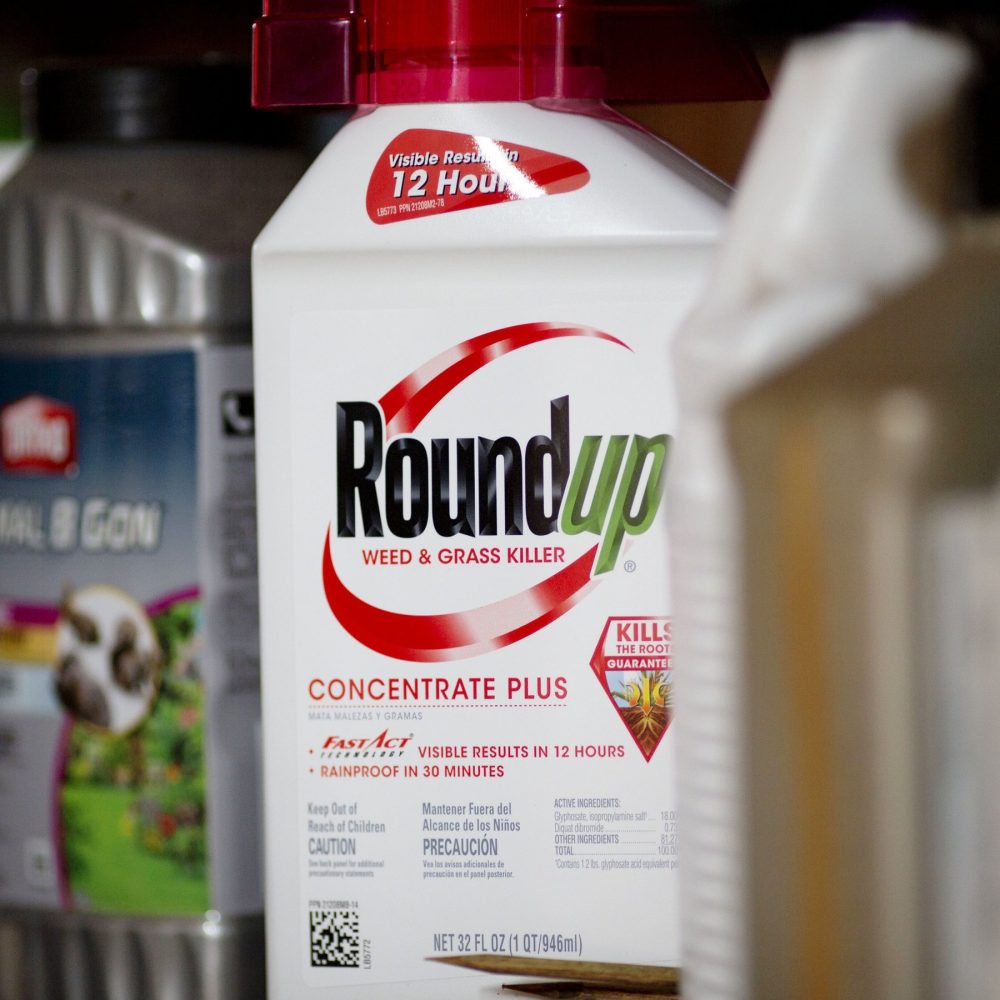
Glyposate is known as Roundup, and greatly risks all sorts of problems, and is illegal in the rest of the world.
There have been thousands of lawsuits over the use of Roundup

 
Nobody likes "bean counters".
It's not that you're wrong.
But a finite budget requires prioritization, "cost containment".

That's not an endorsement. It's an explanation.

The way it used to be is that medical providers had sufficient staff to deal with the all reasonable contingencies, so there was no additional cost to anything.
Now they reduce staff to the bare minimum, and if they need more, either for expertise of volume, they have to subcontract it out and lose money.
 
When were those hospitals etc run by the government?

Under single payer the decision about treatments is entirely up to the patient and doctor - no arguments with an insurance company as to what's covered and what isn't.

Wisconsin used to have socialist governors and mayors, so hospitals were essentially free unless you were wealthy.
It was in the 1950s when McCarthyism started switching over to capitalism and in 1957 in particular when health insurance was allowed as a tax exemption by the IRS, so health insurance started to become popular instead of public healthcare.

I like single payer, but government run hospitals and clinics could save even more money.
 
#3,088, #3,089
I appreciate efficiency.
There are reportedly E.U. member nations that have lower per capita healthcare costs, with superior patient outcomes, compared to the U.S.
- dandy -
Seems to me we needn't re-invent the wheel.
If they have a better way, why not try that?

The answer of course is, Republicans in congress obstruct such progress as "socialist", thereby both keeping our per capita healthcare costs up, and benefiting the status quo, the establishment.

I can't formulate a persuasive argument against privatization, regarding healthcare, or prisons for examples.

But I would prefer that such transition be based on valid economics as well as equal or superior treatment. Change for sake of change seems inappropriate.
 
"There have been thousands of lawsuits over the use of Roundup" S2 #3,086
Reuters

What Bayer's US Supreme Court case means for the thousands of Roundup lawsuits​

By Diana Novak Jones / Updated Sun, April 26, 2026 at 7:49 AM GMT-5
April 26 (Reuters) - The U.S. Supreme Court hears arguments on Monday in Bayer's bid to limit thousands of lawsuits alleging that the German company's Roundup weedkiller causes cancer in a case that is one part of sprawling years long litigation over the product.
Here is a look at how the court's decision, which ‌is expected by the end of June, could affect Bayer's overall liability.
 
I appreciate efficiency.
There are reportedly E.U. member nations that have lower per capita healthcare costs, with superior patient outcomes, compared to the U.S.
- dandy -
Seems to me we needn't re-invent the wheel.
If they have a better way, why not try that?

The answer of course is, Republicans in congress obstruct such progress as "socialist", thereby both keeping our per capita healthcare costs up, and benefiting the status quo, the establishment.

I can't formulate a persuasive argument against privatization, regarding healthcare, or prisons for examples.

But I would prefer that such transition be based on valid economics as well as equal or superior treatment. Change for sake of change seems inappropriate.

Privatization always costs much more.
That is besides the cost of the necessary employees and materials, you then also have to pay the profits required by the private company that was awarded the contract.
 
"Privatization always costs much more." R5 #3,093
If history demonstrates that about healthcare, so be it.
More broadly, privatization seems to have benefited NASA.
I'm surely no Elon Musk fan. BUT !!

NASA used to litter the ocean floor with disposable rocket casings.

This is a stupendous achievement, landing a spent rocket casing in a cradle.

SpaceX01sp.JPG

Not only a $cost savings, perhaps enhanced safety as well, as sooner or later
dropping rocket casings into the ocean risks dropping one on a boat, with humans aboard.

Would NASA now have this technology, or its lunar & Mars prospects, if it hadn't privatized?

That's only part of the story.
IF privatization benefited NASA, why not also healthcare?

"That is besides the cost of the necessary employees and materials, you then also have to pay the profits required by the private company that was awarded the contract." R5 #3,093
This may have been perfectly true last week, but may begin drifting progressively further from the truth next week & thereafter.
Automation is a labor multiplier.
A.I. presents the likely prospect of radical changes to many job categories.

It's not merely that these markets are changing. The world is changing.
What has changed about change is the rate of change is increasing exponentially.

Who knows what the human job market will look like in the 2036?

Imagine a thought-projecting robot working the window @McD's. ... you want fries with that ! ...
 
If history demonstrates that about healthcare, so be it.
More broadly, privatization seems to have benefited NASA.
I'm surely no Elon Musk fan. BUT !!

NASA used to litter the ocean floor with disposable rocket casings.

This is a stupendous achievement, landing a spent rocket casing in a cradle.

View attachment 4796

Not only a $cost savings, perhaps enhanced safety as well, as sooner or later
dropping rocket casings into the ocean risks dropping one on a boat, with humans aboard.

Would NASA now have this technology, or its lunar & Mars prospects, if it hadn't privatized?

That's only part of the story.
IF privatization benefited NASA, why not also healthcare?


This may have been perfectly true last week, but may begin drifting progressively further from the truth next week & thereafter.
Automation is a labor multiplier.
A.I. presents the likely prospect of radical changes to many job categories.

It's not merely that these markets are changing. The world is changing.
What has changed about change is the rate of change is increasing exponentially.

Who knows what the human job market will look like in the 2036?

Imagine a thought-projecting robot working the window @McD's. ... you want fries with that ! ...

Your real point is that the profit motive can induce faster innovation than the collective process of decision making by the public.
But I believe the reality is the risk of that innovation is not worth it.
For example, is it a good idea to land rockets tail first?
I don't think so.
The need to shift trust to balance it has got to be always on the verge of failing.
And in fact, it requires liquid fuel be used and carry about twice as much fuel than you would need just for take off.
Which add a vastly greater health hazard to any human around, if it does fail and explode.
Solid fuel is vastly safer and cheaper.
But even better would be to put wings on it and landing gear, so it could land safely like any glider.
I sort of like Musk, but I think the Tesla also has obvious fatal flaws.
I would never make an electric car.
It is not just all the inefficiencies of generating, transmitting, storing, retrieving and converting electricity back into kinetic energy, but the simple weight increase of all those heavy batteries. Since the batteries double the weight of the vehicle, then you more than double the energy needed to accelerate it up a hill.

With health care we don't really need or want innovation.
We just want people who are responsible, and when you privatize, you tie the hands of the honest and responsible care givers and make them follow cost guidelines.

My personal example is that after years of computer deadlines, I had some acid reflux or GERD problems.
I tried to have it looked at through my insurance, and its been over a year and they still have not gotten me to see a gastrologist specialist yet.
They keep canceling and rescheduling.
One place sent me to have cardiac stress test done, and they said I needed stints immediately.
Which makes no sense.
They said the EKG showed inverted signals, which is impossible.
What really must have happened is that the pain from the acid reflux was sending strong pain signals up the Vegas nerve bundle, while the EKG as sending weak heart rhythm signals down the Vegas nerve bundle.
What I have read is that you can't do a reliable EKG when a person has acid reflux.
They also said I have hypertension when my blood pressure is only 130/70, which is good at age 74, and they wanted me on statins, which I have read are highly dangerous and no one should take, because they cause your arteries to harden by removing all the lipids from their cells. Without lipids, cell walls become totally stiff.

 
Last edited:
The following looks to me like a flurry of obfuscation.
"Your real point is that the profit motive can induce faster innovation than the collective process of decision making by the public." R5 #3,095
"... by the public" in this usage means by government.
But apart from a few judicial contributions it's a little bit the exec:
“I believe that this nation should commit itself to achieving the goal before this decade is out, of landing a man on the moon, and returning him safely to the Earth.” JFK ~1961
But congress controls spending, and thus exercises decisive control over U.S. space adventures. That's a major component of "the collective process of decision making by the public." R5 #3,095

"But I believe the reality is the risk of that innovation is not worth it.
For example, is it a good idea to land rockets tail first?
I don't think so." R5 #3,095
Polluting the ocean with them is better?

"The need to shift trust to balance it has got to be always on the verge of failing." R5 #3,095
I'm enthusiastic about over-engineering.
If installing a beam is required to support a 100 lb. load, why not install a beam that can support a one thousand pound load?
Problem is applying such over-engineering to bicycling produces the mountain bike, a capable machine, but with a pavement surface cruise speed of about half what a more efficient design delivers.
Aeronautical over-engineering may produce robust designs of craft too heavy to leave the ground.
So we split the baby, strong enough, but perhaps not a whole lot stronger.
"The need to shift trust to balance it has got to be always on the verge of failing." R5 #3,095
Yes. When done properly, that is the end result. *

"And in fact, it requires liquid fuel be used and carry about twice as much fuel than you would need just for take off." R5 #3,095
"Twice as much"?
More, to be certain.
Certainly not twice as much. Please bear in mind, this technique of landing rockets tail first has already sent humans farther into space than ever before.

"Solid fuel is vastly safer and cheaper." R5 #3,095
Current solid fuel rockets are not throttlable, and thus are not likely capable of the soft landings SpaceX has achieved.

"But even better would be to put wings on it and landing gear, so it could land safely like any glider." R5 #3,095
I suspect SpaceX has already done the math on that.

"With health care we don't really need or want innovation." R5 #3,095
X-rays were an innovation.
MRI, an innovation that proliferated within your lifetime & mine.

I suspect your conclusion is lay opinion based on hunch, and that detailed investigation would reveal a reality contrary to your characterization.

Your disclosures on personal experience mirror my own. But I get my healthcare through the VA, U.S. federal government, not the private sector. I'm lucky to be alive, because of their care, or despite it.

* Extreme examples, MacCready's Gossamer Condor & Gossamer Albatross.
 
680212051_10167329752150968_7963871786484954941_n.jpg
 
Back
Top