
You are using an out of date browser. It may not display this or other websites correctly.
You should upgrade or use an alternative browser.
You should upgrade or use an alternative browser.
Anthropogenic Global Warming ... how hot is it ?
- Thread starter sear
- Start date
More than half the US threatened with ice, snow and cold in massive winter storm
But you do realize that colder winter storms are due to global warming?
The idea is that if the earth did not rotate, then hot air would rise at the equator and fall at the poles.
But since the earth is rotating, the air can't make it all the way in time.
So there instead are 6 convection zone, with 3 in the north and 3 in the south.
And what happened due to global warming, is that weather now has more energy.
So now arctic air is able to reach further south than normal.
So it is the extra energy of global warming that allows arctic storms to reach much further south than they normally would.
Shiftless2
Well-known member
Absolutely - that's why I posted it here.But you do realize that colder winter storms are due to global warming?
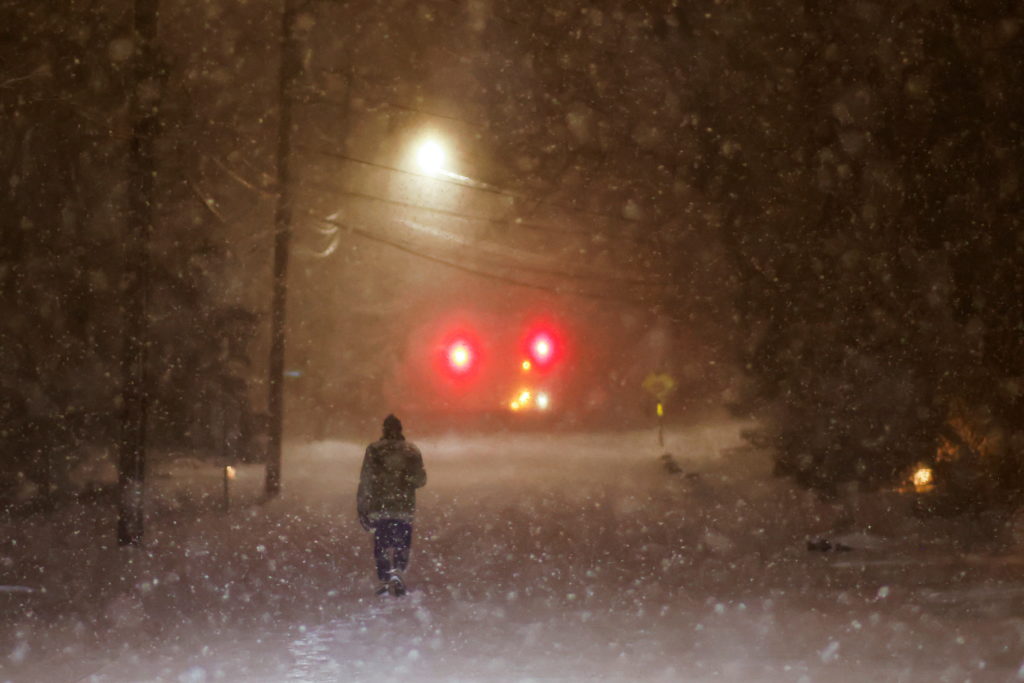
Stretched polar vortex, moisture and a lack of sea ice all to blame for dangerous winter blast, meteorologists say
Meteorologists said the eastern two-thirds of the nation is threatened with a winter storm that could rival the damage of a major hurricane and has some origins in an Arctic that is warming from climate change.
 www.pbs.org
And
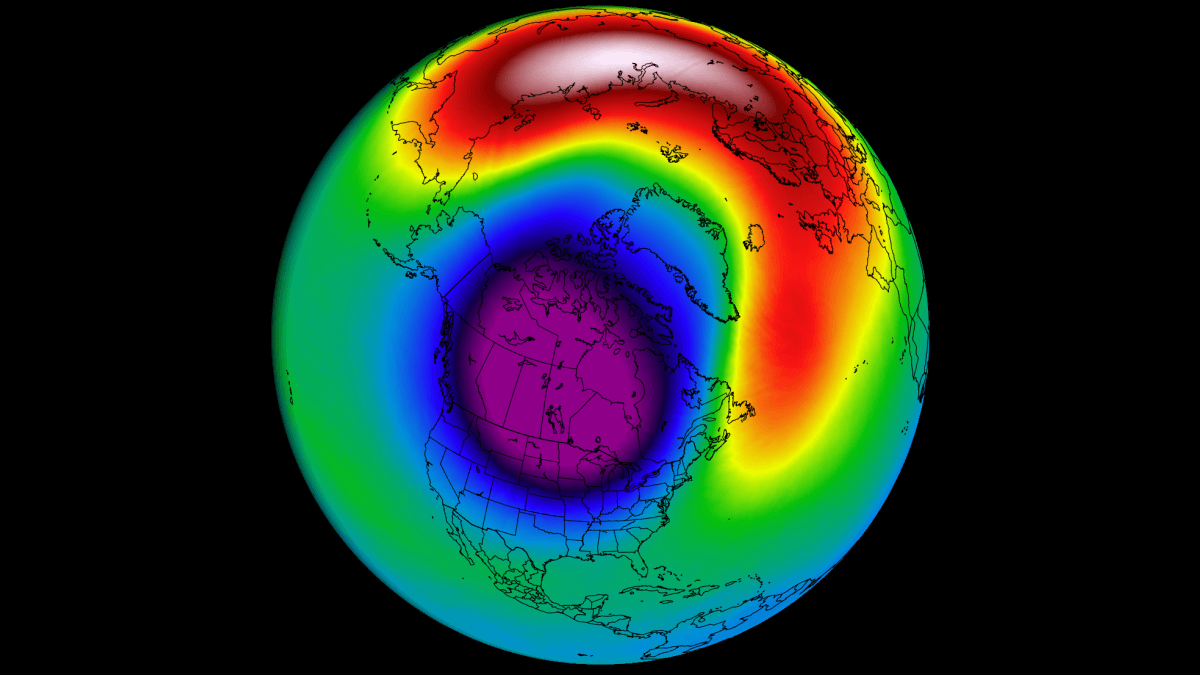
Stratospheric Warming Alert: A Massive Shift in the Polar Vortex is Forecast for early February
A disrupted Polar Vortex is driving U.S. and Canada cold, with an early February Stratospheric Warming now forecast, that could impact the weather patterns deep into February and even into early Spring
 www.severe-weather.eu
And this
How Climate Change May Be Affecting the Polar Vortex : Newsroom
 sebsnjaesnews.rutgers.edu
Shiftless2
Well-known member
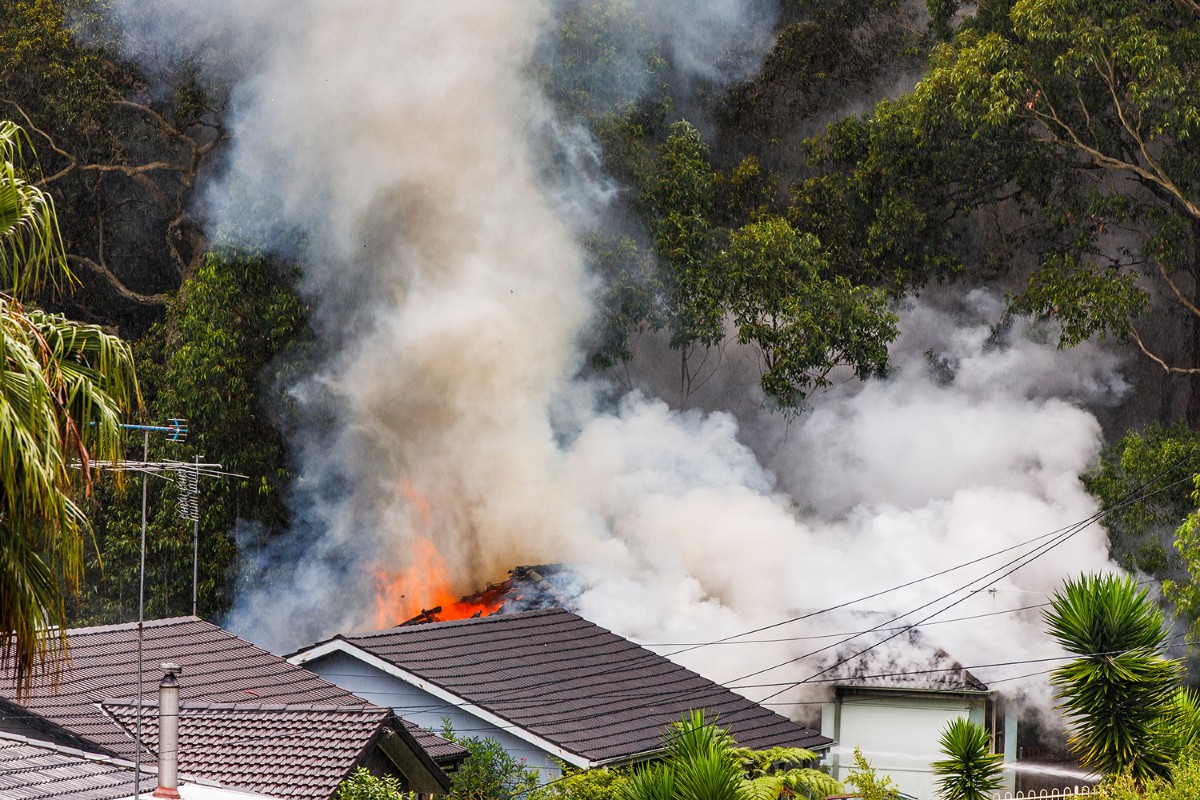
The unexpected danger from ‘ember storms’ during severe wildfires
Understanding the erratic behaviour of wind and embers at fire fronts could save lives.
 www.nature.com
Understanding the erratic behaviour of wind and embers at fire fronts could save lives.
The unexpected danger from ‘ember storms’ during severe wildfires
Understanding the erratic behaviour of wind and embers at fire fronts could save lives.
www.nature.com
The unexpected danger from ‘ember storms’ during severe wildfires
Understanding the erratic behaviour of wind and embers at fire fronts could save lives.
The unexpected danger from ‘ember storms’ during severe wildfires
Understanding the erratic behaviour of wind and embers at fire fronts could save lives.
Yes, I read the same thing in many other articles.
It seems that if you have a metal roof, put ember filter screens on your attic vents, and remove any brush up against the house, that houses can't catch on fire.
Shiftless2
Well-known member
I think you're being overly optimistic - if everything around you is on fire things are going to be hot enough that you may find stuff starting to burn anyways,It seems that if you have a metal roof, put ember filter screens on your attic vents, and remove any brush up against the house, that houses can't catch on fire.
I think you're being overly optimistic - if everything around you is on fire things are going to be hot enough that you may find stuff starting to burn anyways,
Depends on the zoning.
With reasonable zoning regulations so that houses are over 100' apart, I do not see how that could cause it to just from one house to another?
Heat rises, even in 50 mph winds.
And Hardiplank is great.
{...
HardiePlank cladding achieves a fire rating of A2 s1-d0, indicating that it is noncombustible and will not ignite when exposed to direct flame. This rating means it does not contribute fuel to a fire, unlike combustible siding materials that can escalate fire hazards.
...}
Shiftless2
Well-known member
Many moons ago I lived in the middle of the Rocky Mountains and we were regularly inundated with PSA's (television, radio, newspapers) about the dangers of indoor Franklin stoves - seems one of the things that people were doing when they installed installed those thing in wooden cabuns was cladding the wall immediately behind it with tin - the idea was that meant that no sparks could actually light the wall. Only thing is, that metal would get hot enough to light the wood behind on fire.
And listening to those announcements provided an amazing amount of information. One of the logging companies had a yard nearby where they dumped all of the "scraps" they had no use for. Lots of limbs that were 6" or so in diameter but too short to be of any use to the company. And they were quite happy to have people come in and remove it - saved them the trouble of disposing of all that scrap wood and provided much of the community with free firewood. Just take it home - cut it to manageable lengths, strip the bark off of it, and split it - only thing is, too many people weren't stripping the bark off of pine logs - after all, they burned and burned hot. But the resin produced enough soot to clog chimneys very quickly - chimney fires are not a laughing matter.
And apple wood was another problem - it burns when it's still wet but after a week a six inch flue is probably reduced to half an inch (just quoting the fire department on that).
And listening to those announcements provided an amazing amount of information. One of the logging companies had a yard nearby where they dumped all of the "scraps" they had no use for. Lots of limbs that were 6" or so in diameter but too short to be of any use to the company. And they were quite happy to have people come in and remove it - saved them the trouble of disposing of all that scrap wood and provided much of the community with free firewood. Just take it home - cut it to manageable lengths, strip the bark off of it, and split it - only thing is, too many people weren't stripping the bark off of pine logs - after all, they burned and burned hot. But the resin produced enough soot to clog chimneys very quickly - chimney fires are not a laughing matter.
And apple wood was another problem - it burns when it's still wet but after a week a six inch flue is probably reduced to half an inch (just quoting the fire department on that).
Many moons ago I lived in the middle of the Rocky Mountains and we were regularly inundated with PSA's (television, radio, newspapers) about the dangers of indoor Franklin stoves - seems one of the things that people were doing when they installed installed those thing in wooden cabuns was cladding the wall immediately behind it with tin - the idea was that meant that no sparks could actually light the wall. Only thing is, that metal would get hot enough to light the wood behind on fire.
And listening to those announcements provided an amazing amount of information. One of the logging companies had a yard nearby where they dumped all of the "scraps" they had no use for. Lots of limbs that were 6" or so in diameter but too short to be of any use to the company. And they were quite happy to have people come in and remove it - saved them the trouble of disposing of all that scrap wood and provided much of the community with free firewood. Just take it home - cut it to manageable lengths, strip the bark off of it, and split it - only thing is, too many people weren't stripping the bark off of pine logs - after all, they burned and burned hot. But the resin produced enough soot to clog chimneys very quickly - chimney fires are not a laughing matter.
And apple wood was another problem - it burns when it's still wet but after a week a six inch flue is probably reduced to half an inch (just quoting the fire department on that).
I have also lived in lots of rural cabins with wood stoves.
I never strip the bark off or worry about things like apple wood.
I just have a large cylindrical wire brush on a chain I run through once a year, and never had any problem.
I also find that 4" flue pipe will prevent soot build up more than an 8" one will.

Please pardon me if my #530 is a stretch.One of the logging companies had a yard nearby where they dumped all of the "scraps" they had no use for. ... provided much of the community with free firewood. S2 #528

Kingsford is a brand that makes charcoal briquettes, along with related products, used for grilling. Established in 1920 by Henry Ford, the brand is now owned by The Clorox Company. Currently, the Kingsford Products Company remains the leading manufacturer of charcoal in the United States, with 80% market share. More than 1 million tons of wood scraps are converted into charcoal briquettes annually. More from Wikipedia
What did Henry Ford have to do with grilling?
Some Ford automobiles had exterior wood paneling, and as a result, Henry Ford ended up with wood scrap he didn't want to throw away. ... thus Kingsford.
Because of velocity?"I also find that 4" flue pipe will prevent soot build up more than an 8" one will." R5 #529
Burning the same quality of fuel, with the same creosote content in the same volume would require the smoke to exit the same length of stack quicker.
If the surface area of the flue is less than half then the smoke would have less opportunity to heat it. So I suspect the 4" might not collect soot as fast, but may not warm the building as well, more BTUs exhausted to the atmosphere.
volume of a cylinder: pi R squared H
iirc
So double the bore of the chimney, increase chimney volume by 4.
I imagine smoke velocity is inversely proportional (four times faster in the narrower chimney).
Please pardon me if my #530 is a stretch.
Kingsford is a brand that makes charcoal briquettes, along with related products, used for grilling. Established in 1920 by Henry Ford, the brand is now owned by The Clorox Company. Currently, the Kingsford Products Company remains the leading manufacturer of charcoal in the United States, with 80% market share. More than 1 million tons of wood scraps are converted into charcoal briquettes annually. More from Wikipedia
What did Henry Ford have to do with grilling?
Some Ford automobiles had exterior wood paneling, and as a result, Henry Ford ended up with wood scrap he didn't want to throw away. ... thus Kingsford.
Because of velocity?
Burning the same quality of fuel, with the same creosote content in the same volume would require the smoke to exit the same length of stack quicker.
If the surface area of the flue is less than half then the smoke would have less opportunity to heat it. So I suspect the 4" might not collect soot as fast, but may not warm the building as well, more BTUs exhausted to the atmosphere.
volume of a cylinder: pi R squared H
iirc
So double the bore of the chimney, increase chimney volume by 4.
I imagine smoke velocity is inversely proportional (four times faster in the narrower chimney).
That is true, but what they tell me is that slowing the velocity of the stack is what allows the smoke to cool and condense out the creosote crystals that block the flue eventually.
The faster the exhaust velocity, the more it retains its heat and vaporized elements.
I tend to favor tiny stoves these days, even though its more work to reduce the wood.
This one is pretty cool.
Whether running the steel brush through the chimney is more of a burden, subjective."That is true, but what they tell me is that slowing the velocity of the stack is what allows the smoke to cool and condense out the creosote crystals that block the flue eventually.
The faster the exhaust velocity, the more it retains its heat and vaporized elements." R5 #531
Wood pellet stoves have been available for years, but if the prominence of wood-stove pellet fuel is an indication their popularity has peaked, and is in decline around here.
I've seen glass chimneys on oil lamps. When broken, easily replaced. Not sure what happens when the glass chimney on the YouTube contraption in #531 shatters. Burn the house down?
The place to burn wood is outdoors.
Under that inverted caldron / stockpot is a whole chicken, propped upright. Can't vary the intensity of the wood flame, so the grill is raised & lowered from above.
Shiftless2
Well-known member
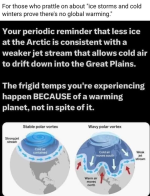
It's called "global" warming, not "Albuquerque" warming."BECAUSE .... , not in spite of ..." #533
Reportedly what's increasing is the global mean temperature. That doesn't mean cold snaps and heat waves have been cancelled.
I haven't checked, but I gather when the dome of polar cold slips this far South on one side of the planet, warmer air from the opposite side of the planet is drawn North to fill the void.
Weather and climate are not synonyms.
It's called "global" warming, not "Albuquerque" warming.
Reportedly what's increasing is the global mean temperature. That doesn't mean cold snaps and heat waves have been cancelled.
I haven't checked, but I gather when the dome of polar cold slips this far South on one side of the planet, warmer air from the opposite side of the planet is drawn North to fill the void.
Weather and climate are not synonyms.
And that slippage of polar air further south means it is being replaced by warmer air than is normal for the poles.
{...
The polar regions, particularly the Arctic, are experiencing significant temperature increases due to climate change. Recent studies indicate that the Arctic is warming nearly four times faster than the global average, with some reports suggesting this rate could be even higher. For instance, temperatures at the North Pole have soared over 20°C above average, reaching levels beyond the melting point of ice, which raises serious concerns about the accelerating pace of climate change and its effects on polar ice and global weather patterns.
...}
Last edited:
Shiftless2
Well-known member
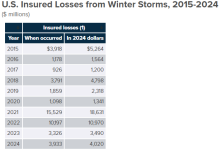
Winter Storm Fern is poised to cause multibillion-dollar insured losses across the US, potentially reaching up to $8 billion, comparable to Winter Storm Elliott, according to Intelligent Insurer. While causing significant damage to infrastructure and power grids, experts consider the financial impact manageable for the industry, notes Carrier Management and Advisen.
Note that's $8 billion estimate only refers to insured losses - total economic losses will be far higher. [As an aside, speaking from experience, preliminary estimates like this are almost always low so what the final number will be is unknown.]
The weekend winter storm that impacted more than 200 million people from more than 24 states is expected to result in total damage and economic losses of between $105 billion and $115 billion, said AccuWeather.
The preliminary loss estimate accounts for damage to homes and businesses, disruptions to commerce and supply chain logistics, tourism losses, impacts to shipping operations at major hubs, financial losses from extended power outages, major travel delays, as well as damage to infrastructure, said the weather forecaster.
AccuWeather said it has independent methods to evaluate all direct and indirect impacts of the storm, which include both insured and uninsured losses. It includes damage to property, job and wage losses, crops, infrastructure, interruption of the supply chain, auxiliary business losses, flight delays, and other costs from the storm.

“The scope of this winter storm was extraordinary. What sets this storm apart is not just the snow and ice, but how widespread the disruption has been across transportation, energy, commerce and daily life,” AccuWeather Chief Meteorologist Jonathan Porter said. “The extreme cold pouring in behind the storm dramatically increases risks and slows recovery in many of the hardest-hit areas.”
Jasper Cooper, vice president and senior credit officer at Moody’s Rating’s, said insured losses from the winter storm Fern will be in the billions of dollars.
“To date, the largest winter storm by insured losses was the 2021 Texas freeze at $18 billion according to industry estimates,” Cooper said. “In recent years, homeowners and commercial property insurers have raised rates and changed policy terms to cover growth in losses from nonpeak perils such as winter storms.”
AccuWeather said dangerously cold Arctic air in the wake of the storm is expected to complicate recovery and power restoration efforts in some areas.
“Prolonged freezing temperatures increase the likelihood of secondary damage, including frozen pipes, structural issues and additional business interruptions long after the storm has passed,” Porter added.
SOURCE
And the source for the table
Note that's $8 billion estimate only refers to insured losses - total economic losses will be far higher. [As an aside, speaking from experience, preliminary estimates like this are almost always low so what the final number will be is unknown.]
Accuweather: Winter Storm to Cause Up to $115B in Damage, Economic Losses
The weekend winter storm that impacted more than 200 million people from more than 24 states is expected to result in total damage and economic losses of between $105 billion and $115 billion, said AccuWeather.
The preliminary loss estimate accounts for damage to homes and businesses, disruptions to commerce and supply chain logistics, tourism losses, impacts to shipping operations at major hubs, financial losses from extended power outages, major travel delays, as well as damage to infrastructure, said the weather forecaster.
AccuWeather said it has independent methods to evaluate all direct and indirect impacts of the storm, which include both insured and uninsured losses. It includes damage to property, job and wage losses, crops, infrastructure, interruption of the supply chain, auxiliary business losses, flight delays, and other costs from the storm.
“The scope of this winter storm was extraordinary. What sets this storm apart is not just the snow and ice, but how widespread the disruption has been across transportation, energy, commerce and daily life,” AccuWeather Chief Meteorologist Jonathan Porter said. “The extreme cold pouring in behind the storm dramatically increases risks and slows recovery in many of the hardest-hit areas.”
Jasper Cooper, vice president and senior credit officer at Moody’s Rating’s, said insured losses from the winter storm Fern will be in the billions of dollars.
“To date, the largest winter storm by insured losses was the 2021 Texas freeze at $18 billion according to industry estimates,” Cooper said. “In recent years, homeowners and commercial property insurers have raised rates and changed policy terms to cover growth in losses from nonpeak perils such as winter storms.”
AccuWeather said dangerously cold Arctic air in the wake of the storm is expected to complicate recovery and power restoration efforts in some areas.
“Prolonged freezing temperatures increase the likelihood of secondary damage, including frozen pipes, structural issues and additional business interruptions long after the storm has passed,” Porter added.
SOURCE
And the source for the table
And where has all this snow come from?"Winter Storm Fern is poised to cause multibillion-dollar insured losses across the US, potentially reaching up to $8 billion, comparable to Winter Storm Elliott, according to Intelligent Insurer." S2 #536
January 15, 2026
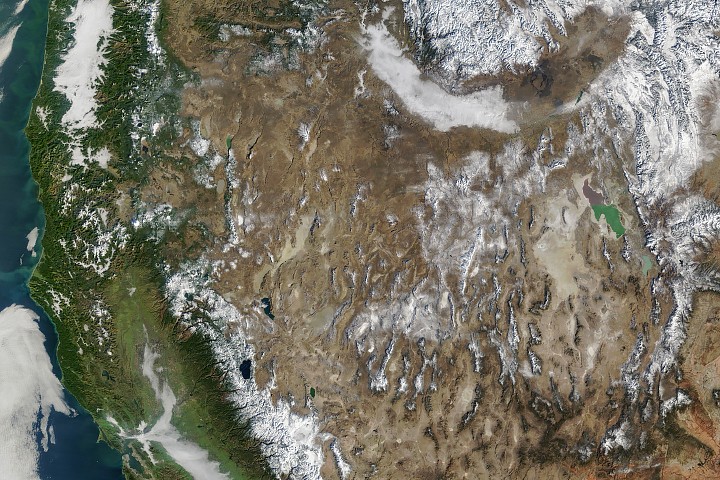
The mountains of the western United States are sporting thin winter coats in early 2026. Although most regions saw average or above-average precipitation in fall and early winter, warmer temperatures meant that much of it fell as rain. The result has been an unusually low snowpack for this time of year, constituting a snow drought.
This image, acquired with the MODIS (Moderate Resolution Imaging Spectroradiometer) on NASA’s Terra satellite, provides a wide view of meager western snow cover on January 15. On that day, measurements derived from satellite observations showed that snow blanketed 142,700 square miles (369,700 square kilometers) of the west. That’s the lowest coverage for that date in the MODIS record dating back to 2001 and less than one-third of the median. Coverage had increased slightly by January 26.
The West Faces Snow Drought - NASA Science
Very wet—but very warm—weather in the western U.S. has left many mountainous regions looking at substantial snowpack deficits.
 science.nasa.gov
So what?
So while days long commercial power failures continue in the East, along with collapsed roofs, etc,
this season's destructive wildfires and their $Billion $dollar price tags have not yet begun.
They will.
Shiftless2
Well-known member
Which potentially means water shortages later in the summer (and a heightened risk of forest fires).... The result has been an unusually low snowpack for this time of year, constituting a snow drought.
As an aside - when I lived in the middle of the Rockies I was working as a sabbatical replacement college prof - meant I drove out there in mid August (wanted to get there a few days before classes started so I'd have time to sort out my schedule, collect my copies of textbooks, and so forth. And one of the things I remember from driving on the highway was looking under the trees at the side of the road in forested areas and seeing snow remaining (and not just little bits - drifts that were three and four feet high). Be interesting to know if that's still the way things are at the end of the summer.
No!
New York lawmakers introduce bill that aims to halt data center development for three years
Cheyenne MacDonald / Sat, February 7, 2026 at 5:40 PM ESTOn Friday, New York State Senators Liz Krueger and Kristen Gonzales introduced a bill that would stop the issuance of permits for new data centers for at least three years and ninety days to give time for impact assessments and to update regulations. The bill would require the Department of Environmental Conservation and Public Service Commissions to issue impact statements and reports during the pause, along with any new orders or regulations that they deem necessary to minimize data centers' impacts on the environment and consumers in New York.

New York lawmakers introduce bill that aims to halt data center development for three years
The bill would require reports from the Department of Environmental Conservation and Public Service Commissions on the impacts of data centers.
Yes!
Georgia lawmakers greenlight data center bill
Kim Jarrett / Fri, February 6, 2026 at 10:35 AM ESTHouse Bill 1023 would require utilities and data centers to include provisions in their contracts that would protect consumers from higher power bills. The House Special Committee on Resource Management recommended approval of the bill on Friday.
The Georgia Public Service Commission passed rules last year that require any new customers using more than 100 megawatts of energy to absorb those costs.
Khara Boender, director of state policy for the Data Center Coalition, said her organization aligns with the bill's intent and the Public Service Commission's rules.
Georgia lawmakers greenlight data center bill
(The Center Square) – Protection for consumers from energy costs passed on by the creation of data centers has moved forward in the Georgia House of Representatives. House Bill 1023 would require util...
Those in a quandary about halting progress may wish to consult King Canute.
No!
New York lawmakers introduce bill that aims to halt data center development for three years
Cheyenne MacDonald / Sat, February 7, 2026 at 5:40 PM EST
On Friday, New York State Senators Liz Krueger and Kristen Gonzales introduced a bill that would stop the issuance of permits for new data centers for at least three years and ninety days to give time for impact assessments and to update regulations. The bill would require the Department of Environmental Conservation and Public Service Commissions to issue impact statements and reports during the pause, along with any new orders or regulations that they deem necessary to minimize data centers' impacts on the environment and consumers in New York.
New York lawmakers introduce bill that aims to halt data center development for three years
The bill would require reports from the Department of Environmental Conservation and Public Service Commissions on the impacts of data centers.news.yahoo.com
Yes!
Georgia lawmakers greenlight data center bill
Kim Jarrett / Fri, February 6, 2026 at 10:35 AM EST
House Bill 1023 would require utilities and data centers to include provisions in their contracts that would protect consumers from higher power bills. The House Special Committee on Resource Management recommended approval of the bill on Friday.
The Georgia Public Service Commission passed rules last year that require any new customers using more than 100 megawatts of energy to absorb those costs.
Khara Boender, director of state policy for the Data Center Coalition, said her organization aligns with the bill's intent and the Public Service Commission's rules.

Georgia lawmakers greenlight data center bill
(The Center Square) – Protection for consumers from energy costs passed on by the creation of data centers has moved forward in the Georgia House of Representatives. House Bill 1023 would require util...news.yahoo.com
Those in a quandary about halting progress may wish to consult King Canute.
Interesting history I did not know about before.
{...
Canute’s first actions were ruthless: he gave Englishmen’s estates to his Danish followers as rewards; he engineered the death of Edmund’s brother Eadwig; and he had some prominent Englishmen killed or outlawed.
...
It is likely that it was Wulfstan who aroused in the young Canute an ambition to emulate the best of his English predecessors, especially King Edgar. Canute proved an effective ruler who brought internal peace and prosperity to the land.
...}
Canute (I) | King of England, Denmark, Norway, Sons, & Vikings | Britannica
Canute was a Danish king of England (1016–35), of Denmark (as Canute II; 1019–35), and of Norway (1028–35), who was a power in the politics of Europe in the 11th century, respected by both emperor and pope. Neither the place nor the date of his birth is known.
 www.britannica.com