What to call this thread?

BREAKING
🚨
🏳️‍🌈
36 states are electing governors this November. Half the races are open seats. If you think the president determines trans rights, you have not been paying attention to what governors have been doing for two years.
The federal government sets the tone. But governors sign the bills. Governors control the state police. Governors decide whether to cooperate with federal data requests for trans kids' medical records. Governors appoint the judges who hear the appeals. Governors can veto anti-trans bills that make it through a legislature, and the most consequential veto in American politics right now is not in Washington. It is in a statehouse in Georgia, or Texas, or Pennsylvania, or Michigan.
This November, 36 states will elect a governor. That is the largest gubernatorial election cycle in recent history, driven by term limits and retirements. Republicans and Democrats each currently hold 18 of those 36 offices up for grabs. Nationally, Republicans hold 26 governorships. Democrats hold 24.
The stakes for trans people could not be higher. The ACLU is currently tracking hundreds of anti-trans bills in state legislatures across 49 states. Every single one of those bills requires a governor's signature to become law. In states with Democratic governors, legislatures have passed anti-trans bills and watched them die on the desk. In states with Republican governors, they have become law within days.
Key battlegrounds include Pennsylvania, Michigan, Wisconsin, Nevada, Arizona, Georgia, New Hampshire and Minnesota, where the outcome of November's governor race will directly determine whether trans kids can access healthcare, whether trans students have legal protections in schools, and whether a trans woman can renew her driver's license without being forced to misgender herself on a government document.
The Human Rights Campaign has committed $15 million to 2026 races. The LGBTQ+ Victory Fund has already endorsed more than 83 candidates up and down the ballot. The math is simple: if trans people and their allies vote in governor's races at the same rate they vote in presidential years, the map changes.
Federal courts have been blocking Trump. But courts do not sign bills into law. Governors do.
This is the election. Right now.
 

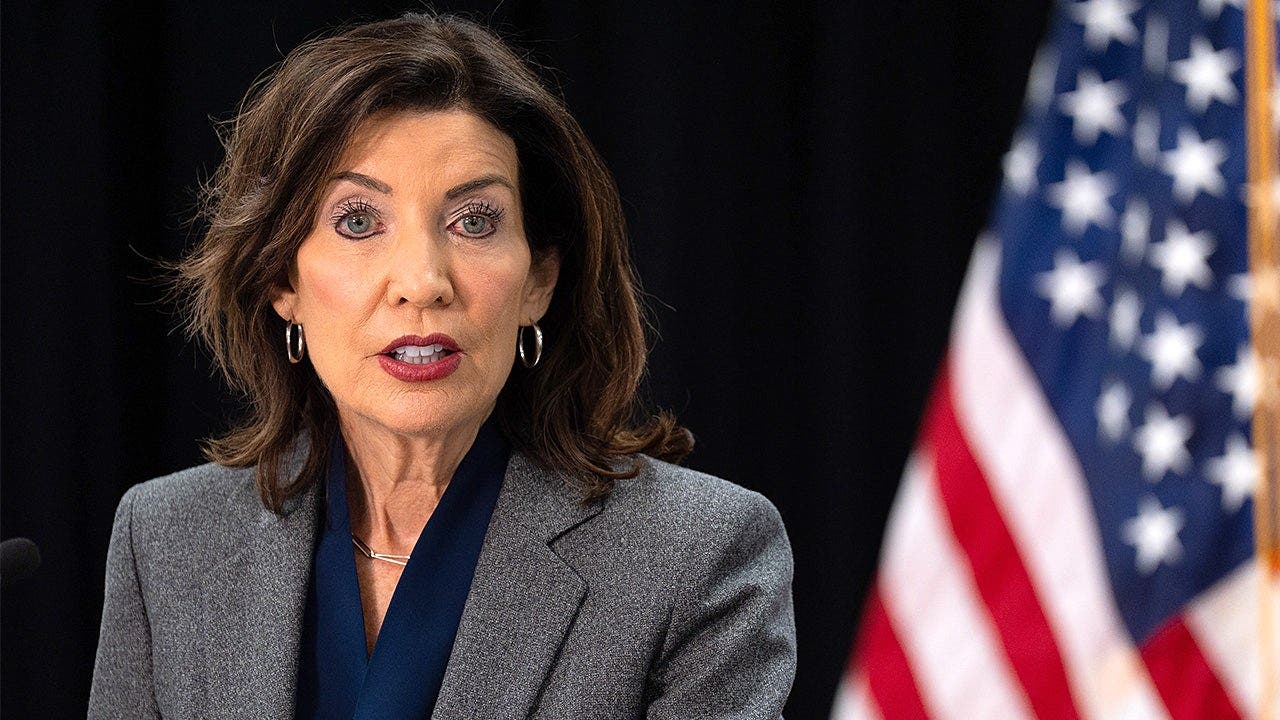
Bill replacing 'mother' and 'father' with gender-neutral terms passes in New York, heads to [Governor] Hochul's desk​

'Mother' becomes 'gestating parent' and 'father' becomes 'non-gestating parent' under the proposal​

By Alexandra Koch Fox News / Published June 5, 2026 1:53pm EDT
New York Democrats recently passed a bill that would remove the words "mother" and "father" from parts of state law, sending the legislation to Gov. Kathy Hochul’s desk for final approval.

Under the new bill, targeting state child custody and parental laws, "mother" becomes "gestating parent," "father" becomes "non-gestating parent," and "paternity" becomes "parentage."
It passed in the state Senate this week after progressing through the Assembly in March.

:rolleyes:

I hope there's more to this story.
 
Not sure where to put this - I chose here because the guy speaking is Sander Jennings (Jazz Jenning's sister)

 
And from the transphobes among us

 
A Republican congresswoman wanted to ban “nude” strippers from performing in front of children in schools but could not point to an example of it ever happening.

1780836458606.png


The article tells us what she really wants to ban.

The bill later goes on to define the sexual material it seeks to ban as including material related to “gender dysphoria or transgenderism” – this no doubt being the real reason behind the legislation, not the supposed threat posed by exotic dancers.

Again, not citing any examples of strippers performing in schools, Miller said she tabled the bill following reports that various frequently banned LGBTQ+ books for young people, like Gender Queer and All Boys Aren’t Blue, were available in school libraries.
 
1780947400235.png

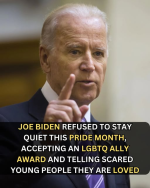
The man who lived through the 1969 police raid on the Stonewall Inn got to choose who he honored this year. He picked Joe Biden.

On Sunday, Biden made a surprise appearance at the Philadelphia Gay News Stonewall Awards brunch and accepted the LGBT Ally Champion Award in front of 150 community leaders. "There's nothing more American than the fight for equality," he told the room.

Then he spoke straight to the young people watching from home, the ones too frightened to step outside right now. "Just be you, be who you are. You're loved. You're loved by more and more people every day."

The timing lands hard. Nearly everything Biden signed to protect LGBTQ Americans has since been torn up by Trump, from his first-day order banning discrimination to letting transgender troops serve openly.

He got the award for the fight anyway, and closed with a challenge. "There's gotta be at least one president in this room other than me coming up, okay? Keep it going, folks."

SOURCE
 
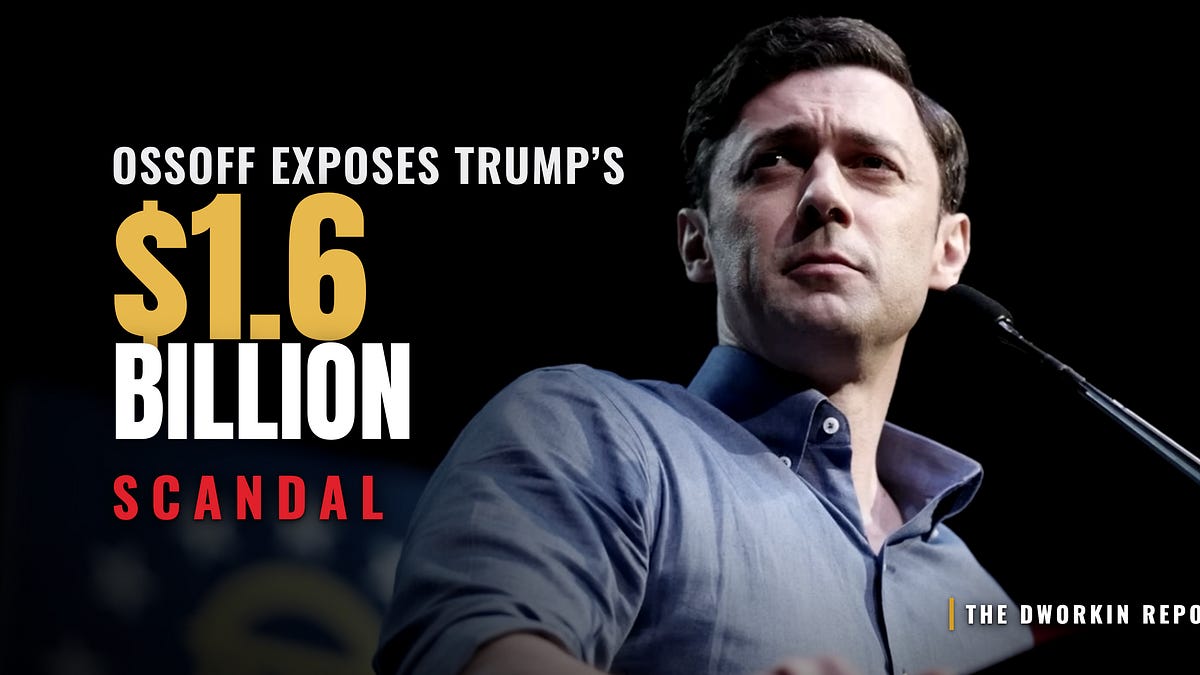
DOJ lawyers just got caught flat-out lying to a federal court to seize private medical records of transgender children. Now, a judge has referred them for potential disbarment.

1781006370143.png

Here’s how far the rot goes. The DOJ demanded the private medical records of transgender children treated at Rhode Island Hospital—including their names, birthdates, Social Security numbers, and home addresses. Every child. Five years’ worth.

Then its own lawyers got caught lying to a federal court to get them.

Judge Mary McElroy—appointed by Trump himself—was not having it. She caught the DOJ lying and forum-shopping—hunting for a friendlier Texas judge. She called it “appalling,” and barred the DOJ from using those records.

On Friday McElroy went further, referring the lawyers for possible discipline—up to disbarment. Caught lying to a federal court and stopped cold by a judge Trump put on the bench himself.


You'll have to scroll down - this article is one of several on this site
 
Re 1,770


There are a number of articles on line but most are behind firewalls so I can't read them

DOJ Lawyers in Transgender Records Case Referred for Discipline


Just a reminder ...

1781020507302.png

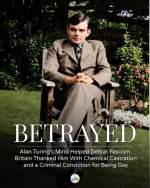
Alan Turing died on June 7, 1954, 72 years ago, today.
Alan was born in London in 1912, a boy with a mind that seemed to move ahead of the world around him. He was fascinated by numbers, patterns, machines, and the possibility that thought itself might be understood through logic. At Sherborne School, he formed a deep attachment to an older student named Christopher Morcom, whose friendship and intelligence ignited feelings of love and inspiration. When Morcom died suddenly from tuberculosis in 1930, Turing was devastated. The loss stayed with him, and so did the questions it left behind. What was the mind? What did it mean to think? Could intelligence be described, preserved, or even recreated?
In 1936, Turing published a paper that imagined a machine capable of following instructions and performing any calculation that could be clearly described. It was theoretical, but it became one of the foundations of computer science—the foundation of much of what we know today. Long before computers became part of everyday life, Turing had helped explain what a computer could be.
When World War II began, his work moved from theory into urgent service. Turing joined Britain’s secret codebreaking operation at Bletchley Park, where mathematicians, linguists, engineers, and analysts worked to read encrypted German military messages. One of the greatest challenges was Enigma, the machine used by Nazi Germany to scramble communications. The system produced an enormous number of possible settings, changed constantly, and was designed to keep Allied forces blind.
Turing helped change that. He broke Enigma’s brain.
Building on earlier Polish breakthroughs, he became central to the development of the Bombe, an electromechanical machine that helped codebreakers find the daily settings used by Enigma. The work at Bletchley Park allowed the Allies to read German messages, protect ships, track military movements, and make decisions that changed the course of the war. Historians have often credited Bletchley Park’s codebreaking with shortening World War II by as much as two years.
For most of his life, Turing could not talk about any of it. His wartime work was classified. The public did not know the scale of what had happened inside Bletchley Park, and he could not use the truth to explain his own importance. The man who helped save lives on a massive scale returned to civilian life carrying one of the most important secrets of the war.
After the war, Turing kept working at the edge of the future. He explored early computer design, artificial intelligence, and mathematical biology. He asked whether machines could think and proposed what later became known as the Turing Test. He studied patterns in nature and how complex forms could emerge from simple rules. Again and again, his mind moved toward questions the rest of the world would spend decades trying to catch up to.
Turing was also gay.
That fact should not have mattered to the government that had relied on him or to the society that benefited from his work. But a judgmental and bigoted society does not function that way. In Britain at the time, homosexual acts between men were criminalized. In 1952, after reporting a burglary to the police, Turing acknowledged a relationship with a man. Instead of being treated as the victim of a crime, he was investigated and prosecuted for “gross indecency.”
He did not deny who he was. He did not invoke shame to make the court more comfortable. Turing’s position was simple: he had done nothing wrong.
The law punished him anyway.
Turing was convicted and forced to choose between prison and hormone treatment, a form of chemical castration. The treatment changed his body and humiliated him. His security clearance was removed. His government work ended. And the country that had benefited from his genius decided his sexuality made him a threat.
On June 7, 1954, Alan Turing died from cyanide poisoning at his home in Wilmslow, England. He was 41 years old, two weeks short of his 42nd birthday. An inquest ruled his death a suicide.
For decades, the full measure of Turing’s life was hidden by secrecy and by the shame imposed on him by the state. As the truth about Bletchley Park became public, so did the cruelty of what had been done to him. In 2009, the British government issued a formal apology. In 2013, Queen Elizabeth II granted Turing a posthumous royal pardon. Later, thousands of other men convicted under old anti-gay laws were pardoned under what became known as the “Alan Turing law.”
But a pardon is not repair. It does not return a life. It does not give Turing the decades he should have had to keep thinking, building, teaching, loving, and changing the world.
Alan Turing helped defeat Hitler and shorten a war. His ideas helped build the computer age. His questions about machines, intelligence, and the human mind still shape the world we live in.
And after all of that, the country he helped save prosecuted him for being gay.
Not just mistreated. Not simply misunderstood. Prosecuted. Stripped of his work. Medically violated. And left to live under the weight of a punishment that should never have existed.
Alan Turing had already changed the world by 41.
Hate, homophobia, and religious zealotry took that away from all of us. Alan should have had decades more to thrive.

SOURCE
 
Back
Top