And from the history books
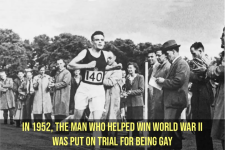
If you like living in a world where Nazis lost, you owe Alan Turing more than a passing nod. Turing cracked the German Enigma code at Bletchley Park, building early computing machines that let the Allies read messages they were never supposed to see. Historians estimate his work shortened the war by at least two years and saved millions of lives.
And then Britain turned on him.
After the war, Turing reported a burglary at his home in Manchester. The investigation led police to his relationship with another man. Rather than overlook the private life of a war hero, the government charged him with “gross indecency,” the same catch-all used to destroy queer lives across the U.K.
He was given a choice: Prison or chemical castration. He chose the injections.
For a year, the state pumped synthetic estrogen into his body. It left him impotent. It caused breast growth. It wrecked his health. They also stripped him of his security clearance, cutting him off from the work he loved.
This is how the British government repaid a war hero.
In 1954, at 41, Turing died from cyanide poisoning. His death was ruled a suicide.
Now known as the father of computer science, for decades, his name faded while his ideas quietly built the modern world. Every computer, every smartphone, every encrypted message carries his fingerprints and is built on his ideas.
The apology from the U.K. government came in 2009. Queen Elizabeth II granted him a posthumous pardon in 2013. Thousands of other men convicted under the same laws were pardoned a few years later.
It was too late for Turing; too late for most of them. The same country that depended on him to defeat fascism decided his love made him disposable.
That's not ancient history. It's within living memory.


 Pennsylvania’s Senate just voted..." S2 #1,578