Shiftless2
Well-known member
You'd think he'd be more worried about the pedophiles the Church keeps protecting
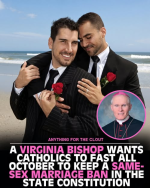
Virginia voters are heading toward a November vote that could finally erase the same-sex marriage ban still sitting in the state constitution.
The ban has been unenforceable since the Supreme Court’s 2015 decision in Obergefell v. Hodges, but the language itself remains in Virginia’s Constitution.
Now voters will decide whether to remove it.
Question 2 would replace the existing language with a provision stating that marriage is a fundamental right and requiring Virginia to recognize and treat equally any lawful marriage between two adults, regardless of sex, gender, or race.
Early voting began September 18.
Election Day is November 3.
If approved, the amendment would take effect January 1, 2027.
And the opposition is already organizing.
Bishop Michael Burbidge of the Diocese of Arlington has launched a “Catholics Vote No” campaign against Question 2, alongside another amendment concerning abortion.
On September 30, he asked Catholics in his diocese to spend October praying and fasting in an effort to defeat both measures.
On Fridays, he asked Catholics to pray the Stations of the Cross and fast by eating only one full meal and no meat.
On Sundays, he asked them to pray the Rosary and stay off social media for at least several hours, particularly around Mass.
The campaign is explicitly political.
The Diocese says Catholics should vote “no” on the marriage amendment because it conflicts with Catholic teaching on marriage.
At a Family Research Council summit in Virginia, conservative activist Katy Faust also argued that the fight over same-sex marriage could eventually return to the Supreme Court.
“Obergefell is next,” she told the audience.
That is a significant statement because Virginia’s existing constitutional ban would become relevant again if Obergefell were ever overturned.
Virginia’s own election authorities acknowledge exactly that possibility in their official explanation of Question 2: the current ban cannot be enforced because of Obergefell, but it remains in the state constitution and could become enforceable if the Supreme Court reversed its precedent.
So Virginia’s vote is about more than removing outdated words.
It is about what the state constitution will say going forward.
One side is asking voters to preserve the existing constitutional language.
The other is asking voters to replace it with an explicit right to marriage regardless of sex, gender, or race.
And while same-sex couples can currently marry in Virginia under federal constitutional law, the state constitution still contains the old prohibition.
That contradiction is exactly what Question 2 would resolve.
The ballot is already open.
The old ban is still printed in the Constitution.
And on November 3, Virginia voters will decide whether it stays there.
Virginia voters are heading toward a November vote that could finally erase the same-sex marriage ban still sitting in the state constitution.
The ban has been unenforceable since the Supreme Court’s 2015 decision in Obergefell v. Hodges, but the language itself remains in Virginia’s Constitution.
Now voters will decide whether to remove it.
Question 2 would replace the existing language with a provision stating that marriage is a fundamental right and requiring Virginia to recognize and treat equally any lawful marriage between two adults, regardless of sex, gender, or race.
Early voting began September 18.
Election Day is November 3.
If approved, the amendment would take effect January 1, 2027.
And the opposition is already organizing.
Bishop Michael Burbidge of the Diocese of Arlington has launched a “Catholics Vote No” campaign against Question 2, alongside another amendment concerning abortion.
On September 30, he asked Catholics in his diocese to spend October praying and fasting in an effort to defeat both measures.
On Fridays, he asked Catholics to pray the Stations of the Cross and fast by eating only one full meal and no meat.
On Sundays, he asked them to pray the Rosary and stay off social media for at least several hours, particularly around Mass.
The campaign is explicitly political.
The Diocese says Catholics should vote “no” on the marriage amendment because it conflicts with Catholic teaching on marriage.
At a Family Research Council summit in Virginia, conservative activist Katy Faust also argued that the fight over same-sex marriage could eventually return to the Supreme Court.
“Obergefell is next,” she told the audience.
That is a significant statement because Virginia’s existing constitutional ban would become relevant again if Obergefell were ever overturned.
Virginia’s own election authorities acknowledge exactly that possibility in their official explanation of Question 2: the current ban cannot be enforced because of Obergefell, but it remains in the state constitution and could become enforceable if the Supreme Court reversed its precedent.
So Virginia’s vote is about more than removing outdated words.
It is about what the state constitution will say going forward.
One side is asking voters to preserve the existing constitutional language.
The other is asking voters to replace it with an explicit right to marriage regardless of sex, gender, or race.
And while same-sex couples can currently marry in Virginia under federal constitutional law, the state constitution still contains the old prohibition.
That contradiction is exactly what Question 2 would resolve.
The ballot is already open.
The old ban is still printed in the Constitution.
And on November 3, Virginia voters will decide whether it stays there.