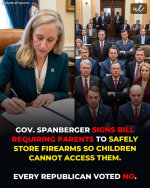
Uvalde - the followup

"After Bill Clinton banned assault weapons in 1994, mass shooting deaths dropped by 43%." #225

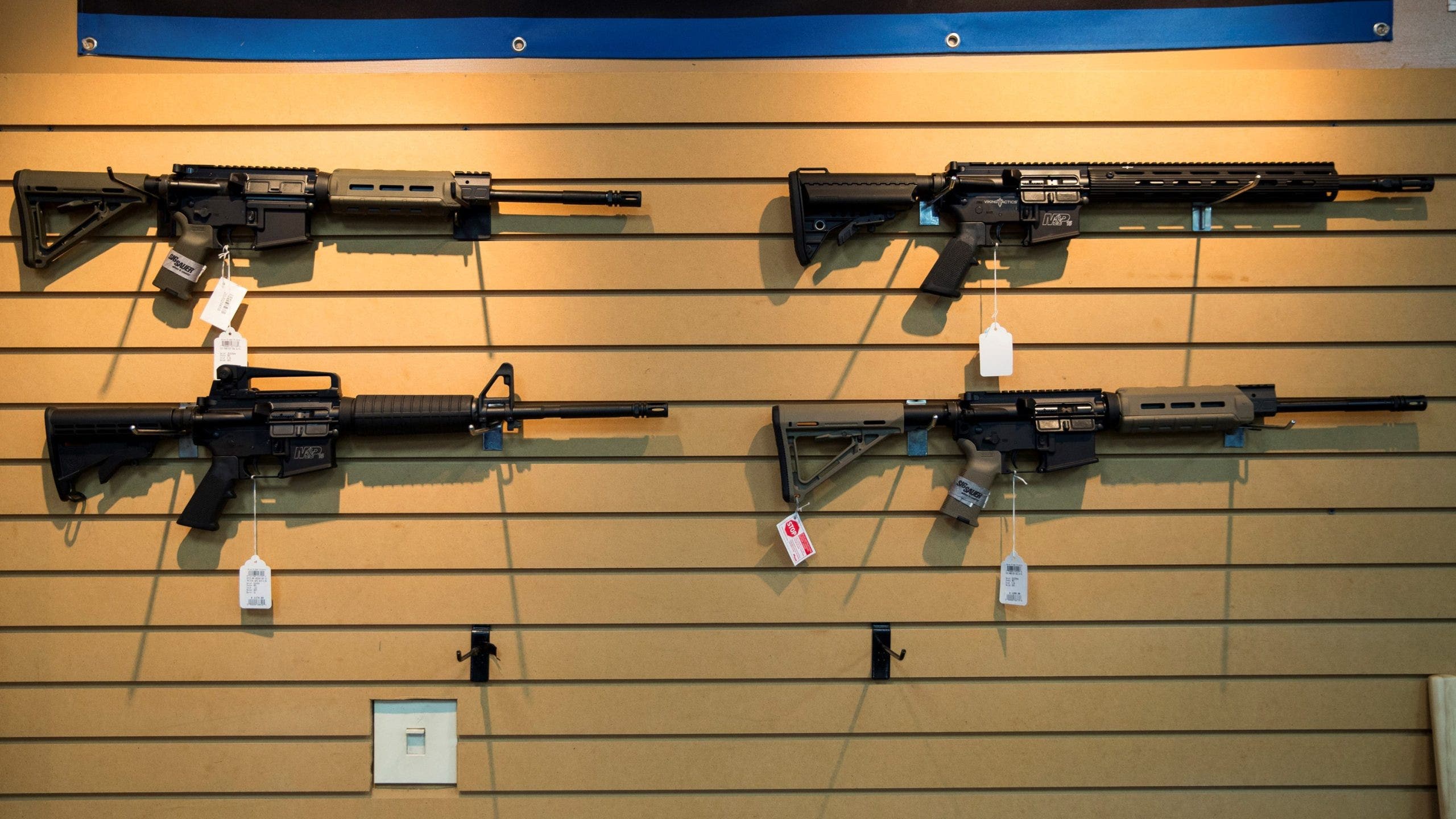
Virginia gun sales spike ahead of July 1 assault weapons ban signed by Gov. Spanberger​

FBI data shows 75,376 background checks in May alone, more than double the same month last year​

By Brie Stimson Fox News / Published June 5, 2026 8:24pm EDT

Gun sales in Virginia have surged in recent months ahead of a July 1 ban on the sale of assault weapons, according to data from the FBI.
Democrat-sponsored bills that would ban the sale of semi-automatic rifles or pistols that have a magazine capacity of more than 15 rounds were introduced in the legislature in January and Gov. Abigail Spanberger signed it into law last month.
Since January, the number of background checks done for the purchase of a firearm has gone up exponentially, with 75,376 background checks in May alone, more than double the amount in May 2025, during which only 37,167 were done, according to FBI statistics.

The high so far this year was in March when 79,846 backgrounds checks were done compared to only 47,069 last year, and in April, 72,011 were done compared to 40,343 in 2025.
A total of 347,167 background checks were run through the end of May this year, which is on track to trounce the 521,283 done in all of last year.
QUESTION:
The United States Constitution's Bill of Rights includes the 2nd Amendment, and includes the wording: - the right of the People to keep and bear arms shall not be infringed -

BUT !!

We ROUTINELY infringe or usurp this right.
In some States convicted felons that have completed their sentence can't own a firearm.
Even citizens licensed to carry face restrictions at:
- airports
- law courts
- "public" (government) schools
- the DMV
- etc

For centuries we've handled this contradiction with a wink & a nod.
Is it time to amend the 2nd Amendment? For what benefit?
 

Virginia gun sales spike ahead of July 1 assault weapons ban signed by Gov. Spanberger​

FBI data shows 75,376 background checks in May alone, more than double the same month last year​

By Brie Stimson Fox News / Published June 5, 2026 8:24pm EDT

Gun sales in Virginia have surged in recent months ahead of a July 1 ban on the sale of assault weapons, according to data from the FBI.
Democrat-sponsored bills that would ban the sale of semi-automatic rifles or pistols that have a magazine capacity of more than 15 rounds were introduced in the legislature in January and Gov. Abigail Spanberger signed it into law last month.
Since January, the number of background checks done for the purchase of a firearm has gone up exponentially, with 75,376 background checks in May alone, more than double the amount in May 2025, during which only 37,167 were done, according to FBI statistics.

The high so far this year was in March when 79,846 backgrounds checks were done compared to only 47,069 last year, and in April, 72,011 were done compared to 40,343 in 2025.
A total of 347,167 background checks were run through the end of May this year, which is on track to trounce the 521,283 done in all of last year.

QUESTION:
The United States Constitution's Bill of Rights includes the 2nd Amendment, and includes the wording: - the right of the People to keep and bear arms shall not be infringed -

BUT !!

We ROUTINELY infringe or usurp this right.
In some States convicted felons that have completed their sentence can't own a firearm.
Even citizens licensed to carry face restrictions at:
- airports
- law courts
- "public" (government) schools
- the DMV
- etc

For centuries we've handled this contradiction with a wink & a nod.
Is it time to amend the 2nd Amendment? For what benefit?

The 2nd amendment does not at all prevent local firearm regulations and just prohibits any federal jurisdiction.
So most people have it backwards, and it is the BATF that should not exist.

But the problem with assault rifle bans is they do not really make any sense because there actually is no such thing as an "assault rifle".
That is actually just the way any firearm is used, and the Civil War cavalry generally used a pair of revolvers as what we would now use an assault rifle for.
In WWI, the trench rifle was a shotgun.

Its also too late to try to ban large capacity magazines.
 
"The 2nd amendment does not at all prevent local firearm regulations and just prohibits any federal jurisdiction." R5 #242
We can all be grateful here at CitizenVoice.us the FIRST AMENDMENT does not work that way, prohibiting federal government from abridging the freedom of speech, or of the press,
BUT leaving subordinate governments, regional, State, county, or local governments free to do so.
True, the Constitutional wording in 1A is "Congress shall make no law ..." BUT !
For centuries this has been interpreted to apply to any law-making process whether statutory, local ordinance, even to stare decisis.
Where federal law pre-empts a state statute or a local ordinance, unconstitutionality does not result unless the Court's opinion so states. Nor are administrative regulations the subject of declarations of unconstitutionality unless the declaration also applies to the law on which it is based. Also excluded are federal or state court-made rules; e.g., Virginia Supreme Court v. Friedman, 487 U.S. 59 (1988).
http://scdb.wustl.edu/documentation.php?var=declarationUncon
Regarding speech: 1A restricts governments, but not the private sector, which is why the Constitution protects you ascending the soap box at the village square, but not at a privately owned or business owned shopping mall.

"But the problem with assault rifle bans is they do not really make any sense because there actually is no such thing as an "assault rifle"." R5 #242
Indeed, that debate is decades old. We needn't reprise it here.
There are certain characteristics which render a subset of firearms suited to Uvalde style carnage. A muzzle-loading firearm may have a rate of fire of one or two rounds per minute. It's not an assault weapon.
In semi-auto. fire a so called "assault-style firearm" may be able to empty a 20 round magazine in 5 seconds. Thus capacity, and rate of fire are the characteristics such bans oppose.

"Its also too late to try to ban large capacity magazines." R5 #242
It's already been done, and undone.
Not clear to me what utility a high capacity magazine has for law abiding citizens, or belt-feed ammunition systems for that matter.
 
We can all be grateful here at CitizenVoice.us the FIRST AMENDMENT does not work that way, prohibiting federal government from abridging the freedom of speech, or of the press,
BUT leaving subordinate governments, regional, State, county, or local governments free to do so.
True, the Constitutional wording in 1A is "Congress shall make no law ..." BUT !
For centuries this has been interpreted to apply to any law-making process whether statutory, local ordinance, even to stare decisis.

Regarding speech: 1A restricts governments, but not the private sector, which is why the Constitution protects you ascending the soap box at the village square, but not at a privately owned or business owned shopping mall.


Indeed, that debate is decades old. We needn't reprise it here.
There are certain characteristics which render a subset of firearms suited to Uvalde style carnage. A muzzle-loading firearm may have a rate of fire of one or two rounds per minute. It's not an assault weapon.
In semi-auto. fire a so called "assault-style firearm" may be able to empty a 20 round magazine in 5 seconds. Thus capacity, and rate of fire are the characteristics such bans oppose.


It's already been done, and undone.
Not clear to me what utility a high capacity magazine has for law abiding citizens, or belt-feed ammunition systems for that matter.

But the point is nothing is accomplished by banning assault rifles, since a person could likely murder more people with a semiauto shotgun or a pair of pistols.
An AR is really pointless in a close range, indoor situation.
 
"But the point is nothing is accomplished by banning assault rifles, since a person could likely murder more people with a semiauto shotgun or a pair of pistols.
An AR is really pointless in a close range, indoor situation." R5 #244

A 30% drop?


Gun massacres fell 37 percent while ban was in place, rose by 183 percent after ban expired

Washington—As the House Judiciary Committee prepares to hold a hearing on federal Assault Weapons Ban legislation on September 25, Senate Judiciary Committee Ranking Member Dianne Feinstein (D-Calif.) released the following statement on misinformation spread by the National Rifle Association:

“The NRA likes to say the 1994 federal Assault Weapons Ban didn’t work, but it did work. The data is clear: there were fewer mass shootings while the Assault Weapons Ban was in effect and significantly more after it expired,” Feinstein said.

Feinstein continued: “Gun massacres of six or more killed decreased by 37 percent for the decade the ban was active, then shot up 183 percent during the decade following its expiration. There’s no disputing those numbers.

“The goal of the Assault Weapons Ban in 1994 was the same as it is today: to prevent mass shootings by beginning to dry up the supply of military-style assault weapons and high-capacity magazines. There are roughly 15 million assault weapons in the United States today, so no law will be immediately effective. But by banning the manufacture and importation of new guns and implementing voluntary buy-back programs, we can again start to get these weapons of war off our streets. That’s how we’ll save lives, and we need to act now.”

NRA myth: The NRA says the 1994-2004 federal Assault Weapons Ban didn’t work.

Fact: The ban did work, and a number of studies lay that out.
  • University of Massachusetts researcher Louis Klarevas, author of the book “Rampage Nation,” found that the number of gun massacres dropped by 37 percent and the number of gun massacre deaths feel by 43 percent while the ban was in effect compared to the previous decade. After the ban lapsed in 2004, those numbers dramatically rose – a 183 percent increase in massacres and a 239 percent increase in massacre deaths.
  • A 2019 study in the Journal of Trauma and Acute Surgery found that, based on data from 1981 to 2017, there were fewer mass-shooting deaths while the ban was in place.
  • A 2017 study in the Journal of Urban Health observed that law enforcement recovery of assault weapons fell nationwide while the ban was in base, indicating that they were used in fewer crimes, but increased after the ban expired.
  • A 2004 University of Pennsylvania study conducted for the Justice Department explained that the use of assault weapons in crime declined by 70 percent nine years after the Assault Weapons Ban took effect.
 
A 30% drop?


Gun massacres fell 37 percent while ban was in place, rose by 183 percent after ban expired

Washington—As the House Judiciary Committee prepares to hold a hearing on federal Assault Weapons Ban legislation on September 25, Senate Judiciary Committee Ranking Member Dianne Feinstein (D-Calif.) released the following statement on misinformation spread by the National Rifle Association:

“The NRA likes to say the 1994 federal Assault Weapons Ban didn’t work, but it did work. The data is clear: there were fewer mass shootings while the Assault Weapons Ban was in effect and significantly more after it expired,” Feinstein said.

Feinstein continued: “Gun massacres of six or more killed decreased by 37 percent for the decade the ban was active, then shot up 183 percent during the decade following its expiration. There’s no disputing those numbers.

“The goal of the Assault Weapons Ban in 1994 was the same as it is today: to prevent mass shootings by beginning to dry up the supply of military-style assault weapons and high-capacity magazines. There are roughly 15 million assault weapons in the United States today, so no law will be immediately effective. But by banning the manufacture and importation of new guns and implementing voluntary buy-back programs, we can again start to get these weapons of war off our streets. That’s how we’ll save lives, and we need to act now.”

NRA myth: The NRA says the 1994-2004 federal Assault Weapons Ban didn’t work.

Fact: The ban did work, and a number of studies lay that out.
  • University of Massachusetts researcher Louis Klarevas, author of the book “Rampage Nation,” found that the number of gun massacres dropped by 37 percent and the number of gun massacre deaths feel by 43 percent while the ban was in effect compared to the previous decade. After the ban lapsed in 2004, those numbers dramatically rose – a 183 percent increase in massacres and a 239 percent increase in massacre deaths.
  • A 2019 study in the Journal of Trauma and Acute Surgery found that, based on data from 1981 to 2017, there were fewer mass-shooting deaths while the ban was in place.
  • A 2017 study in the Journal of Urban Health observed that law enforcement recovery of assault weapons fell nationwide while the ban was in base, indicating that they were used in fewer crimes, but increased after the ban expired.
  • A 2004 University of Pennsylvania study conducted for the Justice Department explained that the use of assault weapons in crime declined by 70 percent nine years after the Assault Weapons Ban took effect.

I disagree.
It is true there was a drop in mass shootings at first, around 2000, but the ban was from 1994 to 2004 so the mass shootings level actually shows no correlation to the ban.
Which leads me to conclude that all the media hype to get the ban passed is what had some positive effect, and not the actual ban itself.

arthur-guns-1.png
 
Back
Top