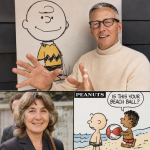
In 1968, a schoolteacher named Harriet Glickman believed that one of America's most widely read comic strips was missing something important: Black children. Eleven days after the assassination of Dr. Martin Luther King Jr., she wrote to Charles Schulz, the creator of Peanuts, asking him to introduce a Black child into the world of Charlie Brown, Snoopy and their friends.
At the time, Peanuts had been running for nearly two decades, yet its familiar group of children did not include a Black character. Glickman believed this mattered because popular culture helped shape how children understood the world and their place in it. Black children deserved to see themselves represented in the everyday stories that millions of other children enjoyed.
Schulz initially hesitated. He agreed with the idea but worried that, as a white cartoonist, he might introduce a Black character in a way that seemed patronizing or insincere. Rather than accepting his uncertainty as the end of the conversation, Glickman asked Black friends and parents to write to him directly.
Among them were Kenneth Kelly and Monica Gunning, who encouraged Schulz to portray the new character as an ordinary child rather than making him a symbol or turning his presence into a lesson about race.
The result was Franklin, who made his first appearance in Peanuts on July 31, 1968. He met Charlie Brown at the beach after returning his lost beach ball. There was no lengthy explanation of his arrival or dramatic announcement. He simply became another child in the neighbourhood.
That ordinary introduction was significant. However, Franklin's presence did not go entirely unchallenged. When a newspaper editor objected to showing Franklin sitting alongside white children in a classroom, Schulz refused to change his approach.
Franklin later received the surname Armstrong through a connection with cartoonist Robb Armstrong, creator of JumpStart, who admired the character growing up.
The story is a reminder that representation does not always begin with a major institution or a famous public campaign. Sometimes it begins with an ordinary person recognising an absence, writing a letter and refusing to let the conversation end. Harriet Glickman helped make room for Black children in a comic strip that had been part of American popular culture for generations.