... topic drift overflow ...

sear

Administrator
Staff member
I got in trouble for topic-drift before.
But there's ramble potential in the following, from the For my Canadian friends topic:
"As a mechanic until 1978, I find US cars to have been incredibly silly.
A V8 engine is going to weigh over 700 lbs all by itself, and use up a great deal of gas just accelerating its own mass.
Which is why now makers are more likely to install a turbo charged 4 cylinder engine with the same hp as a V8.
Two stroke engines make much more sense than 4 stroke engines, since they produce twice the hp without needing a larger engine.

The only bad thing about the Trabant was mixing oil with the fuel.
By using fuel injection and super charging, they did not need to do that, and it would have had much better emissions ratings, which is what killed the Trabant in 1991." R5 #424
https://citizenvoice.us/threads/for-my-canadian-friends.459/page-22
Yes.
A Chevy Corvette w/ a 427 (7 liter) engine is over-powered. And popular.

My problem with turbochargers in public roadway automobiles is the reputation turbos earned (I've never owned one) for bad design.
Reportedly passenger car turbochargers are prone to bearing failure. This is attributed to the turbocharger shutting down when the engine is shut down, while the turbo is still at high operating temperature, and in need of lubrication / oil circulation.
Whether in the new millennium consumer-grade turbochargers have been designed to be as reliable and low maintenance as the rest of the engine, I do not know.

Pouring motor oil into the fuel tank does lack allure.
In the '50's the Saab was like that, and smoked visibly, and even ran with the familiar 2 stroke stumble.
In the '50's gasoline pump islands often included stacked displays of 1 quart metal cans of 10W-30 motor oil, as a practical necessity.
But the horsepower to weight ratio indeed did favor it, in motorcycles, and outboard motors. I've never seen a 4 stroke chainsaw.

Emissions killed the Trabant?
I suspect VW, Toyota, Nissan ... killed the Trabant.
The market serves similar function to politburo central planning. BUT !
Instead of politburo politicians, the market uses automotive engineers.
The Soviet politburo was structured by and populated by nincompoops.

I gather China's politburo is a tiny fraction the size of the Soviet's, and more skillfully operated. But it's still central planning, and thus has its own intrinsic limitations.
And those intrinsic politburo limitations are progressively more consequential as the rate of change in human civilization increases exponentially.

But authoritarian ideology still impairs China's model. Seems to me some of the most successful aspects of China
are the most Westernized / commercialized.

Whether Sum Dum Phuk will ever figure that out ... ?
 
I got in trouble for topic-drift before.
But there's ramble potential in the following, from the For my Canadian friends topic:

Yes.
A Chevy Corvette w/ a 427 (7 liter) engine is over-powered. And popular.

My problem with turbochargers in public roadway automobiles is the reputation turbos earned (I've never owned one) for bad design.
Reportedly passenger car turbochargers are prone to bearing failure. This is attributed to the turbocharger shutting down when the engine is shut down, while the turbo is still at high operating temperature, and in need of lubrication / oil circulation.
Whether in the new millennium consumer-grade turbochargers have been designed to be as reliable and low maintenance as the rest of the engine, I do not know.

Pouring motor oil into the fuel tank does lack allure.
In the '50's the Saab was like that, and smoked visibly, and even ran with the familiar 2 stroke stumble.
In the '50's gasoline pump islands often included stacked displays of 1 quart metal cans of 10W-30 motor oil, as a practical necessity.
But the horsepower to weight ratio indeed did favor it, in motorcycles, and outboard motors. I've never seen a 4 stroke chainsaw.

Emissions killed the Trabant?
I suspect VW, Toyota, Nissan ... killed the Trabant.
The market serves similar function to politburo central planning. BUT !
Instead of politburo politicians, the market uses automotive engineers.
The Soviet politburo was structured by and populated by nincompoops.

I gather China's politburo is a tiny fraction the size of the Soviet's, and more skillfully operated. But it's still central planning, and thus has its own intrinsic limitations.
And those intrinsic politburo limitations are progressively more consequential as the rate of change in human civilization increases exponentially.

But authoritarian ideology still impairs China's model. Seems to me some of the most successful aspects of China
are the most Westernized / commercialized.

Whether Sum Dum Phuk will ever figure that out ... ?
The Trabant was German and not Russian.
It was well designed and was much more durable than most cars.
Like the VW, it was a military design that allowed for ease of maintenance.

There are many solutions to overheating turbocharger bearings.
One is to let the engine idle for a minute before shutting it off.
Another is to run coolant or oil lines to the turbo charger to cool it.
But the best in my opinion is to just use a belt driven cold super charger instead of a hot exhaust driven turbo charger.

Rember that 2 stroke does not need to put oil in the fuel.
That is just something aircraft engines did by habit, not because it was best.
Aircraft engined could not use oil sumps if they wanted to be able to fly upside down.
But the Trabant could just have had an oil sump since it never was inverted.
 
"The Trabant was German and not Russian." R5 #3
Oh.

It was well designed and was much more durable than most cars.
Like the VW, it was a military design that allowed for ease of maintenance.
VW, as you say, & the WWII Nazi Kübelwagen, brainchild of Ferdinand Porsche
May have been a German military engineer that tried to extend the vehicle's mileage before requiring drive belt replacement by installing Möbius drive belts.
The idea was, belt life would be ~doubled, because the belt would wear evenly on both sides.
The idea was such a success no one has heard of it.

"There are many solutions to overheating turbocharger bearings.
One is to let the engine idle for a minute before shutting it off.
Another is to run coolant or oil lines to the turbo charger to cool it." R5 #3
I've wondered about an electronic oil pump that would maintain oil pressure to the turbo bearings after engine shutdown,
and if necessary, idle the turbo to roll the bearings in heat-conducting lubricating oil until thermostatically cycled off.

"But the best in my opinion is to just use a belt driven cold super charger instead of a hot exhaust driven turbo charger." R5 #3
I've long puzzled over why the turbo has displaced the supercharger on engineering drawing boards, design budget controllers, & car dealer retail lots.
A nice brushless motor, shazam. Not sure direct drive could work well.

"Rember that 2 stroke does not need to put oil in the fuel." R5 #3
Remember, a 2 stroke needs oil on the bearings.
2 stroke seem to run forever. I gather bearing cat fails due to lubricant starvation is not an issue for 2 stroke when operated in spec.

"That is just something aircraft engines did by habit, not because it was best.
Aircraft engined could not use oil sumps if they wanted to be able to fly upside down.
But the Trabant could just have had an oil sump since it never was inverted." R5 #3
Isn't the radial aircraft engine a 2 stroke?
Tom Magliozzi said pilots of open cockpit planes with radial engines used to wear long scarfs, so they could filter the 2 stroke exhaust gas & particles, using the scarf as a filter mask.

"Aircraft engined could not use oil sumps if they wanted to be able to fly upside down.
But the Trabant could just have had an oil sump since it never was inverted." R5 #3

Trabant's don't fly upside down ?!
You have never seen me behind the wheel of a Trabant sir. Trabant01b.JPG
 
Oh.


VW, as you say, & the WWII Nazi Kübelwagen, brainchild of Ferdinand Porsche
May have been a German military engineer that tried to extend the vehicle's mileage before requiring drive belt replacement by installing Möbius drive belts.
The idea was, belt life would be ~doubled, because the belt would wear evenly on both sides.
The idea was such a success no one has heard of it.


I've wondered about an electronic oil pump that would maintain oil pressure to the turbo bearings after engine shutdown,
and if necessary, idle the turbo to roll the bearings in heat-conducting lubricating oil until thermostatically cycled off.


I've long puzzled over why the turbo has displaced the supercharger on engineering drawing boards, design budget controllers, & car dealer retail lots.
A nice brushless motor, shazam. Not sure direct drive could work well.


Remember, a 2 stroke needs oil on the bearings.
2 stroke seem to run forever. I gather bearing cat fails due to lubricant starvation is not an issue for 2 stroke when operated in spec.


Isn't the radial aircraft engine a 2 stroke?
Tom Magliozzi said pilots of open cockpit planes with radial engines used to wear long scarfs, so they could filter the 2 stroke exhaust gas & particles, using the scarf as a filter mask.


Trabant's don't fly upside down ?!
You have never seen me behind the wheel of a Trabant sir. View attachment 4239

Very interesting.
I had never heard of a Mobius drive belt before.
But apparently they are common.
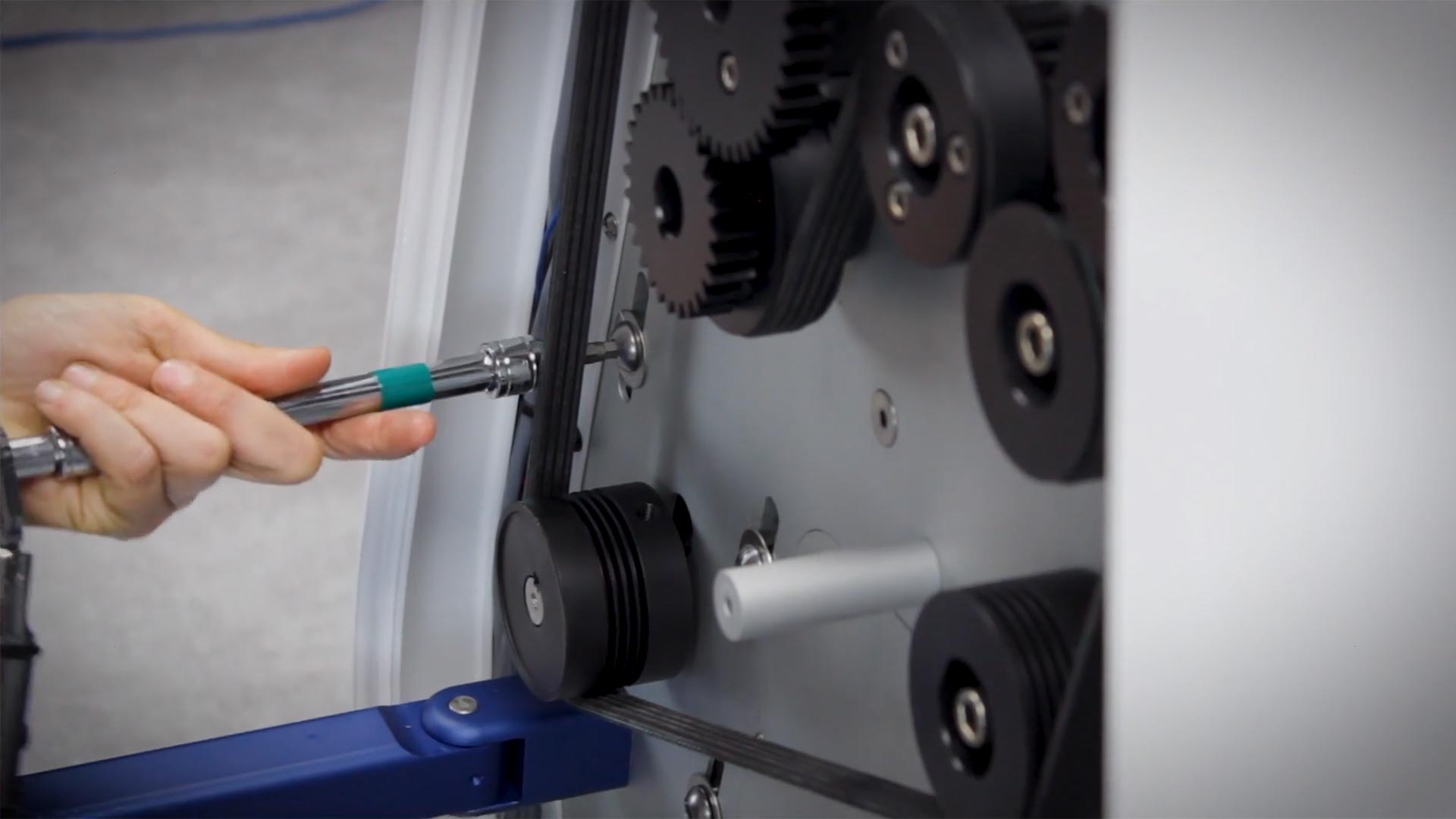
This is from some sort of factory trimming machine.
04-3-512x288.jpg

{...

Mobius M108S Trimmer​

Drive Belt Removal & Installation​

...}
 
"Very interesting.
I had never heard of a Mobius drive belt before.
But ..." R5 #5
I apologize R5.
The historic account I read of this suggested the design was introduced with the military combat the vehicles where scheduled to endure in mind,
and that the resources necessary to change all those drive belts, resources like a battlefield free environment for the mechanics to work, would not be available. BUT !

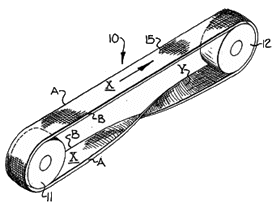
The illustration you've posted looks to me like a drive belt, but not Möbius, which has an easily recognizable, characteristic 180 degree twist.

1772642243058.png
 
I apologize R5.
The historic account I read of this suggested the design was introduced with the military combat the vehicles where scheduled to endure in mind,
and that the resources necessary to change all those drive belts, resources like a battlefield free environment for the mechanics to work, would not be available. BUT !

The illustration you've posted looks to me like a drive belt, but not Möbius, which has an easily recognizable, characteristic 180 degree twist.

View attachment 4248


When I did the search on "mobius drive belt", I may have simply hit a company called "Mobius" that makes standard drive belts.
But a twist may be seen in the belts they sell?
Not sure?

These days most belts either are wedged or cogged, so a twist would not work for them.

But I did find verification of what you brought up.
mobius-belt.gif
 
R5 #5

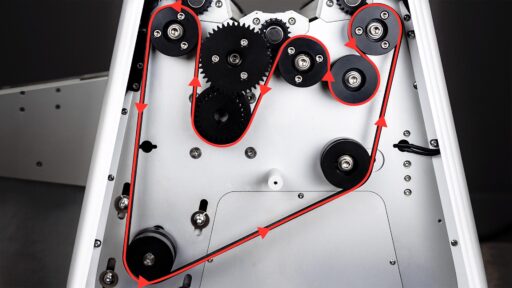
1772684492533.png

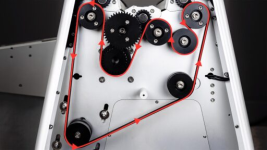
Bloke once told me a serpentine belt is called a serpentine belt because of the circuitous path it takes around multiple pulleys, as depicted above. BUT !
They didn't call V-belts V-belts because of the shape of its circuit.
V-belts were so named for the appearance of their cross-section.
I concluded a serpentine belt is so named for the ridges on its pulley contact surface, suggesting a serpent in cross-section.

I checked https://www.etymonline.com/ but got zero.
I tried Urban Dictionary, and got an unwanted education about "Cincinnati Serpentine Belt". Don't look. If you do, you'll wish you hadn't.

Bottom line, for the moment I don't know why it's called "serpentine", but it is. How was that? Topic drift enough?
 
R5 #5

View attachment 4256

Bloke once told me a serpentine belt is called a serpentine belt because of the circuitous path it takes around multiple pulleys, as depicted above. BUT !
They didn't call V-belts V-belts because of the shape of its circuit.
V-belts were so named for the appearance of their cross-section.
I concluded a serpentine belt is so named for the ridges on its pulley contact surface, suggesting a serpent in cross-section.

I checked https://www.etymonline.com/ but got zero.
I tried Urban Dictionary, and got an unwanted education about "Cincinnati Serpentine Belt". Don't look. If you do, you'll wish you hadn't.

Bottom line, for the moment I don't know why it's called "serpentine", but it is. How was that? Topic drift enough?

A V-belt can't have a zigzag circuit and can only curve over a pulley with the skinny part inward.
 
"A V-belt can't have a zigzag circuit and can only curve over a pulley with the skinny part inward." R5 #9
The practical limitation is the belt's strength, it's ability to drive components.
A single V-belt would not endure well, driving all the pulleys a 3rd millennium serpentine belt can & does.

IIRC I've seen a V-belt on 3 pulleys:
- crankshaft (drive) pulley
- water pump
- generator / alternator

Seems to me one or more additional cylindrical tensioners could be added to a V-belt's circuit,
- either to add tension (only need one tensioner for that). Such bearing tensioner or idler would ride on the dissimilar side of the V-belt's isosceles triangular cross-section.
- or to avoid conflict with other components in a crowded engine compartment.

Indeed, the first horseless carriages seemed to be designed around the drive components, engine for example, resulting in vintage cars with high center of gravity.

As lower center of gravity evolved over automotive decades, components such as engine adapted.
They don't stack the air filter on top of the carburetor, on top of the intake manifold, on top of the engine block anymore.
 
The practical limitation is the belt's strength, it's ability to drive components.
A single V-belt would not endure well, driving all the pulleys a 3rd millennium serpentine belt can & does.

IIRC I've seen a V-belt on 3 pulleys:
- crankshaft (drive) pulley
- water pump
- generator / alternator

Seems to me one or more additional cylindrical tensioners could be added to a V-belt's circuit,
- either to add tension (only need one tensioner for that). Such bearing tensioner or idler would ride on the dissimilar side of the V-belt's isosceles triangular cross-section.
- or to avoid conflict with other components in a crowded engine compartment.

Indeed, the first horseless carriages seemed to be designed around the drive components, engine for example, resulting in vintage cars with high center of gravity.

As lower center of gravity evolved over automotive decades, components such as engine adapted.
They don't stack the air filter on top of the carburetor, on top of the intake manifold, on top of the engine block anymore.

Seems to me the problem is that besides the 3 normal pulleys, they added air pump, air conditioning, and power steering pump.
With more than 4 things on the same belt, would have less than 90 degrees of pulley contact to the belt, and it would slip.
The only other solution besides a serpentine belt, would be to use 2 or more V-belts.
 
"Seems to me the problem is that besides the 3 normal pulleys, they added air pump, air conditioning, and power steering pump.
With more than 4 things on the same belt, would have less than 90 degrees of pulley contact to the belt, and it would slip.
The only other solution besides a serpentine belt, would be to use 2 or more V-belts." R5 #11
I've never seen a one-sided coin.
There are consequences of either (any) design.

One of the limitations of the V-belt, because it's thicker, the material it's made of must flex more.
If the V-belt is 3 times as thick, it has to flex 150% - 300% more, depending on where the non-flex webbing embedded within it is located.

Serpentine is fine. Doesn't look like we'll be going back to automotive V-belts anytime soon. BUT !
Though there are advantages, with V-belts if the alternator bearing seizes, the other belts can continue to operate.
In that scenario, the driver might "limp home", drive to safety / rescue, on reserve battery power, with the remaining V-belt driven components still in operation.

In contrast w/ serpentine, if the air conditioner compressor packs up, the vehicle may need to be towed (flat bed), as roadside repair may not be an option.

Note:
Ray Magliozzi observed:
material tends to expand when heated. BUT !
Magliozzi cites V-belt rubber as an exception.
Instead of expanding when heated, the rubber in V-belts shrinks.
This Magliozzi claims is why though a slipping V-belt may squeal when cold,
as it slips, and flexes in operating circuit, and receives radiant heat from the engine,
- the belt warms up, and when it warms up,
- the V-belt shrinks, tightening it, and suspending the slippage & squealing, until the belt goes cold again.
 
I've never seen a one-sided coin.
There are consequences of either (any) design.

One of the limitations of the V-belt, because it's thicker, the material it's made of must flex more.
If the V-belt is 3 times as thick, it has to flex 150% - 300% more, depending on where the non-flex webbing embedded within it is located.

Serpentine is fine. Doesn't look like we'll be going back to automotive V-belts anytime soon. BUT !
Though there are advantages, with V-belts if the alternator bearing seizes, the other belts can continue to operate.
In that scenario, the driver might "limp home", drive to safety / rescue, on reserve battery power, with the remaining V-belt driven components still in operation.

In contrast w/ serpentine, if the air conditioner compressor packs up, the vehicle may need to be towed (flat bed), as roadside repair may not be an option.

Note:
Ray Magliozzi observed:
material tends to expand when heated. BUT !
Magliozzi cites V-belt rubber as an exception.
Instead of expanding when heated, the rubber in V-belts shrinks.
This Magliozzi claims is why though a slipping V-belt may squeal when cold,
as it slips, and flexes in operating circuit, and receives radiant heat from the engine,
- the belt warms up, and when it warms up,
- the V-belt shrinks, tightening it, and suspending the slippage & squealing, until the belt goes cold again.

I did not believe the belt being smaller when hot and smaller when cold, but there is a video to prove it.
 
"I did not believe the belt being smaller when hot " R5 #13
We seem to share an interest in the counterintuitive. The rule is, matter expands when heated.
The exception is V-belts. ;)

Another topic drift?
Under terrestrial conditions H2O generally seems to follow the conventional thermal expansion pattern. BUT !
When the temperature of H2O drops to very near freezing, instead of shrinking further, it expands.
Because of this ice is less dense than water.
Because of this, ice floats (and shatters glass milk bottles).
Seems to me if the thermal expansion of H2O were linear, ice would sink.

Right?
 
We seem to share an interest in the counterintuitive. The rule is, matter expands when heated.
The exception is V-belts. ;)

Another topic drift?
Under terrestrial conditions H2O generally seems to follow the conventional thermal expansion pattern. BUT !
When the temperature of H2O drops to very near freezing, instead of shrinking further, it expands.
Because of this ice is less dense than water.
Because of this, ice floats (and shatters glass milk bottles).
Seems to me if the thermal expansion of H2O were linear, ice would sink.

Right?

I figured out the expanding ice a long time ago.
We see it when we see snowflakes.
They are crystals that then grow larger than the original water was.

But the belt shrinkage as it warms is beyond my understanding.
 
"I figured out the expanding ice a long time ago.
We see it when we see snowflakes." R5 #15
You're ahead of me on that.
I've long puzzled over how the 6 different branches of a snowflake mirror one another.

"But the belt shrinkage as it warms is beyond my understanding." R5 #15
I suspect elasticity is a factor.

<<<<<<<<< >>>>>>>>>>>>>

Is transparency any easier to understand?
- Mahogany is wood, it's solid. It doesn't let much light through.
- Iron, and the alloys of it that come to mind, are similarly obstructive.
But glass is quite solid, but can be seen through, well enough for us to read, etc.
 
You're ahead of me on that.
I've long puzzled over how the 6 different branches of a snowflake mirror one another.


I suspect elasticity is a factor.

<<<<<<<<< >>>>>>>>>>>>>

Is transparency any easier to understand?
- Mahogany is wood, it's solid. It doesn't let much light through.
- Iron, and the alloys of it that come to mind, are similarly obstructive.
But glass is quite solid, but can be seen through, well enough for us to read, etc.

The answer I am finding claims that the reason for the 6 identical symmetry is that what caused changes, like temperature and humidity, happens equally to all 6 planes.
Their explanation for 6 sides I did not understand at all.

Glass explanation was also lost on me.
{...

Atomic Structure of Glass​

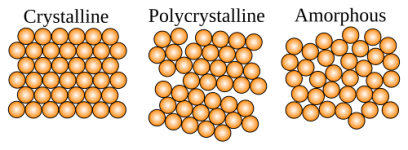
Glass is an amorphous solid, meaning its atoms are arranged in a random, non-crystalline pattern rather than a regular lattice like quartz. This disordered structure avoids internal surfaces or grain boundaries that would scatter light, which is essential for clarity. Common glass, such as soda-lime glass, is primarily composed of silicon dioxide (SiO₂), where each silicon atom is covalently bonded to four oxygen atoms in a tetrahedral arrangement. These tetrahedra form a tangled network that is rigid yet lacks long-range order.

biologyinsights.com

Interaction with Light​

Light consists of photons, which carry energy. For a photon to be absorbed by a material, it must have enough energy to excite an electron from the valence band to the conduction band. Glass has a wide band gap (greater than 4 electron volts), while visible light photons have energies between 1.8 eV (red) and 3.1 eV (violet). Because visible light photons do not have sufficient energy to excite electrons in glass, they are not absorbed and instead pass through the material. This is why glass is transparent to visible light but can absorb ultraviolet light, which has higher energy photons.

biologyinsights.com
...}
 
Back
Top