The war in Iran (or whose war is it anyways?)

1787329033515.png
By Anika Arora Seth, Shelby Holliday, Denise Blostein, and Milàn Czerny / June 25, 2026 9:00 pm ET

When the Iranian missiles and drones came for the nerve center of America’s naval operations in the Middle East, some of them hit their mark.

The U.S. Navy base in Bahrain was repeatedly targeted between late February and June. Strikes that got through caused extensive damage, according to a Wall Street Journal analysis of satellite imagery, social-media footage and interviews with current and former service members—damage that the Pentagon hasn’t publicly acknowledged. Hit hard were the command headquarters and at least a dozen other buildings, along with two satellite communications terminals.

The Trump administration has called the aircraft carrier USS Abraham Lincoln home after supply shortages aboard created difficulties for the crew.
Some reports filtering through suggest Iran's counterattacks against U.S. military Middle East locations reduced the U.S. ability to resupply our vessels there, including the Lincoln.
 
View attachment 6123
By Anika Arora Seth, Shelby Holliday, Denise Blostein, and Milàn Czerny / June 25, 2026 9:00 pm ET

When the Iranian missiles and drones came for the nerve center of America’s naval operations in the Middle East, some of them hit their mark.

The U.S. Navy base in Bahrain was repeatedly targeted between late February and June. Strikes that got through caused extensive damage, according to a Wall Street Journal analysis of satellite imagery, social-media footage and interviews with current and former service members—damage that the Pentagon hasn’t publicly acknowledged. Hit hard were the command headquarters and at least a dozen other buildings, along with two satellite communications terminals.

The Trump administration has called the aircraft carrier USS Abraham Lincoln home after supply shortages aboard created difficulties for the crew.
Some reports filtering through suggest Iran's counterattacks against U.S. military Middle East locations reduced the U.S. ability to resupply our vessels there, including the Lincoln.

I think Iran has every legal right to a nuclear deterrent, and the US is committing a war crime by attacking them.
It would be different if the US did not have nukes and we could claim they were too dangerous for anyone to have.
But if we have them, it is illegal to deny them to anyone else.
That is especially true after we lied about WMD in Iraq.
 
"I think Iran has every legal right to a nuclear deterrent, and the US is committing a war crime by attacking them." R5 #402
The U.S. has tried covert military assault for months. It hasn't worked. So now
the U.S. is reverting to "economic d-day", trade sanctions which hasn't worked for decades.

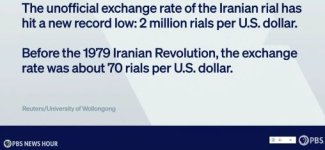
PBSNH260824as.JPG
 
The U.S. has tried covert military assault for months. It hasn't worked. So now
the U.S. is reverting to "economic d-day", trade sanctions which hasn't worked for decades.

View attachment 6155

{...

Rule 53.​

Starvation as a Method of Warfare​


Rule 53. The use of starvation of the civilian population as a method of warfare is prohibited.

Practice​

Volume II, Chapter 17, Section A.

Summary​

State practice establishes this rule as a norm of customary international law applicable in both international and non-international armed conflicts.

International armed conflicts​

While in 1863 the Lieber Code still stated that “it is lawful to starve the hostile belligerent, armed or unarmed, so that it leads to the speedier subjection of the enemy”,[1] by 1919 the Report of the Commission on Responsibility set up after the First World War listed “deliberate starvation of civilians” as a violation of the laws and customs of war subject to criminal prosecution.[2] The prohibition of starvation as a method of warfare is codified in Article 54(1) of Additional Protocol I.[3] This provision was generally considered new at the time of the adoption of Additional Protocol I but since then has hardened into a rule of customary international law. Under the Statute of the International Criminal Court, “intentionally using starvation of civilians as a method of warfare” is a war crime in international armed conflicts.[4]
The prohibition of starvation is set forth in numerous military manuals.[5] Starvation of civilians as a method of warfare is an offence under the legislation of many States.[6] This rule is also supported by official statements and other practice.[7] This practice includes that of States not, or not at the time, party to Additional Protocol I.[8] Contrary practice has been generally condemned or has been denied by the accused party.[9]
...}
 
"Rule 53." R5 #404
President Trump ?!
A crook ?!?! 😲

[ramble] There are some that may think they don't kill animals, despite the fact they wear leather shoes, & eat cheeseburgers.
They may not be trigger-man at the abattoir, but they're party to the slaughter.

Personally I do not favor starving civilian populations. BUT !
As a U.S. citizen / $taxpayer / voter I am party to it. (n) [/ramble]

Thank you R5 #404,
not a joyous message, but an important reminder none the less.
 
National Security

Iran inflicted billions in damage to U.S. intelligence sites, sources say​

The attacks on buildings and surveillance equipment in the Middle East caused unprecedented damage for the CIA and other U.S. spy agencies.
Aug. 25, 2026, 1:05 PM GMT-5
By Dan De Luce and Courtney Kube
WASHINGTON — Iranian missile and drone attacks have inflicted damage on U.S. intelligence posts and surveillance hardware in the Middle East that is more extensive than any destruction America’s spy agencies have endured and will cost billions of dollars to repair, according to four people with knowledge of the matter.

Trump & minions may pretend this reflects Trump's "America First" campaign commitment. BUT !
If destroying these "billions" in assets in the Middle East was worth the expenditure of billions more in Trump's War on Iran,
then why did the U.S. spend the "billions" on the buildings and surveillance equipment in the first place?

U.S. Federal Debt: $40,035,385,103,646.14
 
USA TODAY
Trump’s ‘excursion’ in Iran has lasted 6 months. What went wrong?


What went right, the substantially shorter list.
Trump has demonstrated himself profoundly ignorant and inept in dealing with Iran.

Without providing much if any actionable objection Trump insulted the Obama administration's JCPOA
agreement with Iran, Britain, France, Germany, China, Russia, & U.S.
and without coherent explanation unilaterally withdrew.

Trump forcefully declared Iran must never have a nuclear weapon, which President Obama already attended to.
Is the U.S., is the global economy better off now that the U.S. has expended $Billions there,
& depleted our military weapons arsenal?

Trump's current War on Iran is likely to be included in President Trump's top 10 worst presidential blunders list.

The "sanity-check" verification of that is Trump's severely back-sliding objectives for his War there,
objectives which Iran has reduced to the pre-War status quo.

Trump squandered $Billions on that ?!
 
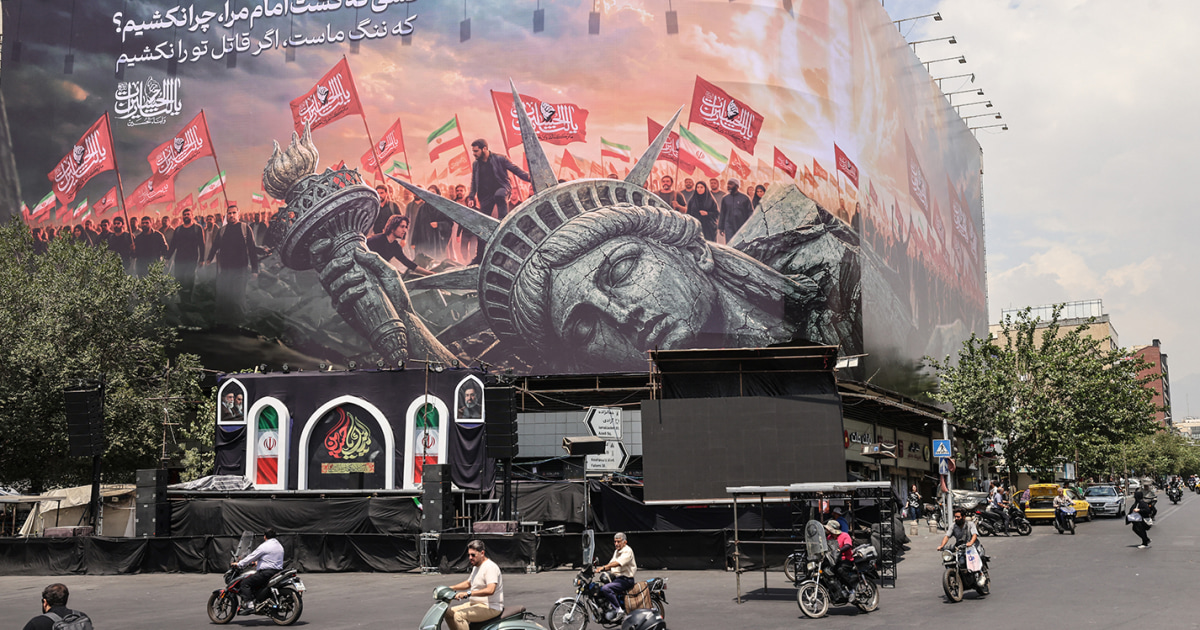
AP.JPG
World News

Six months on, the Iran war has changed the Middle East, but not in the way its architects had hoped​

By JOSEPH KRAUSS Updated 11:14 PM GMT-5, August 27, 2026
It’s been six months since the United States and Israel attacked Iran with the perennial goal of transforming the Middle East through military force. The region has changed, but not in the way they had hoped.
The Islamic Republic survived the assassination of its top leaders and weeks of heavy bombing, and found a potent form of leverage in the Strait of Hormuz. Gulf Arab nations saw worrying gaps open up in the American security umbrella they have relied on for decades — and some are looking at alternatives.
Israel has once again thrashed its enemies without defeating them, and after nearly three years of war in Gaza and new land seizures, is at risk of a generational rupture with the U.S., its closest ally. Hopes of normalizing relations with Saudi Arabia — another enduring U.S. and Israeli aspiration — have dimmed even further.
When they attacked Iran on Feb. 28, the U.S. and Israel hoped to topple its clerical leadership and replace it with a pro-Western government. Instead, they’ve ended up with a “hardened and very radical regime,” said Barbara Leaf, a former ambassador who served as assistant secretary of state for the Middle East in the Biden administration.
“That is going to be exceptionally difficult to deal with, to say the least,” she said. Iran’s “confidence has grown over the months that it cannot only survive, but it can prevail, it can reset the regional landscape.”

MAGA01.JPG
Good idea!
When shall we begin ?
 
Oddly enough, by Trump attacking Iran without any legal cause, makes it even more obvious why Iran not only has the right but the need to have a nuclear deterrent.
 
"Oddly enough, by Trump attacking Iran without any legal cause, makes it even more obvious why Iran not only has the right but the need to have a nuclear deterrent" R5 #410
Trump attacking Iran without any legal cause, makes it even more obvious why Iran not only has the right but the need to have a nuclear deterrent, BUT !
Trump has equipped Iran with a weapon more useful than a nuke. Trump has now taught the world that Iran now has the ability to throttle commerce through the Hormuz Strait.
Iran can choose which vessels transit safely, and which decorate the sea floor.

D.J. !
You shouldn't have.

View attachment 6195 MAGA hat s #409
Good idea!
When shall we begin ?
Mid-term elections, double digits away. Vote Dem., or vote dumb.
 
1788540041817.png

The Trump administration signed a secret deal to pull billions from the budget that keeps Americans alive against HIV, TB, and the flu, and hand it to the Pentagon for its war in Iran.

Rep. Rosa DeLauro found the paperwork, forced them to admit it, and is now demanding the whole thing be shredded.

Congress already appropriated that money to the National Institute of Allergy and Infectious Diseases, the roughly $7 billion arm of NIH that researches HIV, influenza, TB, malaria, and Ebola.

Rather than go back to Congress and ask for more, the Defense Department signed something called an interagency agreement, a piece of paperwork that lets one agency tap into another agency's funds with no floor vote and no debate.

No hearing. No public vote. A signature that turns disease research into a Pentagon slush fund, with NIH reportedly left to approve each new withdrawal the military asks for.

DeLauro's office says the deal was cut without telling Congress or the public. It only surfaced because House appropriators leaned on the administration until it handed over the details.

Why is the Pentagon this desperate for cash? Start with the war. The fighting in Iran has run up a tab of at least $37.5 billion by the administration's own accounting, and independent experts say the real figure is far higher. On top of a base military budget already north of $1 trillion, the administration is asking Congress for another $67 billion to keep the war going.

Now remember how we got here. The same administration handed trillions in tax cuts to billionaires and corporations, then started a war Congress never authorized.

Broke by choice, it went looking for loose change in the one place it should never touch.

Picture who is actually on the other end of that transfer. The patient waiting on an HIV breakthrough. The child in a TB ward. The researcher whose clinical trial dies the moment the grant disappears. They are being quietly conscripted to pay for this war, and nobody bothered to tell them.

Then comes the excuse. An administration spokesperson defended the deal by claiming it would help the government respond quickly to public health emergencies, and pointed to the recent Ebola outbreak as the example.

They want to drain the exact institute that fights Ebola, and they are selling it as Ebola preparedness.

Nobody voted for this war, and nobody voted to fund it out of the disease ward. They just signed the paper and hoped no one would read it.

SOURCE with comments

 
View attachment 6298

The Trump administration signed a secret deal to pull billions from the budget that keeps Americans alive against HIV, TB, and the flu, and hand it to the Pentagon for its war in Iran.

Rep. Rosa DeLauro found the paperwork, forced them to admit it, and is now demanding the whole thing be shredded.

Congress already appropriated that money to the National Institute of Allergy and Infectious Diseases, the roughly $7 billion arm of NIH that researches HIV, influenza, TB, malaria, and Ebola.

Rather than go back to Congress and ask for more, the Defense Department signed something called an interagency agreement, a piece of paperwork that lets one agency tap into another agency's funds with no floor vote and no debate.

No hearing. No public vote. A signature that turns disease research into a Pentagon slush fund, with NIH reportedly left to approve each new withdrawal the military asks for.

DeLauro's office says the deal was cut without telling Congress or the public. It only surfaced because House appropriators leaned on the administration until it handed over the details.

Why is the Pentagon this desperate for cash? Start with the war. The fighting in Iran has run up a tab of at least $37.5 billion by the administration's own accounting, and independent experts say the real figure is far higher. On top of a base military budget already north of $1 trillion, the administration is asking Congress for another $67 billion to keep the war going.

Now remember how we got here. The same administration handed trillions in tax cuts to billionaires and corporations, then started a war Congress never authorized.

Broke by choice, it went looking for loose change in the one place it should never touch.

Picture who is actually on the other end of that transfer. The patient waiting on an HIV breakthrough. The child in a TB ward. The researcher whose clinical trial dies the moment the grant disappears. They are being quietly conscripted to pay for this war, and nobody bothered to tell them.

Then comes the excuse. An administration spokesperson defended the deal by claiming it would help the government respond quickly to public health emergencies, and pointed to the recent Ebola outbreak as the example.

They want to drain the exact institute that fights Ebola, and they are selling it as Ebola preparedness.

Nobody voted for this war, and nobody voted to fund it out of the disease ward. They just signed the paper and hoped no one would read it.

SOURCE with comments

Similar to how Reagan illegally funded the Contras.
But at least Oliver North got convicted over that one,
 
1788547009607.png

A Gold Star widow says her benefits hinge on whether Congress declared war. JD Vance had to ask who she was.

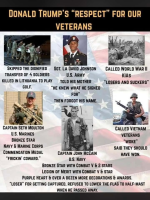
Major John "Alex" Klinner was 33, from Trussville, Alabama. He joined the Air Force through ROTC at Auburn and flew tankers for eight years, four deployments, 362 combat hours.

On March 12 his KC-135 went down in western Iraq supporting the Iran operation. Six airmen died. He left his wife, Libby, and three children under three: a toddler and twin babies. Alabama lowered its flags. Thirteen thousand strangers sent his family more than a million dollars.

On March 18, the President of the United States stood on the tarmac at Dover Air Force Base as he came home. Pete Hegseth stood there. The Chairman of the Joint Chiefs stood there. The Speaker of the House stood there. They knew his name in March.

Last weekend, Libby Klinner posted this:

"The Air Force recently told me that because we haven't officially declared war, my kids and I aren't eligible for some benefits. So not only was my husband killed in a war he never wanted to participate in, but now the benefits we're left with are being dictated by semantics and public perceptions. 6 months of a war that we can't call a war."

The benefits she named are the ones the government reserves for combat: hostile-fire pay, the combat-zone tax exclusion. Her husband died under hostile fire in a combat zone. The paperwork just won't use the word.

A war we can't call a war. She chose that phrase, and this week the Vice President proved her right. Asked whether the conflict is a war, JD Vance said: "I wouldn't call it a war." The same week, the Commerce Secretary said there had been no American deaths in it at all. Eighteen Americans are dead. Six of them died on Alex Klinner's plane.

On Thursday, CNN's Kaitlan Collins asked Vance at the White House whether he and the President would personally ensure the Klinner family gets every benefit it is owed.

His first words: "So, what's her name? You said his name was Alex Klinner?"

Then he asked for the family's contact information. Then he said this:

"Obviously, our hearts break for every single person who has lost their lives in this operation. We want to be as helpful as we can and make sure she gets everything she is entitled to."

The Air Force says it contacted Libby Klinner on August 31 and is auditing her entitlements. Its statement: "We understand this matter has been difficult for Mrs. Klinner and her family, and we are committed to addressing her concerns with care and respect."

It has not said why she was told what she was told. Maybe it was a paperwork error. Maybe it gets fixed. If so, good. It should not take a grieving mother's post going viral, and a reporter reading it aloud to the Vice President, for the government to count a widow whose husband it honored at Dover.

Her name is Libby Klinner. Her husband's name is Alex. The only word this administration won't say is war.

SOURCE with comments

Just another reason not to enlist
 
Back
Top