An expanded version of #3,515
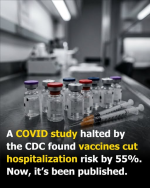
A blocked COVID vaccine study has finally been published.
The study, published in JAMA Network Open, looked at how well the 2025-2026 COVID vaccine protected adults during the latest season of infections.
Researchers found that the updated vaccine was about 55% effective against COVID-related hospitalization and about 50% effective against COVID-related emergency department or urgent care visits.
That does not mean vaccinated people could not get infected. It means that, among adults who sought care for COVID-like illness, those who had received the updated vaccine were less likely to test positive for COVID than those who had not.
The study drew extra attention because it was originally expected to appear in the CDC’s Morbidity and Mortality Weekly Report, one of the agency’s main public health publications. But Trump administration political appointees raised concerns about the study design and it did not run there.
The method, called a test-negative design, is widely used in vaccine research. It compares people who seek medical care for similar symptoms, then looks at who tests positive and who tests negative, and how vaccination rates differ between the groups.
Critics argue the method depends on assumptions that could skew results. Supporters say it is one of the best available tools for tracking vaccine effectiveness in real time, especially when viruses evolve and population immunity keeps changing.
The findings themselves are not especially surprising. COVID vaccines have repeatedly been shown to reduce the risk of severe illness, especially hospitalization.
But the controversy around this paper points to something bigger.
Public health depends not only on collecting data, but on publishing it clearly, quickly, and transparently so people can understand the risks and make informed decisions.
Read the study:
“Interim Estimated Effectiveness of 2025-2026 COVID-19 Vaccines in Adults Using a Test-Negative Design.” JAMA Network Open.
SOURCE