
You are using an out of date browser. It may not display this or other websites correctly.
You should upgrade or use an alternative browser.
You should upgrade or use an alternative browser.
The Second Term of Donald J. Trump as President of the United States of America
- Thread starter sear
- Start date

Shiftless2
Well-known member
This guy was arrested as part of a sex trafficking sting operation - he's a background checker for ICE, Homeland Security, and various federal agencies.

 www.yahoo.com
Bloomington Police arrest 30 in human trafficking sting operation, including 1 federal employee
Bloomington Police announced Tuesday that officers have arrested 30 people in connection with a human trafficking sting operation. One of the people arrested allegedly works as a federal employee hir...
Shiftless2
Well-known member
HISTORIC TOURISM COLLAPSE: Florida Leaders Admit CANADA Walked Away — $58B, 310,000 Jobs
It's not just Florida as the vid explains and it's not a "one off" loss.
It's not just Florida as the vid explains and it's not a "one off" loss.

Did Florida vote for Trump? This source: https://usafacts.org/articles/how-red-or-blue-is-your-state/"HISTORIC TOURISM COLLAPSE: Florida Leaders Admit CANADA Walked Away — $58B, 310,000 Jobs" S2 #2,723
says Florida voted Republican in 2024 by over 13 (percent?).
"Watch what you wish for ... ."
Thank you Canada.
Shiftless2
Well-known member
Rep. Ilhan Omar posted on X calling President Trump the “leader of the P*dophile Protection Party,” saying “at least in Somalia they execute pedophiles not elect them.” Her comment came after Trump criticized Somalia and Omar in an interview and also suggested the Justice Department and Congress were “looking at” her.
Omar’s post drew strong condemnation from the White House and triggered MAGA weirdos.


Omar’s post drew strong condemnation from the White House and triggered MAGA weirdos.
Shiftless2
Well-known member

Shiftless2
Well-known member

Shiftless2
Well-known member

Shiftless2
Well-known member
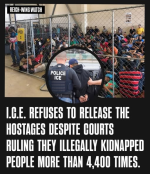
Since October, federal judges across the U.S. have issued more than 4,400 rulings finding that U.S. Immigration and Customs Enforcement (ICE) under the Trump regime is holding immigrant hostages without lawful authority — and yet the detentions continue. 
The wave of decisions stems from a shift in how the government interprets immigration law, particularly its approach to bond hearings and mandatory detention. Many courts — including judges appointed by Republican presidents — have concluded that people who could be released on bond are instead being kept in concentration camps INDEFINITELY. 
In its review of thousands of federal habeas corpus cases, Reuters reportedly found that detainees have filed over 20,000 lawsuits arguing they are being held illegally. In at least 4,421 of those, judges ruled in their favor, yet ICE often CONTINUED detaining them anyway. 
One judge from West Virginia blasted the government for ignoring clear legal standards when ordering a detainee’s release, while others noted that some people remained locked up even after judges ordered their freedom. 
The surge in legal challenges has strained the U.S. Department of Justice, with hundreds of attorneys diverted from other work to defend the government’s dystopian and inhumane position in immigration detention cases. 
Under current policies, ICE’s concentration camp population has swollen — at one point reaching roughly 68,000 people, up sharply from before — even as courts have repeatedly rejected the legal basis for holding many of them. 
The persistence of these practices despite thousands of adverse rulings raises questions about respect for constitutional protections and the limits of the judicial branch to enforce rulings.
The wave of decisions stems from a shift in how the government interprets immigration law, particularly its approach to bond hearings and mandatory detention. Many courts — including judges appointed by Republican presidents — have concluded that people who could be released on bond are instead being kept in concentration camps INDEFINITELY. 
In its review of thousands of federal habeas corpus cases, Reuters reportedly found that detainees have filed over 20,000 lawsuits arguing they are being held illegally. In at least 4,421 of those, judges ruled in their favor, yet ICE often CONTINUED detaining them anyway. 
One judge from West Virginia blasted the government for ignoring clear legal standards when ordering a detainee’s release, while others noted that some people remained locked up even after judges ordered their freedom. 
The surge in legal challenges has strained the U.S. Department of Justice, with hundreds of attorneys diverted from other work to defend the government’s dystopian and inhumane position in immigration detention cases. 
Under current policies, ICE’s concentration camp population has swollen — at one point reaching roughly 68,000 people, up sharply from before — even as courts have repeatedly rejected the legal basis for holding many of them. 
The persistence of these practices despite thousands of adverse rulings raises questions about respect for constitutional protections and the limits of the judicial branch to enforce rulings.
Shiftless2
Well-known member

Shiftless2
Well-known member

Shiftless2
Well-known member
Their not even trying to hide it anymore

Shiftless2
Well-known member
No question - America was a nice experiment while it lasted

Politics·The Daily Beast
 www.yahoo.com
TACO Trump Plots Humiliating Retreat as His Approval Rating Plummets
Donald Trump is quietly gearing up to roll back some of the tariffs he promised would make the country “rich as hell” as his approval rating plummets amid an affordability crisis. The president slapped tariffs of up to 50 percent on steel and aluminum imports last summer, boasting that the move would provide a “big jolt” to U.S. industry. But in a humiliating retreat, and keeping true to the nickname he has earned for his chaotic approach to trade policy—“TACO,” short for “Trump Always Chickens Out".
TACO Trump Plots Humiliating Retreat as His Approval Rating Plummets
Donald Trump is quietly gearing up to roll back some of the tariffs he promised would make the country “rich as hell” as his approval rating plummets amid an affordability crisis. The president slappe...
Shiftless2
Well-known member


Shiftless2
Well-known member
Shiftless2
Well-known member
How a Solitary Bullet Hole Blew Apart ICE’s Web of Lies
A nonfatal shooting forced DHS to walk back its own version of events.
Michael DalyHomeland Security Secretary Kristi Noem quickly offered a variation of her standard falsehood.
She had said the same after the fatal shooting of Renee Good, an unarmed mother of three, a week earlier on Jan. 7. And she would repeat it regarding the killing of VA ICU nurse Alex Pretti on Jan. 24.
“Fearing for his life, he fired a defensive shot,” Noem said of her agent.
She told the press that the delivery driver incident constituted “an attempted murder of federal law enforcement.”
“Our officer was ambushed and attacked by three individuals who beat him with snow shovels and the handles of brooms,” she added.
That falsehood was more elaborate than the others, but received less attention because .....
MORE>
Shiftless2
Well-known member
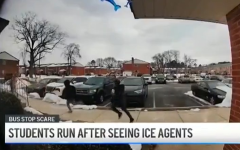
BREAKING: INFURIATING! Trump’s ICE goons raid a SCHOOL BUS stop, sending dozens of kids running in panic as they stormed in to arrest their parents!
Children were waiting patiently at their school bus pickup when the goon squad rolled in, looking for the father of poor little Hugo Cuello, just ten years old. The kids reacted immediately, fleeing in terror from the men who they know beat, brutalize, and kill Americans with impunity.
They were so traumatized that counselors had to be called in once they all got to school.
School officials were understandably furious.
“The absolute chaos sowed by this ICE operation in Lindenwold yesterday morning was appalling,” wrote Camden County Commissioner Director Louis Cappelli Jr. in a statement. “the impact and fear that struck the children of our county was painful to watch, and I can’t imagine the anxiety and trauma that came from this incident. Furthermore, as a community, segments of our population are being terrorized and scared to leave their homes. This is no way for any of us to live.”
Camden County Commissioner Jonathan Young also released a statement slamming ICE for their actions. “As a former Lindenwold resident, I’m disgusted to watch the videos of children running in absolute terror along a busy county thoroughfare,” Young said. “This callous operation, in front of 44 young children, sent them scattering in different directions underscores the type of terror our residents are living under every day. No one wants criminals in their community, that said, under Trump, ICE has been inhumane in how it conducts its operations. We’ve seen that firsthand throughout other cities in the country and now it’s happening here. No one in our community deserves to hide in the shadows.”
What have we come to as a society where our children are sent fleeing in terror down a busy county road as an unrestrained paramilitary squad of armed masked men hunt down their parents?
DHS is currently shut down due to lack of funding, and it needs to stay that way until ICE’s reign of terror ends for good.
Our kids already have to put up with mass shooter drills; they shouldn’t have to run from government agents too!
Shiftless2
Well-known member
Not just Chicago