
You are using an out of date browser. It may not display this or other websites correctly.
You should upgrade or use an alternative browser.
You should upgrade or use an alternative browser.
For my Canadian friends
- Thread starter Shiftless2
- Start date
Shiftless2
Well-known member

Shiftless2
Well-known member
The "Reverse Brain Drain" is real

 www.facebook.com
9.3K views · 3.2K reactions | AMERICAN EXCEPTIONALISM – NOW AVAILABLE IN CANADA #fyp #foryoupage #american #canada #smart | Shannon Kincaid | Facebook
AMERICAN EXCEPTIONALISM – NOW AVAILABLE IN CANADA #fyp #foryoupage #american #canada #smart
www.facebook.com
Shiftless2
Well-known member

Shiftless2
Well-known member
Shiftless2
Well-known member
Canadians will understand

Have say that, in days gone by, Tims made good donuts - of course that was in the days when donuts were all made locally in the back of every store. Since they've stopped that an just ship in frozen donuts from a central factory that's no longer the case.
Have say that, in days gone by, Tims made good donuts - of course that was in the days when donuts were all made locally in the back of every store. Since they've stopped that an just ship in frozen donuts from a central factory that's no longer the case.
Canadians will understand
View attachment 6254
Have say that, in days gone by, Tims made good donuts - of course that was in the days when donuts were all made locally in the back of every store. Since they've stopped that an just ship in frozen donuts from a central factory that's no longer the case.
As far as I can see, JK Rowling is entitled to her own opinion.
She does not know the science, and can't extrapolate from her own experiences.
Shiftless2
Well-known member
But she's using her money to lobby against equality. Fact is, she's actually threatened to bankrupt Amnesty International for opposing her.As far as I can see, JK Rowling is entitled to her own opinion.
She does not know the science, and can't extrapolate from her own experiences.

True, but immaterial." JK Rowling is entitled to her own opinion." R5 #627
Her own opinion is not the issue. Opinion is state of mind. It's not a matter of thought. It's a matter of conduct.
Rowling seems to be committed to civil rights discrimination. That's a crime under the Constitution, including the equal protection clause of the 14th Amendment.
Shiftless2
Well-known member

Shiftless2
Well-known member
But in Canada it's not known as "Canadian Bacon". That name is simply an American marketing ploy. And the stuff they sell in the US under that name is a poor imitation of the real thing.
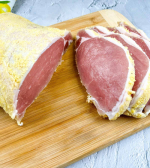
Since you probably can't find it where you live you can make your own. It's not difficult - I bought my Prague Powder (sometimes called "pink salt" on Amazon - a comment, it's not salt so you cannot substitute the "pink salt" you find in gourmet stores and you can't put it on food).
You'll find a number of other recipes on line - the only difference being the spices that go in the marinade.
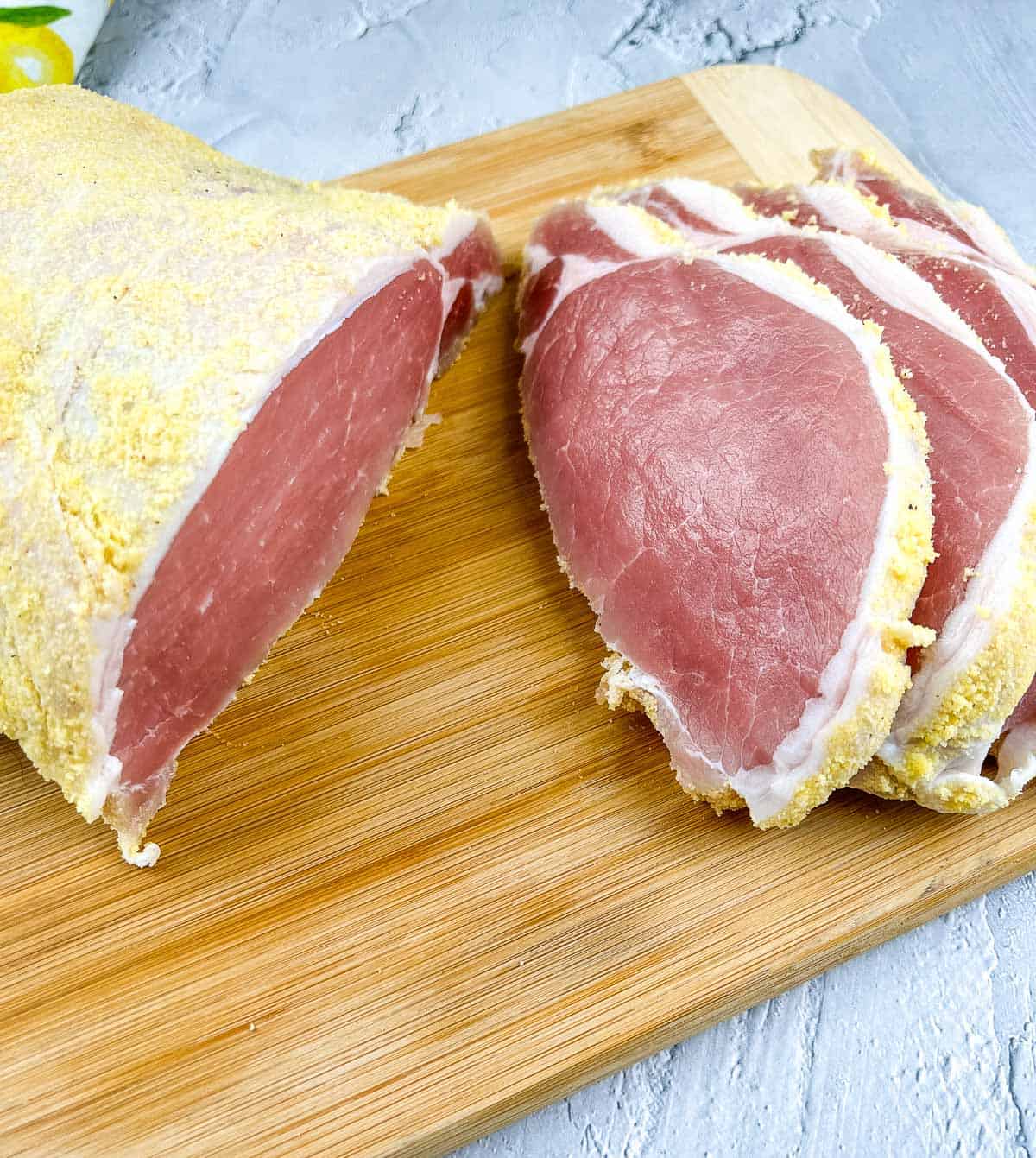
 cookwhatyoulove.com
Since you probably can't find it where you live you can make your own. It's not difficult - I bought my Prague Powder (sometimes called "pink salt" on Amazon - a comment, it's not salt so you cannot substitute the "pink salt" you find in gourmet stores and you can't put it on food).
You'll find a number of other recipes on line - the only difference being the spices that go in the marinade.
Peameal Bacon Recipe — Authentic Ontario-Style, Made at Home
Make peameal bacon at home with perfect seasoning and less salt, a simple, budget-friendly way to enjoy this Canadian favorite.
cookwhatyoulove.com
Geoffrey took a cab from Zurich Airport to midtown Zurich. One of the first retail shops he found sold cheese."But in Canada it's not known as "Canadian Bacon". That name is simply an American marketing ploy." S2 #632
Geoffrey had eaten swiss cheese in Peoria, and decided to try what Switzerland had to offer,
and ordered sliced swiss cheese.
The clerk shrugged:
"It's all Swiss. What kind would you like?"
Geoffrey ate at McDonald's.
Shiftless2
Well-known member
First time I went to Switzerland (Zurich to be exact) I was under strict orders from my wife to bring back some real Swiss chocolate. I was there for a little over a week and everybody was asking me what I was going to do during my free time on the weekend - when I said that I was going to do some sightseeing but did want to buy some good chocolate the immediate response was "You've go to go to Sprungli" - after the fifth time I was told this I got the idea - I should probably go to Sprungli. Definitely did and walked out CHF 300 poorer (and it all fit in my briefcase for the flight home). On subsequent trips I discovered that they also had a store in the Zurich airport so I had no excuses for not stocking up before I came home.

 spruengli.ch
Confiserie Sprüngli
Confiserie Sprüngli has stood for the finest haute chocolaterie for 190 years. Discover legendary Luxemburgerli, fine chocolate and exclusive gift ideas.
But she's using her money to lobby against equality. Fact is, she's actually threatened to bankrupt Amnesty International for opposing her.
I am not well versed in all the details, but what I have seen from JK Rowlings seemed reasonable to me.
She does not seem to me to be denying the existence of transgender, but instead is against them having an edge in sports.
And I think I agree that the need to know what pronouns to use without having any means of knowing what ones are desired, is untenable.
Anyway, here s Factuality on the matter:
{...
Executive summary
J.K. Rowling has taken a publicly prominent, consistently critical stance toward aspects of transgender rights and policy in the UK, framing her position as a defense of biological sex and women’s single‑sex spaces, while asserting respect for trans individuals’ right to live [1] [2]. Her statements since 2020—tweets, a long essay, blog posts, public endorsements, and financial support for groups opposing self‑ID and certain reforms—have been widely interpreted as oppositional to trans‑affirming policies, and have prompted sustained backlash from LGBTQ+ advocates and several Harry Potter cast members [3] [4].
AccurateInaccurate
1. How she frames the issue — A woman defending sex‑based rights or opposing gender identity claims?
Rowling publicly argues that “sex is real” and that recognizing gender identity in law and policy risks eroding protections for cisgender women and girls, particularly around single‑sex spaces and services. This framing appears in her essay and repeated social media posts where she ties concerns about self‑identification laws and related reforms to safety and legal clarity, and she has expressed willingness to refuse compelled use of trans‑preferred pronouns [1] [2]. Supporters of her phrasing present it as a principled defence of sex‑based rights and women’s safety; critics counter that her rhetoric negates trans identities and fuels discrimination, labeling the stance trans‑exclusionary or transphobic, which has amplified public debate and drawn condemnation from LGBTQ+ organisations [5] [6].
2. What she has done — Tweets, essays, legal support and funding that shaped the controversy
Since 2020 Rowling has used multiple platforms to amplify her views: a detailed essay explaining her rationale, frequent activity on social media, public support for the legal case of Maya Forstater, and reported financial backing for groups opposing trans‑inclusive reforms. These actions include praising court rulings that interpret “woman” in biological terms and supporting organisations such as For Women Scotland, which resist self‑ID proposals—steps that move beyond commentary into legal and civic intervention [3] [6]. Observers see this mix of rhetoric, legal advocacy, and philanthropy as a coordinated influence on the UK policy conversation; defenders argue it is legitimate civic participation grounded in research and personal experience [2] [5].
3. Who responded — Allies, critics, and the fractures in Rowling’s public coalition
The reaction to Rowling’s stance has been sharply divided. Prominent former collaborators and cast members like Daniel Radcliffe, Emma Watson, and Rupert Grint publicly rejected her statements and expressed support for trans rights, while some figures such as Robbie Coltrane and Eddie Izzard have offered varying degrees of defence, illustrating a fractured public response tied to personal relationships and differing views on gender policy [4] [7]. LGBTQ+ organisations and activists have consistently condemned her positions as harmful to trans people and as contributing to a hostile climate; supporters emphasize her stated respect for individuals and argue critics conflate policy scepticism with hatred. These splits have had reputational consequences for Rowling and complicated cultural discourse around the Harry Potter brand [1] [7].
4. Policy impact and the courtroom — Did her stance influence law or rulings?
Rowling’s commentary intersected with contentious legal debates in the UK, including discussions of self‑identification, reforms to the Gender Recognition Act, and court rulings on the legal definition of “woman.” She celebrated rulings seen as aligning with a biological definition of sex and has used her platform to back organisations participating in legal challenges, which contributors interpret as an effort to shape outcomes via public pressure and funding [6] [3]. While it is difficult to quantify direct causal impact on legislation, her visibility elevated public scrutiny, mobilised both opponents and defenders of reform, and contributed to an intensified political and judicial spotlight on transgender rights in the UK [1] [8].
5. What the debate omits and the larger context readers should know
Coverage often reduces complex questions—medical pathways for gender‑diverse youth, single‑sex protections, free speech and compelled speech—to binary moral arguments; this obscures nuance about evidence, clinical guidelines, and lived experience. Analysts highlight Rowling’s stated concerns about detransition rates and young people, and her supporters say her perspective is rooted in charitable work and research, while critics point to her social media likes and associations with anti‑trans figures as evidence of an agenda [2] [8]. The conversation remains highly politicised: some actors and organisations amplify trans‑affirming protections as human rights imperatives, while others prioritise sex‑based legal clarity—both positions reflect distinct policy priorities that policymakers and courts continue to navigate amid sustained public controversy
...}
What is J. K. Rowling's stance on LGBTQ+ rights in the
Executive summary J.K. Rowling has taken a publicly prominent, consistently critical stance toward aspects of transgender rights and policy in the UK, fra...
Shiftless2
Well-known member
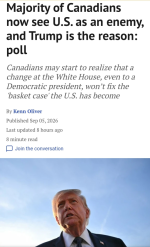


Majority of Canadians now see U.S. as an enemy, and Trump is the reason: poll
Canadians' views of the U.S. are shifting amid Trump's trade war, with a new poll finding 41 per cent now see the country as an enemy.
 nationalpost.com
Shiftless2
Well-known member

Canada is putting Terry Fox on its money.
The Bank of Canada has confirmed that the Marathon of Hope runner will appear on the country’s next $5 bank note. The new polymer note will be predominantly blue and use the vertical format being introduced for Canada’s newer bank notes.
Fox was chosen following a national nomination and advisory process. More than 600 nominees met the eligibility requirements before an independent advisory council narrowed the list to eight Canadians. The final decision was made by the Minister of Finance in December 2024.
His Marathon of Hope began on April 12, 1980, when Fox set out from St. John’s, Newfoundland, to run across Canada and raise money for cancer research. He ran about 5,373 kilometres over 143 days before being forced to stop near Thunder Bay on September 1, when doctors discovered that his cancer had spread to his lungs.
Fox died in 1981, but the run he started continued. Terry Fox Runs are now held in countries around the world, and the Terry Fox Foundation announced in February 2026 that fundraising inspired by his legacy had surpassed C$1 billion for cancer research.
The new $5 note is still being developed, and the Bank of Canada has not announced a release date. It will enter circulation after the new vertical $20 note, which is scheduled to appear in early 2027.
For a country that watched Terry Fox run with a prosthetic leg toward a goal he never got to finish, seeing his image on everyday currency will give millions of Canadians another reason to remember his story.
SOURCE with comments
Shiftless2
Well-known member

BREAKING: REAL LEADER! Canadian Prime Minister Mark Carney unleashes a defiant message as his crushing tariffs against Trump take effect: "This is about who we are as Canadians."
The White House is not going to win this trade war...
"By now, you've likely heard something about the collapse of our trade talks with the United States. And you've probably heard that we could not accept what they were proposing," Carney said in a video posted to social media and YouTube. "Let's be clear, it's a shame."
"Because a mutually beneficial trade agreement between Canada and the United States is possible. One that respects our sovereignty. One that builds on our complementary strengths," he continued. "One that lowers costs for families on both sides of the border. One that creates good jobs for our workers. Canada has always worked towards these goals, even while America's attention and dedication to them has wavered."
As of today, Carney's new tariffs on roughly $20 billion in U.S. imports have gone into effect. They apply to a vast range of items ranging from clothing and food to metal parts and will devastate a U.S. populace already struggling with the economic fallout from Trump's disastrous Iran War. Americans are suffering and Trump just keeps heaping on more abuse.
And Trump is fully to blame here. He picked a trade war with Canada because they refused to bow to his neo-imperialist demands and because he wanted to distract from his other failures with a new scandal. This pointless, asinine showdown with our closest ally is also why he's attempting to rename Lake Ontario to "Lake America." Devoid of substantive policies, he's falling back on cheap stunts and mindless aggression.
"Canada has consistently proposed long-term partnerships, while the US has too often demanded ...
CONTINUED with comments

View attachment 6354
BREAKING: REAL LEADER! Canadian Prime Minister Mark Carney unleashes a defiant message as his crushing tariffs against Trump take effect: "This is about who we are as Canadians."
The White House is not going to win this trade war...
"By now, you've likely heard something about the collapse of our trade talks with the United States. And you've probably heard that we could not accept what they were proposing," Carney said in a video posted to social media and YouTube. "Let's be clear, it's a shame."
"Because a mutually beneficial trade agreement between Canada and the United States is possible. One that respects our sovereignty. One that builds on our complementary strengths," he continued. "One that lowers costs for families on both sides of the border. One that creates good jobs for our workers. Canada has always worked towards these goals, even while America's attention and dedication to them has wavered."
As of today, Carney's new tariffs on roughly $20 billion in U.S. imports have gone into effect. They apply to a vast range of items ranging from clothing and food to metal parts and will devastate a U.S. populace already struggling with the economic fallout from Trump's disastrous Iran War. Americans are suffering and Trump just keeps heaping on more abuse.
And Trump is fully to blame here. He picked a trade war with Canada because they refused to bow to his neo-imperialist demands and because he wanted to distract from his other failures with a new scandal. This pointless, asinine showdown with our closest ally is also why he's attempting to rename Lake Ontario to "Lake America." Devoid of substantive policies, he's falling back on cheap stunts and mindless aggression.
"Canada has consistently proposed long-term partnerships, while the US has too often demanded ...
CONTINUED with comments
View attachment 6355
Curious about the details:
{...
In late January 2026, a dispute arose between the United States and Canada over aircraft certification, focusing on Gulfstream business jets, notably the G700 and G800. While the FAA has certified these aircraft in the U.S., Transport Canada has not yet issued certification, delaying Canadian operations.
Trump’s Public Threats
U.S. President Donald Trump publicly threatened Canada, claiming it had “wrongfully and illegally” refused certification of Gulfstream aircraft, and suggesting that the U.S. could “decertify” Canadian aircraft and impose tariffs unless Canada approved them.
FAA Official Position and Three‑Year Exemption
The FAA granted Gulfstream a time‑limited exemption valid for three years, allowing the G700 and G800 to operate in the U.S. while completing full-scale fuel‑icing testing. The exemption expires at the end of 2026, at which point Gulfstream must demonstrate full compliance with FAA fuel‑icing requirements to maintain certification.
Exemption No. 21744 (Docket FAA‑2023‑2183) — official FAA document detailing the temporary relief::
https://downloads.regulations.gov/FAA-2023-2183-0005/attachment_1.pdf
This three-year exemption permits conditional operations while testing continues, enabling Gulfstream to deliver aircraft to customers before full compliance verification.
Canadian Position
Transport Canada has not yet certified the G700 or G800, pending additional fuel-icing evaluations. Canada conducts independent safety assessments rather than automatically accepting FAA certifications. Officials indicate the process is ongoing, and the exemption does not apply in Canada.
...}
{...
Does the U.S. Use Bombardier Jets?
Yes — the United States both operates and purchases Bombardier aircraft, including military and commercial jets, and Bombardier has a significant U.S. manufacturing and service presence.Military use
The U.S. Air Force currently flies the E‑11A, a modified Bombardier Global XRS/6000‑series business jet equipped with Northrop Grumman’s Battlefield Airborne Communications Node (BACN) to link forces with incompatible communications systems . Bombardier delivered its ninth Global aircraft for this program in September 2025The U.S. Army has also selected the Global 6500 for its High Accuracy Detection and Exploitation System (HADES), part of its transition from turboprop intelligence aircraft to jets
...}
Bombardier

Bombardier, technology that matters
to anglers & fish alike.
The early worm catches the fish be for breakfast.