For my Canadian friends

Every day I'm astounded at the changes taking place in and for Canada and Canadians. Our neighbours south of our border no longer are our besties. The U.S. elected a delusional man who lies, cheats, and set out to conquer us, one way or another. But thanks to Canadian voters we said no, never, and not sorry, and elected an intelligent, educated man who actually has what it takes to set
🇺🇸
back on its heels. While the president of the U.S. wants an America Alone,
🇨🇦
's Prime Minister has and is bringing the world's best to our table.

1787999824423.png

SOURCE with comments
 
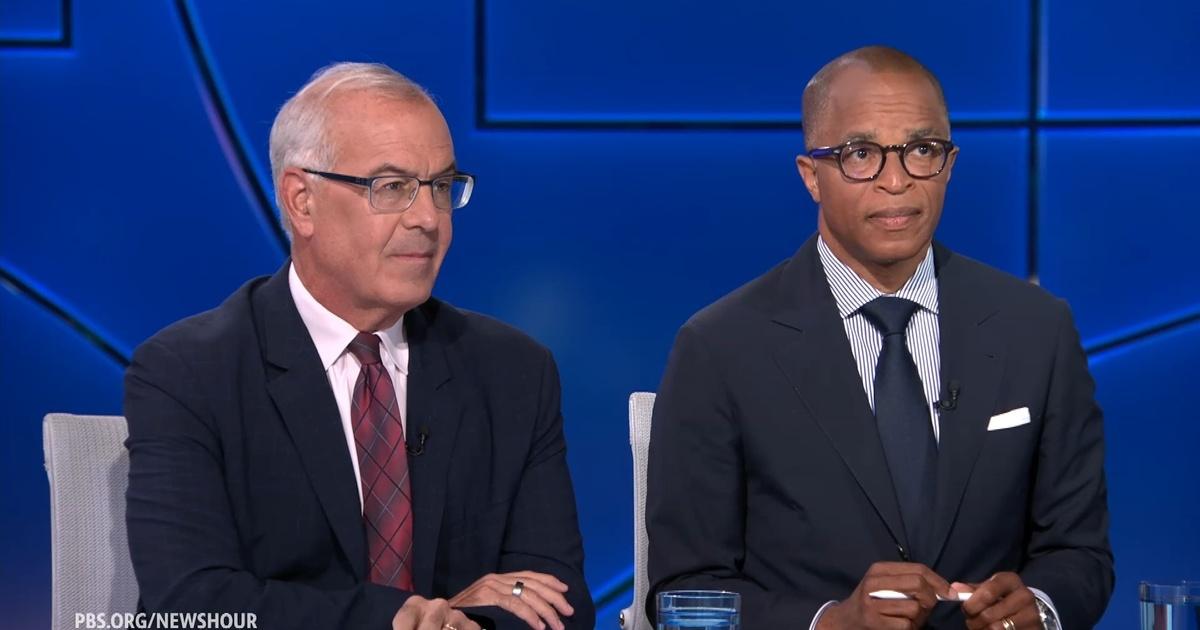
"If Canada accepts a bad deal simply because the alternative is painful, then every future negotiation begins with the assumption that enough economic pressure will eventually force Canada to surrender.

That is precisely why Europe is paying attention."


1788089474299.png

Mark Carney’s decision to walk away from the U.S. trade deal is no longer being watched only in Canada.

Europe is watching too.

And that may turn out to be one of the most important consequences of this entire confrontation.

Former Liberal leader Michael Ignatieff says Canada’s rejection of Washington’s proposed deal is attracting attention across Europe because European governments are now asking a difficult question: did they concede too much to Donald Trump, and should they take a tougher approach next time?

That is a much bigger story than Canada simply saying no.

Last year, the European Union accepted a trade arrangement that left most EU exports to the United States facing a 15 percent tariff. The agreement was heavily criticized inside Europe as unbalanced, but European leaders calculated that compromise was preferable to an escalating trade war with Washington.

Canada made a different calculation.

Carney walked away after the U.S. sought terms Ottawa said would interfere with Canadian decision making, including restrictions affecting Canada’s ability to negotiate trade agreements with other countries. Carney said Canada would not accept a deal that ....

CONTINUED with comments
 
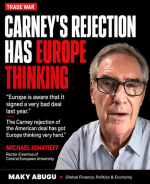
"Former Liberal leader Michael Ignatieff says Canada’s rejection of Washington’s proposed deal is attracting attention across Europe because European governments are now asking a difficult question: did they concede too much to Donald Trump, and should they take a tougher approach next time?
That is a much bigger story than Canada simply saying no." #603
What does the GOP stand for, other than Donald Trump?

History may demonstrate Mark Carney's decision to walk away was his best option.
The U.S. has earned scorn for President Trump's hostility to our friends and allies.

Near term, the obvious question:
will the GOP pay a penalty for having been Trump's dutiful lap dog?
 
I consider tariffs that are not simply retaliatory, to be inherently illegal.
Governments do not have the authority to cause harm to the life, liberty, or pursuit of happiness of individuals.
And tariffs do cause harm to individuals.
 
"I consider tariffs that are not simply retaliatory, to be inherently illegal.
Governments do not have the authority to cause harm to the life, liberty, or pursuit of happiness of individuals.
And tariffs do cause harm to individuals." R5 #605
We share the concern for justice, and the welfare of individuals. BUT !
I'm not convinced tariffs are inherently illegal, OR that they harm the welfare of individuals.

A simple example:
A U.S. taxpaying voter in good standing attempts to earn a living manufacturing amulets.
China competes against him by mass-producing competing amulets with Chinese slave labor.

The U.S. doesn't have the ability to compel China to treat its workers fairly. BUT !
What the U.S. can do is impose a tariff on Chinese slave-labor amulets so they don't undercut
the law-abiding U.S. citizen's amulets in wholesale & retail markets.

Such tariff may be tricky. & misuse of tariffs may be an insidious risk.
But I wouldn't conclude from that, because there's a risk, we shouldn't ever tariff at all.
 
We share the concern for justice, and the welfare of individuals. BUT !
I'm not convinced tariffs are inherently illegal, OR that they harm the welfare of individuals.

A simple example:
A U.S. taxpaying voter in good standing attempts to earn a living manufacturing amulets.
China competes against him by mass-producing competing amulets with Chinese slave labor.

The U.S. doesn't have the ability to compel China to treat its workers fairly. BUT !
What the U.S. can do is impose a tariff on Chinese slave-labor amulets so they don't undercut
the law-abiding U.S. citizen's amulets in wholesale & retail markets.

Such tariff may be tricky. & misuse of tariffs may be an insidious risk.
But I wouldn't conclude from that, because there's a risk, we shouldn't ever tariff at all.

And interesting question.
When a country is abusive to its own workers, things you do to that country could then all be considered "retaliatory"?
But rather than tariffing slave labor, I would prefer more explicit threats.

One of the causes of the Civil War was the northern imposed tariffs on British goods the south relied upon.
Even if these tariffs were to punish slavery in the south, they did not reduce slavery by making the south buy goods from the north instead of England.
So those tariffs did not seem to have justification?
 
"When a country is abusive to its own workers, things you do to that country could then all be considered "retaliatory"?" R5 #607
Compensatory.
It relates to the "level playing field" standard of international trade.
 
Compensatory.
It relates to the "level playing field" standard of international trade.

I would not go the "level playing field" route since other countries could achieve that simply by also having slave labor.
I would go with the idea that no country has the authority to violate the rights of individuals, and that all countries have an obligation to protect all rights, even those of individuals in other countries.
 
"I would not go the "level playing field" route since other countries could achieve that simply by also having slave labor." R5 #609
😲
The standard is earning a middle-class $income / living.
The "level playing field" is NOT about degrading U.S. standards down to slavery level. It's PRECISELY the opposite.

Instead it's about realizing the promise of NAFTA / globalization: raising the standard of living of workers around the world.
Perhaps ironically, this may be the most substantive move toward achieving the empty promise Marx & Engels made in their Communist Manifesto.

"I would go with the idea that no country has the authority to violate the rights of individuals" R5 #609
Excellent.
And when they do, our middle-class entrepreneurs deserve reasonable protection. Tariffs are one way of providing such protection.
 
😲
The standard is earning a middle-class $income / living.
The "level playing field" is NOT about degrading U.S. standards down to slavery level. It's PRECISELY the opposite.

Instead it's about realizing the promise of NAFTA / globalization: raising the standard of living of workers around the world.
Perhaps ironically, this may be the most substantive move toward achieving the empty promise Marx & Engels made in their Communist Manifesto.


Excellent.
And when they do, our middle-class entrepreneurs deserve reasonable protection. Tariffs are one way of providing such protection.

Except that tariffs essentially turn your own citizens into slaves, since they no longer get choices about who they want to buy from or how much things are going to cost.
 
...., our middle-class entrepreneurs deserve reasonable protection. Tariffs are one way of providing such protection.
Tariffs are a tax on Americans, not on the "other guy" (China or whoever). Trump and his sycophants don't seem to have figured that out.

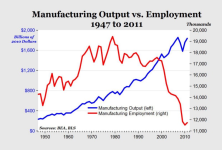
And they won't bring the jobs back - fact is, American manufacturing has increased but the jobs have left - automation has replaced the need for workers. This graph is somewhat dated but, if anything, things will have gotten worse.
1788117876427.png

And it's not just manufacturing and other jobs we think of as "labor". Thinking back to when my daughter was doing university tours to decide where she wanted to go, one of the schools we visited was the university I had attended as a Masters student. The main library is immense - it's four stories above ground and I honestly don't know how many below ground (I never had a need to go that deep into the place because the math department had it's own library). In the day you had to find the a book you wanted and then go get it or you could place an order with a librarian and they'd get it for you - pick it up at the front desk the next morning. Now, you go on line, find the book you want, and then you can go immediately to the library and your book will be waiting (even if a student is living in the graduate residences which are less than a five minute walk away). The reason you can do this is simple - there are now robots in the library and those robots will retrieve the requested book from the stacks and deliver it to the front desk. You merely have to sign it out (and you do that by scanning your student card and the bar code inside the book). When you return the book it's scanned back in and replaced on the shelves by a robot. [I'm sure the rare book section doesn't work like this but I doubt you can remove anything from there in any case.]

The library still employs librarians but their role is primarily to answer questions, help students with research, and the like.

those people moaning about wanting more manufacturing to return to America haven't thought it thru. If it does come back those jobs won't be the assembly line jobs of the past and those jobs won't be accessible to someone whose education stops with high school.

Turning to fast food (the source of many part time jobs for high school students and "empty nest" housewives looking for something to do now that the kids have left home) don't know about wrapping them yet but there are "burger machines" that can produce several hundred gourmet quality burgers in an hour. Far faster (and cheaper) than hiring even part time high school students to do the work. And again, the average high school graduate is not going to be employed servicing those machines.

One of the airports I regularly fly thru has replaced its old style restaurant with counters and the menus are now iPads - you simply enter your order and it's relayed to the cooks (yes there are two people running the grill, one person delivering the food and clearing the counter when you leave, and one other who roams around and helps anyone having difficulty ordering)

 
"Tariffs are a tax on Americans, not on the "other guy" (China or whoever)." S2 #612
Indeed.
Tariffs are a blunt instrument.
Laissez-faire may seem to be the ideal toward which we should strive. BUT !
When competing against slave labor abroad, laissez-faire would mean sinking to slavery, rather than elevating the competition.

"Trump and his sycophants don't seem to have figured that out." S2 #612
Trump is obviously wildly out of line imposing 50% tariffs on Canada.
"The fact that somebody over-sells an idea doesn't make it a bad idea. It makes them a bad salesman." Rep. Barney Frank (D-MA ret)
 
Back
Top