For my Canadian friends

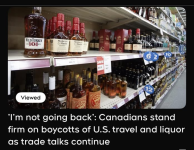
A new Nanos survey for CTV News found that most Canadians continue supporting boycotts of U.S. travel and products as trade tensions persist. About 82% of respondents said avoiding American goods and travel helps strengthen Canada’s bargaining position, with older Canadians showing the strongest support.

Provinces removing U.S. liquor from shelves have significantly impacted American distilleries, with exports to Canada reportedly dropping 63% in 2025 and nearly 1,000 related jobs lost.

Despite the economic impact, many Canadians interviewed said they plan to continue avoiding U.S. products and travel until trade disputes are resolved, viewing the boycott as important leverage in negotiations.
1778336461132.png

SOURCE

And from one Canadian liquor store, after the shelves had been stripped of American booze an employee had placed a single aptly named bottle of wine there ....

1778336818455.png
 
Saturday May 16, 2026:
- tonight -

NHL HOCKEY
Buffalo Sabres at Montreal Canadiens ABC-TV 8PM/ET

Let's Go Buffalo !
 
Canada is decoupling from the miscreant pariah, formerly known as the United States for many reasons but mostly because of the disrespect, condescending rhetoric, lies, and arrogance. Add this to the fact the US is dishonourable, racist, unreliable, insulting and untrustworthy!
🖕
🌮
💩
🇺🇸


Canada has moved on and the world wants what we have. Prime Minister Dr. Mark Carney has already signed agreements with over 50 countries!

1779018138612.png

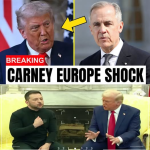
Canada Is Gone — Carney Just Replaced America With Europe And Trump Can't Stop It Something extraordinary is happening in global politics right now — and according to this analysis, Canada is at the center of it.

The argument is that Prime Minister Mark Carney is no longer simply managing tensions with the United States. He is systematically redesigning Canada’s economic and geopolitical future to reduce dependence on Washington altogether.

After years of tariffs, trade disputes, annexation rhetoric, and political pressure from Donald Trump, Canadians handed Carney a strong electoral mandate built around one central idea: Canada must become more independent and globally diversified.

And Carney appears to be moving with remarkable speed.

In just a few months, Canada has pursued new trade and security relationships across Europe, Asia, the Middle East, and South America. Negotiations involving India, ASEAN countries, Mercosur, China, and Qatar are being framed not as isolated trade deals, but as part of a much larger structural shift — one designed to spread Canada’s economic partnerships across multiple continents so that no single country can dominate its future.

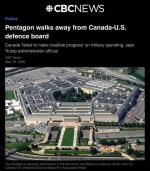
The most symbolic move came when Canada joined the European Union’s SAFE defense initiative, becoming the first non-European country ever included in the framework. That decision signaled something deeper than diplomacy: Ottawa no longer sees long-term reliance on Washington as sufficient for Canada’s security and economic future.

Throughout the strategy, Carney’s approach reflects his background as a central banker and technocrat. Rather than responding emotionally to political pressure, he is building systems — trade agreements, investment flows, supply chains, defense partnerships, and infrastructure networks — that become difficult to reverse once established.

The analysis also argues that Trump’s confrontational approach may actually be accelerating Canada’s pivot away from the United States. Every tariff, public insult, or annexation comment gives Carney more domestic political support for diversification and deeper ties with Europe and Asia.

Perhaps the most important point is this: Carney is not trying to “fix” the old relationship with America. He may be trying to build a Canada that no longer depends on that relationship remaining stable at all.

Whether this transformation ultimately succeeds remains uncertain. But one thing is increasingly clear: Canada is attempting one of the most ambitious geopolitical repositionings in its modern history — and the consequences could reshape the future of North America for decades.
 
Back
Top