View attachment 5566
Ford Hires Over 300 Engineers, Including Former Employees, After Finding AI Couldn't Do Their Work
What people forget is that AI is not computers, but instead is just human programmers, who know very little about cars.

View attachment 5566
Ford Hires Over 300 Engineers, Including Former Employees, After Finding AI Couldn't Do Their Work

Virginia / Published July 3, 2026 9:45am EDT"AI is not computers" R5 #401

 www.foxbusiness.com
"AI is not computers" alone. BUT !"AI is not computers" R5 #401
The "A" in "AI" stands for "artificial". That means Silicon which eats electrons, not Carbon, which eats pizza. BUT !"AI is not computers" R5 #401
Yeah, firing hundreds of human engineers is premature, the result of non-technical management making management decisions.R5 #401
Virginia / Published July 3, 2026 9:45am EDT
Virginia county urges power saving measures amid 25% electricity rate hike, data center growth
County manager cites Great Recession era austerity as power bills climb 25% in data center capital
By Robert McGreevy FOX Business
John Vithoulkas, the county manager in Virginia's Henrico County, is asking county employees to cut back on power usage as electricity rates soar 25% across Virginia, the state with by far the most data centers.
Virginia county urges power saving measures amid 25% electricity rate hike, data center growth
Virginia's Henrico County is implementing energy austerity measures to combat a $5 million spike in utility costs as the state's data center industry explodes.
"AI is not computers" alone. BUT !
These data center computers are guzzling electrons on industrial scale, not only jostling commercial electric power markets,
but also computer hard-drive, and Silicon computer chip markets too. The result, the cost of smart-phones and consumer grade computers is increasing, after decades of progressive price decrease.
The "A" in "AI" stands for "artificial". That means Silicon which eats electrons, not Carbon, which eats pizza. BUT !
Yeah, firing hundreds of human engineers is premature, the result of non-technical management making management decisions.
4 million times more?"In general, brains and computers are just binary switches, with on/off.
But human brains have about 4 million more of these switches than our largest computers." R5 #403
That would be an example of artificial incompetence / stupidity."For example, there now have been hundreds of airplane crashes due to the autopilot anti-stall programming that causes planes to go into steep dives that are often fatal." R5 #403
Some may consider this an intrinsic limitation of the technology, of the concept."The point being that human programmers lack expertise, subtlety, and understanding how to really program physical events into computers." R5
As a code writer? In what language?"Which was my specialty for over 50 years." R5
4 million times more?
That would be an example of artificial incompetence / stupidity.
The challenge is auto-pilot engineering is not to create an auto-pilot that's nearly as good as a human.
The challenge is to create pilot automation that is superior.
This has already been ably demonstrated by NASA's now retired shuttle fleet.
Humans aren't good enough to pilot such a glider (a rocket ship in unpropelled descent). [NASA shuttles may have been spacecraft in orbit, but they were glider aircraft after re-entry.]
So the NASA shuttle fly by wire system provided the human "pilot" controls, not directly to the flight control surfaces such as rudder and elevator,
but to the spacecraft's piloting parliament, four separate computers that each received the human's input. The four then calculated from there.
Some may consider this an intrinsic limitation of the technology, of the concept.
I can not.
Instead I consider it unambiguous evidence the technology reached the market prematurely.
As a code writer? In what language?
Or as a code writer specializing in aviation? If so, which aircraft? DC8 ?
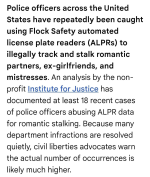
"officers ... illegally track and stalk" #407
Considered purely as a hypothetical I can find no obvious error in #409. BUT !"I agree all these surveillance cameras and tracking methods all seem totally illegal to me.
I am going to fight a camera speeding ticket since it did not warn me when it happened, and I am not allowed to "face my accuser" in court.
The camera legally is just 2nd hand "hearsay"." R5 #409
"A good lawyer knows the law.
A great lawyer knows the judge."
Considered purely as a hypothetical I can find no obvious error in #409. BUT !
It's a two-edged sword.
IF that were the legal standard, then how would home owners make use of doorbell cams, and dash-cams, and home security cameras, for matters as simple as "porch pirates" (stealing a UPS delivery)
or simple vandalism caught on a home security camera?
As a matter of pure logic, makes sense to me.
But as we know these government surveillance / enforcement cameras have been in operation for decades.
If government were not consistently getting away with this already, such equipment would not likely still be in operation. Not sure even a "good lawyer" can help here.
I'm not sure there's any statute or precedent protecting privacy in public, specifically on public roadway."The surveillance aspect seems a violation of privacy." R5 #411
I'm not sure there's any statute or precedent protecting privacy in public, specifically on public roadway.
There may be a warrantless search / probable cause angle. BUT !
Again, I suspect such argument has already been tried, and rejected.
"There is no law that says we have to go to work every day and follow our employer's orders. Legally there is nothing to prevent us from going to live in the wild like primitive people or from going into business for ourselves.
But in practice there is very little wild country left, and there is room in the economy for only a limited number of small business owners. Hence most of us can survive only as someone else's employee."
Excerpt from Unabomb Manifesto: author convict Theodore Kaczynski; sentenced to Lifetime imprisonment without possibility of parole
R5,
Got a radar detector?
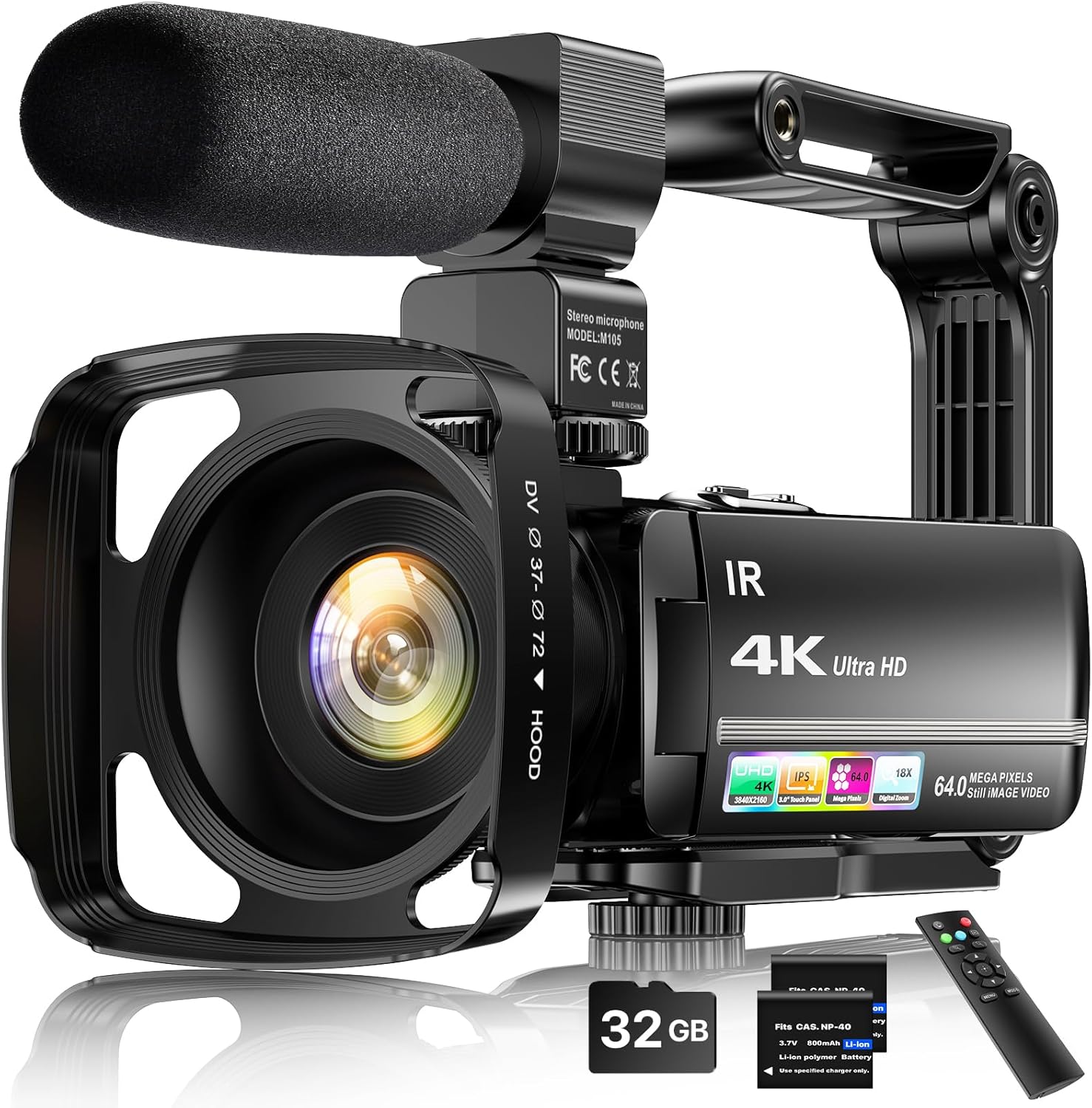
I run both a radar detector, and a 4k dashcam.
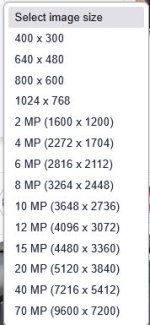
I'd love to have a 20 megapixel camera for that, have been culling the Internet for years. The specs are listed for such cameras:
View attachment 5614
BUT !
I haven't found a single vendor.
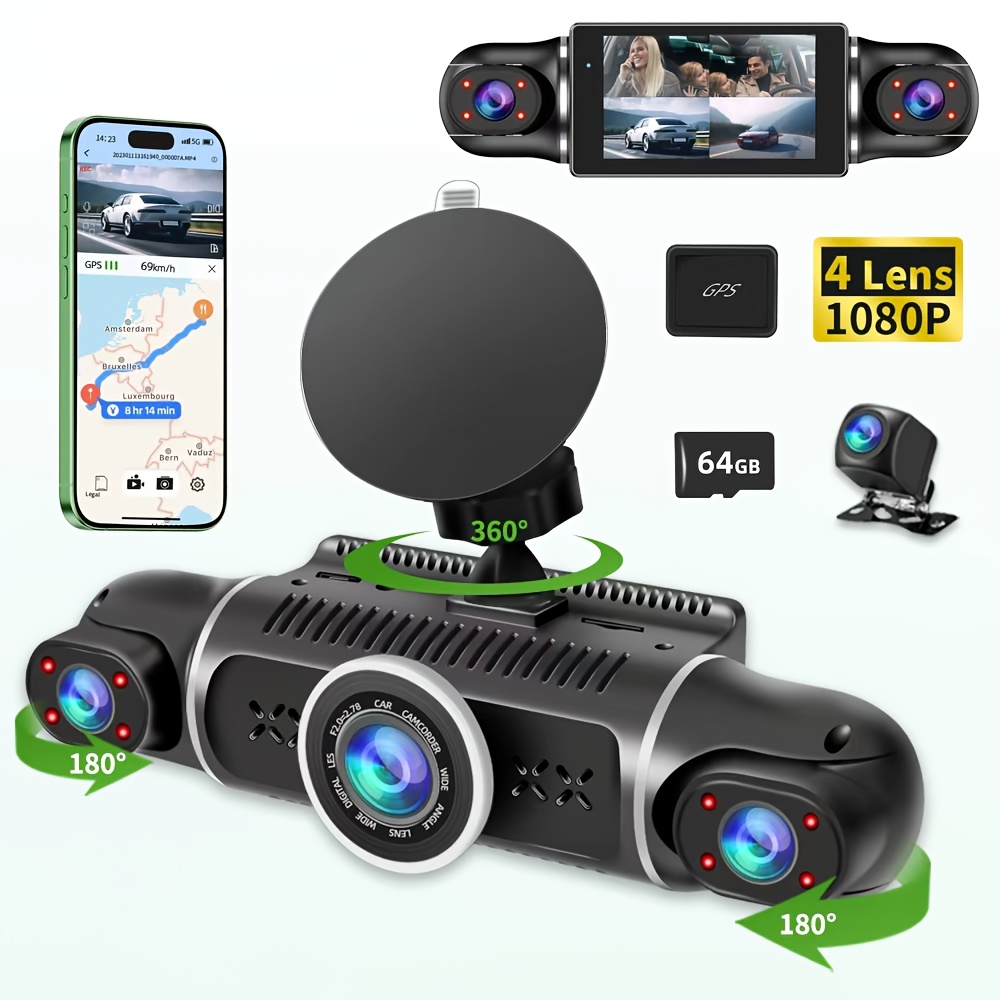
I've ordered from Temu, occasional annoyances; example, a zippered jacket with the slider designed for left-hand operation."You might want to look at Temu, Ali Baba, LightInTheBox, etc.
They are all cheapie mail order from Asia, but some of their stuff seems to be a very good deal?
Some is junk however.
Here is a link to Temu, then search for dashcams.
This one is $54.
https://www.temu.com "
A UK lawyer friend tells me that those speed cameras take 100's of pictures on a roll of film. It's a given that there will be pictures of a number of police cruisers speeding on any given roll and, since they're all time stamped it's an easy matter to confirm whether or not they were on call so their speeding was justified. It's a given that at least a few (if not most) of those speeding cruisers were simply late for their coffee break. So the obvious defense is "why was my client ticketed when the officer were not?"I am going to fight a camera speeding ticket since it did not warn me when it happened, and I am not allowed to "face my accuser" in court.
The camera legally is just 2nd hand "hearsay".
"A UK lawyer friend tells me that those speed cameras take 100's of pictures on a roll of film. It's a given that there will be pictures of a number of police cruisers speeding on any given roll and, since they're all time stamped it's an easy matter to confirm whether or not they were on call so their speeding was justified. It's a given that at least a few (if not most) of those speeding cruisers were simply late for their coffee break. So the obvious defense is "why was my client ticketed when the officer were not?"" S2 #415

Those pics are all time and date stamped so it's a simple matter to determine what cruiser and who was driving AND whether they were on call or just late to coffee.Even if we consider it a probability this government video record of "speeding cruisers", it is not a certitude.
If there's government video evidence of "speeding cruisers" they may have legal defense that may apply if it was the $taxpayer that is accused. "Flow of traffic", one such example.
Unless the defendant has specific knowledge of a time / date / location of a government violation, obtaining the evidence is a fishing expedition.
Indeed,"Those pics are all time and date stamped so it's a simple matter to determine what cruiser and who was driving AND whether they were on call or just late to coffee." S2 #417
Applying for the vids may be as simple as completing a one page government form. BUT !"A bird in the hand is worth two in the bush." aphorism
BUT !"And, as my lawyer friend said - it's easier (and cheaper) for them to simply drop the charges than it is to defend every case of a cruiser speeding - there will be dozens on any single roll of film." S2 #417
BUT !
Even if we consider it a probability this government video record of "speeding cruisers", it is not a certitude.
If there's government video evidence of "speeding cruisers" they may have legal defense that may apply if it was the $taxpayer that is accused. "Flow of traffic", one such example.
Unless the defendant has specific knowledge of a time / date / location of a government violation, obtaining the evidence is a fishing expedition.
FOIL may ostensibly enable that, but in practical terms, government can and has stonewalled such citizen inquiries. Institutional anal-retentalism.
And the State has developed viable agility in dodging / circumventing such legal application.
Example: speed limits apply only to automobiles, and a police car is not an automobile.
I've ordered from Temu, occasional annoyances; example, a zippered jacket with the slider designed for left-hand operation.
The cam in #413 is about the exact opposite of what I'm looking for.
I need no bells & whistles. And 1080P is tolerable for broadcast TV. But not good enough for this install.
The Blackvue dashcam I use is UHD / 4K. It's pretty good.
20MP or 40MP would be better.
- - - - -
What I'd like is a security style dome camera ~20MP with PTZ mounted on the car roof near the windshield.
So far, no such camera, and even if there was, not sure how difficult it would be to playback the vid right-side up.