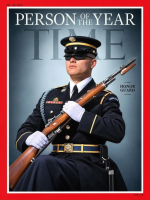
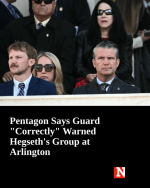
Naming this monument "Tomb Of The Unknown Soldier" excludes our other armed services. This monument honors those that lost both life, and identity in national defense.
Late in the 20th century the monument was renamed "Tomb Of The Unknowns", and however briefly held remains of unknown service members from 4 service branches. BUT !
As DNA technology developed, the "unknowns" were identified. So they re-unnamed the tomb?
This story is a swirl of unanswered questions.
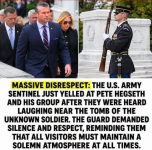
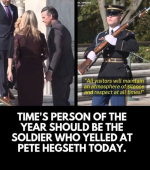
- The words the honor-guardsman spoke, was he improvising? Or reciting prepared text provided by his chain of command, which he recited?
- How often do guardsmen on this post break silence? Once a day? Once a decade? Never happened before?
- Did the cited infraction barely cross the line? Or was it a flagrant over-the-line violation?
- Are there written signs on conspicuous display for visitors specifying quiet? If so, what is the wording? Were those written instructions violated in this Hegseth case?
- I see no rank on the military uniform. There's something on the epaulet, but rank insignia located there indicates a commissioned officer. Rarely if ever do commissioned officers perform guard duty, generally left to enlisted, or NCO, rank displayed on sleeve below the shoulder. *
- The specific honor-guardsman looks like he's from central casting. Was the duty roster altered to get that specific guard on that post at that time? If so, where did the intel. come from, that Hegseth would be there then? An inside job from a Hegseth's insider?
There are other questions. But I suspect the answers may be more interesting than the alarming headline.
There's no persuasive evidence Hegseth was set up for this. Neither is there evidence it was otherwise.
* There is such rank in the U.S. Army displaying no rank insignia, pay grade E-1, rank: "buck private". BUT ! The uniform in this case displays multiple medals. Rarely have buck privates of that age & demeanor earned so many medals.

 www.facebook.com