
Below The Fold ...

"But what I have read from anthropologists, is that humans naturally or normally do not compete." R5 #480
Fine.
BUT !

We still benefit from being alert when meeting strangers, because while the probability that they'll be lethally aggressive may be low, the consequence is reciprocally high.

"What I have read says that humanoid primates originally were arboreal, but for some reason came down from the trees.
And when they did, they discovered that by not having speed, armor, claws, or fangs, our only means of survival left was to act as a group defense." R5 #480
R5,
As you know, anthropologists weren't there then.
So they're trying to deduce behavior from fragmentary skeletons, stone tools, etc.

I'm guessing (wildly?) anthropologists generally do a pretty accurate job. BUT !
It's unlikely they're 100% correct on every detail.

I suspect our ancestors descended from the trees to strut upon the savanna imparting competitive advantage to the strutters, (otherwise we'd still be in the trees)
perhaps a more diverse diet, perhaps better more diverse mating opportunity, perhaps longer life, thus more mating opportunities, or superior child rearing.
That's speculation. We may not know why. But we know it happened.

"Meaning that when one is attacked, all have to pitch in with the defense, even though that could mean the sacrifice of your own life, in order to help someone else." R5
Their division of labor was confined to family / clan scale.
Difficult for me to imagine a crowd marching up & down the savanna. It almost certainly happened. Whether it was the rule, or the exception, who knows?

"Instead of the nuclear family arrangement we expect from our European ancestry, the natives of the Western Hemisphere lived communally.
They shared a common kiva living structure, that only had 2 or 3 cooking facilities for over 500 people.
Meaning that we are forcing a far more narcissistic society on humanity than what was naturally selected for over the millions of years of primate existence." R5 #480
I deduce you have personally visited some of these sites.
I appreciate your reflection on the experience.
I don't mean to diminish or disparage "book learnin'".
But it's difficult to substitute for personal experience.
 
Fine.
BUT !

We still benefit from being alert when meeting strangers, because while the probability that they'll be lethally aggressive may be low, the consequence is reciprocally high.


R5,
As you know, anthropologists weren't there then.
So they're trying to deduce behavior from fragmentary skeletons, stone tools, etc.

I'm guessing (wildly?) anthropologists generally do a pretty accurate job. BUT !
It's unlikely they're 100% correct on every detail.

I suspect our ancestors descended from the trees to strut upon the savanna imparting competitive advantage to the strutters, (otherwise we'd still be in the trees)
perhaps a more diverse diet, perhaps better more diverse mating opportunity, perhaps longer life, thus more mating opportunities, or superior child rearing.
That's speculation. We may not know why. But we know it happened.


Their division of labor was confined to family / clan scale.
Difficult for me to imagine a crowd marching up & down the savanna. It almost certainly happened. Whether it was the rule, or the exception, who knows?


I deduce you have personally visited some of these sites.
I appreciate your reflection on the experience.
I don't mean to diminish or disparage "book learnin'".
But it's difficult to substitute for personal experience.

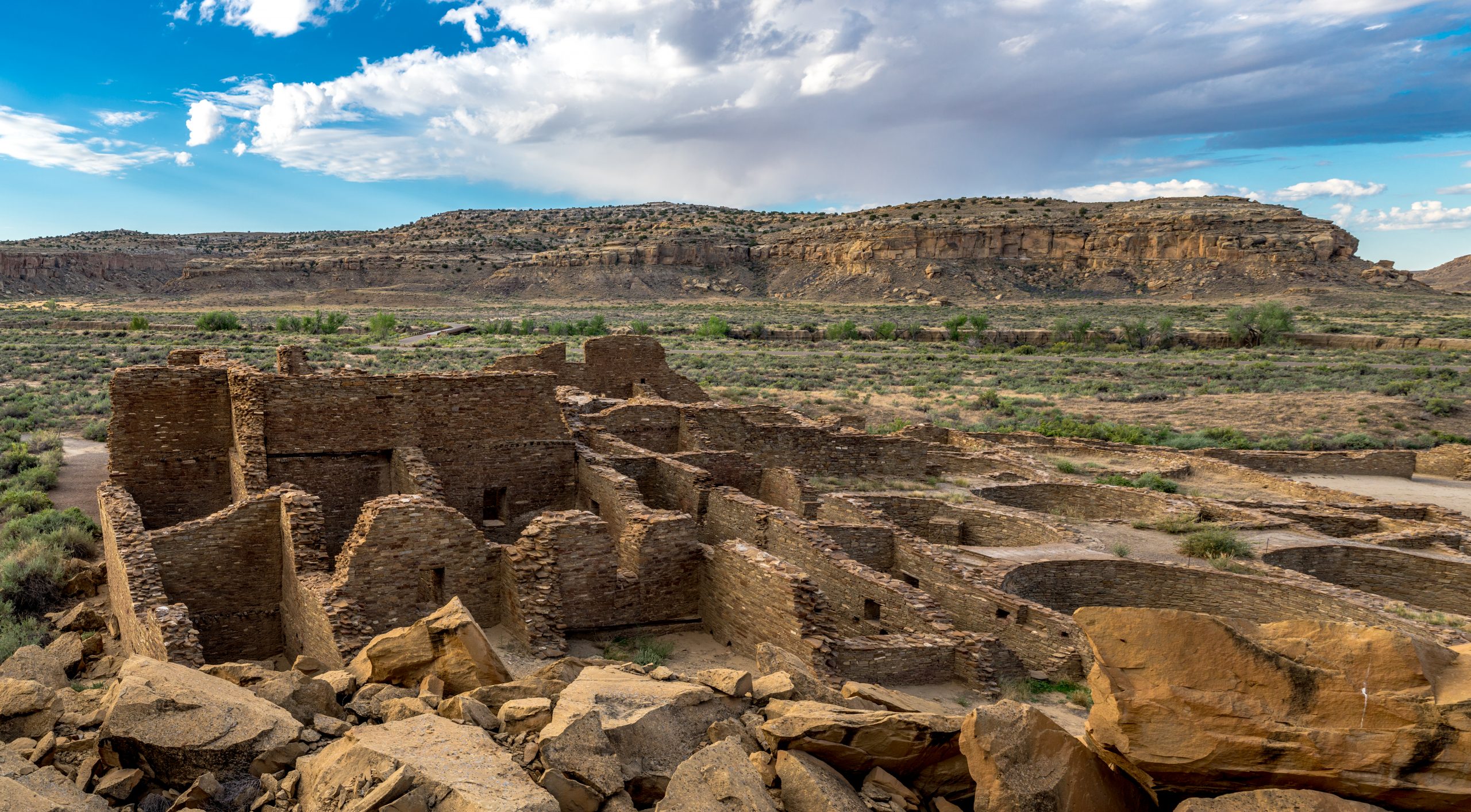
The most interesting I have seen were Chaco Canyon and Mesa Verde.
The first thing you notice is that they are all masonry of stone and mortar, which contrasts with the mythical nomadic tent life we tend to see on TV.
From around 900 AD but abandoned before 1200 AD. Drought most likely. But doorways sealed, like there was an intent to return?
0A94571-Pano-1-scaled.jpg
 
R5,
I've been studying #482.
The public roadway located between ruins in foreground and escarpment in background appears to have both a T-intersection, and a bridge.
If the terrain was merely a dry ravine they might have used a causeway to traverse it. Looks like a bridge to me.
That suggests water, though drought may leave it a dry gulch for years at a time.
Was it a river when the stonework was built?

Some of the building approximates orthogonality. But there are a few ~circular structures. Cisterns / wells?

" like there was an intent to return?" R5 #482
If site hydrology supported a community for generations, they may have hoped a reduction in water supply was temporary.

I've never been there, but I imagine the days can be hot, & the nights cold. The thick rock walls would buffer the heat, warm at night, cool in the day.

My grim anxiety about this, the conquest of North America may have been successfully completed by Peoples that were technically / militarily superior.
But they / we may have extinguished cultures / nations that were superior socially, and or politically.

Thanks for the vaca R5.
 

Industrial Atrophy?

The machines that keep America alive are failing. We forgot how to replace them​

We've finally admitted that electricity is as essential as water, but we did so too late to avoid disruption​

By Brian Tochman Fox News / Published August 7, 2026 5:00am EDT
Texas pauses AI data center power hookups amid grid fears

For 20 years, electricity was the most boring business in America, and our industry built its whole infrastructure strategy around the assumption that things would stay that way.

The numbers tell the story. From 2010 to 2020, U.S. electricity consumption fell by roughly 1%. LEDs, efficient motors and tightening appliance standards quietly cancelled out the electricity used by every new subdivision, factory and data hall, and then some. Demand was flat, and planners treated this as a permanent fact of life rather than as what it actually was: an intermission.

No-growth industries make choices that are perfectly rational, yet corrosive. You don't fund apprenticeships when there's no new capacity to staff. You don't keep spare metallurgical know-how on the payroll when nobody's ordering. You don't recruit ambitious 25-year-olds into a sector whose pitch is "stable, essential, and never going anywhere."

So, the utilities didn't. The transformer makers didn't. The steel mills didn't. The workforce aged in place and the labor pipeline behind it ran dry.

We mistook a flat line for stability and in doing so, allowed a slow decay to occur. Then the line broke.

Since 2020, electricity consumption has reversed two decades of decline and climbed about 7%. Demand for large power transformers, the equipment through which nearly all of America's electricity passes at some point, has surged 116% since 2019. Data centers, reshoring, electrification and grid hardening all arrived in the same handful of years, descending on an industry that had bought into the idea that it would never grow again.

Facing resurgent demand, we went looking for the people and the parts to meet resurgent demand, and here is what we found: America had forgotten how to make pipes.

TRUMP’S REINDUSTRIALIZATION AGENDA FACES ITS BIGGEST HURDLE — AMERICANS

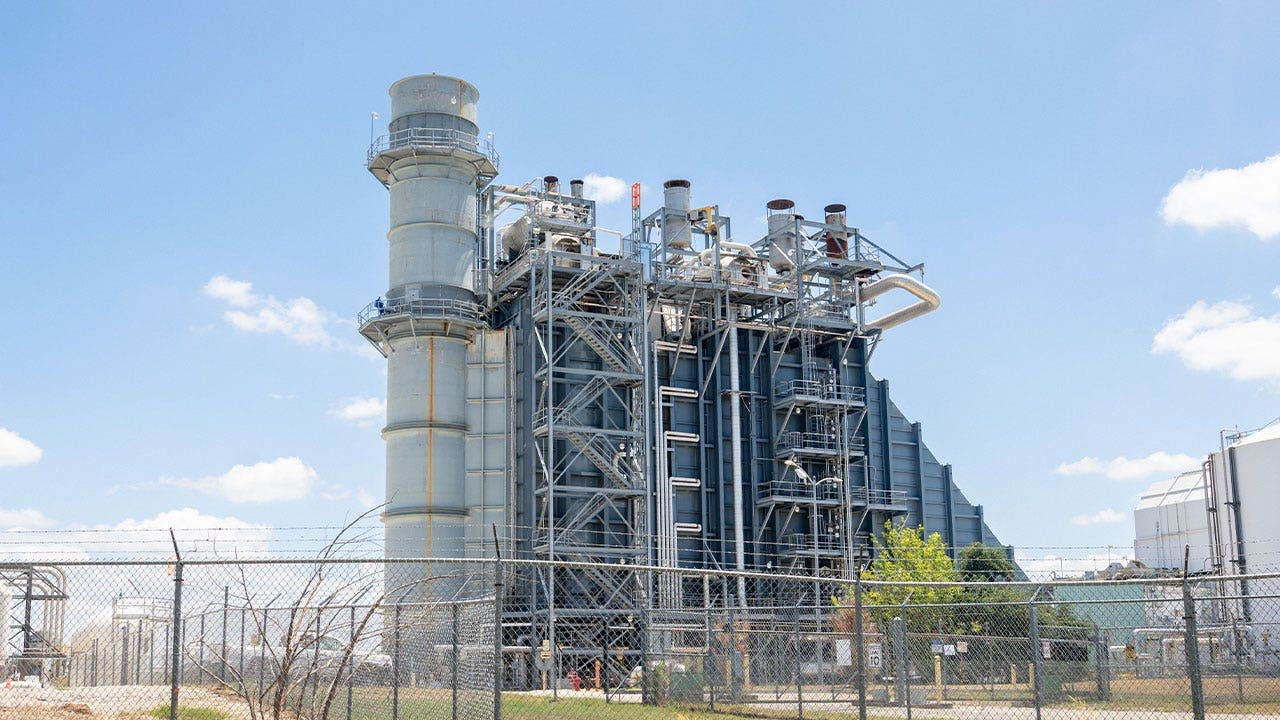
Roughly 80% of the large power transformers the United States installs are now imported. The grain-oriented electrical steel at the heart of every one of them has but a single domestic producer. Lead times for a standard power transformer have stretched to nearly two and a half years, and the larger units that connect power plants to the grid run longer still. Prices are up more than 77% since 2019. The average transformer already humming away on the American grid is 38 years old, and more than 70% of the fleet is past age 25.

TEXAS GOV. GREG ABBOTT EFFECTIVELY PAUSES NEW DATA CENTER PROJECTS PENDING STATEWIDE GRID AUDIT

 
R5,
I've been studying #482.
The public roadway located between ruins in foreground and escarpment in background appears to have both a T-intersection, and a bridge.
If the terrain was merely a dry ravine they might have used a causeway to traverse it. Looks like a bridge to me.
That suggests water, though drought may leave it a dry gulch for years at a time.
Was it a river when the stonework was built?

Some of the building approximates orthogonality. But there are a few ~circular structures. Cisterns / wells?


If site hydrology supported a community for generations, they may have hoped a reduction in water supply was temporary.

I've never been there, but I imagine the days can be hot, & the nights cold. The thick rock walls would buffer the heat, warm at night, cool in the day.

My grim anxiety about this, the conquest of North America may have been successfully completed by Peoples that were technically / militarily superior.
But they / we may have extinguished cultures / nations that were superior socially, and or politically.

Thanks for the vaca R5.

The river is flowing now.
So likely is used to flow most of time.

There are likely several types of rooms that were circular.
One would be a granary, since you would want to store grain in rodent proof masonry, just as the Egyptians did.
But the other is the familiar kiva.
I think the kivas were communal cooking and dining areas, but wiki calls them more "spiritual".
{...
A kiva[a] (also estufahttps://en.wikipedia.org/wiki/Kiva#cite_note-2[1]) is a space used by Puebloans for rites and political meetings, many of them associated with the kachina belief system. Among the modern Hopi and most other Pueblo peoples, "kiva" refers to a large, circular, underground room used for spiritual ceremonies and as a place of worship.

Similar subterranean rooms are found among ruins in the Southwestern United States, indicating uses by the ancient peoples of the region, including the ancestral Puebloans, the Mogollon culture, and the Hohokam.[2] Those used by the ancient Pueblos of the Pueblo I period and following, designated by the Pecos Classification system developed by archaeologists, were usually round and evolved from simpler pit-houses. For the Ancestral Puebloans, these rooms are believed to have served a variety of functions, including domestic residence, social, and ceremonial purposes.[3]
...}


By the way, from the doorways, you can tell that these Chaco Canyon Pueblo buildings were at least 3 stories tall.
And the beams came from Mt. Taylor, over 50 miles away, without the use of horses.

As for why primates came down from the trees, there were over 12 ice ages, and I think one could likely find better shelter from the cold on the ground than up in a tree?
 
Last edited:

Industrial Atrophy?

The machines that keep America alive are failing. We forgot how to replace them​

We've finally admitted that electricity is as essential as water, but we did so too late to avoid disruption​

By Brian Tochman Fox News / Published August 7, 2026 5:00am EDT
Texas pauses AI data center power hookups amid grid fears

For 20 years, electricity was the most boring business in America, and our industry built its whole infrastructure strategy around the assumption that things would stay that way.

The numbers tell the story. From 2010 to 2020, U.S. electricity consumption fell by roughly 1%. LEDs, efficient motors and tightening appliance standards quietly cancelled out the electricity used by every new subdivision, factory and data hall, and then some. Demand was flat, and planners treated this as a permanent fact of life rather than as what it actually was: an intermission.

No-growth industries make choices that are perfectly rational, yet corrosive. You don't fund apprenticeships when there's no new capacity to staff. You don't keep spare metallurgical know-how on the payroll when nobody's ordering. You don't recruit ambitious 25-year-olds into a sector whose pitch is "stable, essential, and never going anywhere."

So, the utilities didn't. The transformer makers didn't. The steel mills didn't. The workforce aged in place and the labor pipeline behind it ran dry.

We mistook a flat line for stability and in doing so, allowed a slow decay to occur. Then the line broke.

Since 2020, electricity consumption has reversed two decades of decline and climbed about 7%. Demand for large power transformers, the equipment through which nearly all of America's electricity passes at some point, has surged 116% since 2019. Data centers, reshoring, electrification and grid hardening all arrived in the same handful of years, descending on an industry that had bought into the idea that it would never grow again.

Facing resurgent demand, we went looking for the people and the parts to meet resurgent demand, and here is what we found: America had forgotten how to make pipes.

TRUMP’S REINDUSTRIALIZATION AGENDA FACES ITS BIGGEST HURDLE — AMERICANS

Roughly 80% of the large power transformers the United States installs are now imported. The grain-oriented electrical steel at the heart of every one of them has but a single domestic producer. Lead times for a standard power transformer have stretched to nearly two and a half years, and the larger units that connect power plants to the grid run longer still. Prices are up more than 77% since 2019. The average transformer already humming away on the American grid is 38 years old, and more than 70% of the fleet is past age 25.

TEXAS GOV. GREG ABBOTT EFFECTIVELY PAUSES NEW DATA CENTER PROJECTS PENDING STATEWIDE GRID AUDIT


Its kind of scary because the feds used to protect or subsidize strategic industries in the past.
But these days, we seem to have lost tracks and can't make TVs, cellphones, computers, etc. anymore.
I did not even know we had stopped making the larger stuff, like transformers and generators.
 
"The river is flowing now." R5
I figured.
"So likely is used to flow most of time." R5
I doubt such water resource was merely coincidentally nearby.

" from the doorways, you can tell that these Chaco Canyon Pueblo buildings were at least 3 stories tall." R5 #485
I wonder what they used for upper story flooring.
Difficult for me to imagine them running a lumber mill.
They may have been talented ornamental Silversmiths. I doubt they had much experience with steel, as in a lumber mill circular saw blade.

"And the beams came from Mt. Taylor, over 50 miles away, without the use of horses." R5
Nice to know those pesky squaws earned their meager gruel.
There are several similar puzzles from ancient times. The large stones from Stonehenge. The statues of Easter Island. The great Egyptian pyramids.

I don't see lintels over the windows & doorways.

"As for why primates came down from the trees, there were over 12 ice ages, and I think one could likely find better shelter from the cold on the ground than up in a tree?" R5 #485
Makes sense to me.
There seems to be a correlation between these climatic adversities, and rapid increase in cranial volume. Apparently it was the smart ones, rather than the furry ones that survived.

"I did not even know we had stopped making the larger stuff, like transformers and generators." R5 #486
So what's GE up to these days? Making jet engines?

"Its kind of scary because the feds used to protect or subsidize strategic industries in the past." R5 #486
I consider it a gargantuan U.S. national security danger for numerous reasons, including
if China is manufacturing our top secret electronics, is it rational to imagine China doesn't have all the technical details on our top secret electronics?

We should make our own armaments. But I'm not clear on how to go about implementing that statutorily.
 
I figured.

I doubt such water resource was merely coincidentally nearby.


I wonder what they used for upper story flooring.
Difficult for me to imagine them running a lumber mill.
They may have been talented ornamental Silversmiths. I doubt they had much experience with steel, as in a lumber mill circular saw blade.


Nice to know those pesky squaws earned their meager gruel.
There are several similar puzzles from ancient times. The large stones from Stonehenge. The statues of Easter Island. The great Egyptian pyramids.

I don't see lintels over the windows & doorways.


Makes sense to me.
There seems to be a correlation between these climatic adversities, and rapid increase in cranial volume. Apparently it was the smart ones, rather than the furry ones that survived.


So what's GE up to these days? Making jet engines?


I consider it a gargantuan U.S. national security danger for numerous reasons, including
if China is manufacturing our top secret electronics, is it rational to imagine China doesn't have all the technical details on our top secret electronics?

We should make our own armaments. But I'm not clear on how to go about implementing that statutorily.


Yes, I think water supply was a big essential.

The building methodology for upper story floors is likely 6" vigas every 4' apart, and then cross latillas 2" to 3" notched in between the vigas.
Then you can fill in with mud and straw stucco.
I am guessing since the originals are long gone, but the same methodology is used still today.

{... Pueblo buildings are most commonly constructed from adobe, though stone was also used where available, for instance at Chaco Canyon. The buildings have flat roofs supported by rough-hewn wooden beams called vigas and smaller perpendicular laths or latillas. The vigas typically extend through the exterior wall surface. Larger structures often take the form of multistory terraces with setbacks at each level. Traditionally, upper floors were accessed by ladders, and buildings were often semi-fortified with minimal door and window openings at ground level. In modern practice, conventional doors and windows are more common, and were often retrofitted into older buildings. Other key elements of Pueblo architecture include kivas, which are circular ceremonial rooms which are partially or fully below ground, and enclosed courtyards or plazas.[3][4] There is an emphasis on communal rather than private spaces, with the plaza at the center of the village and village life, while dwelling and storage areas are more utilitarian and are arranged around the periphery. ...}
https://en.wikipedia.org/wiki/Pueblo_architecture

As far as metal work, I think they were still stone age and not even bronze age?

I assume the lentils were wood and decayed away?

I would like to see all electronics made in the USA since anything made overseas could have hidden backdoors, for things like listening in, being capable of being shut down, tracking, etc.
 
Back
Top