
You are using an out of date browser. It may not display this or other websites correctly.
You should upgrade or use an alternative browser.
You should upgrade or use an alternative browser.
Photos, vids, etc ....
- Thread starter Shiftless2
- Start date


Casual, superficial consideration of this may lead one to make a potentially false cause-&-effect assumption, perhaps implied by the quotation."The top 5 least religious countries are the least criminal, least violent and the happiest." #2,741
Does religion cause the crime, violence, and unhappiness? - OR -
Does religion help ameliorate it?
Shiftless2
Well-known member
Correlation does not imply causation. When I was teaching undergraduate statistics I used to point out that there was a very high positive correlation between the number of murders committed in NYC and the number of ice cream cones sold there. That did not mean that people were being bludgeoned to death with a double scoop of chocolate. Instead both were related to the temperature - if it was hot tempers frayed and people were killed and, if it was hot, people bought ice cream cones.Casual, superficial consideration of this may lead one to make a potentially false cause-&-effect assumption, perhaps implied by the quotation.
Back to religion - there is a high negative correlation between the degree of religiosity of a country and its average intelligence. BTW, that says nothing about an individual's religious beliefs and intelligence - it only refers to the population in general.
And if you want some other examples of spurious correlations you can look here
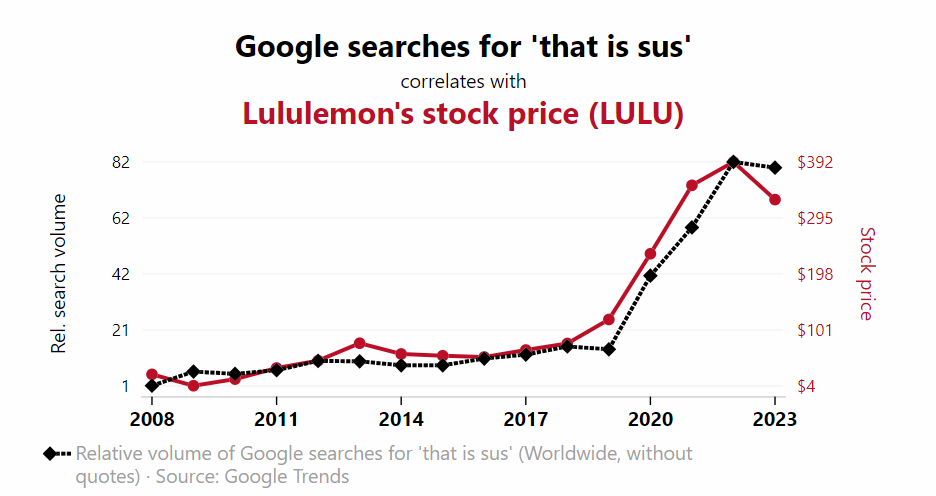
Spurious Correlations
Correlation is not causation: thousands of charts of real data showing actual correlations between ridiculous variables.
 www.tylervigen.com
Decades ago I read an account of aboriginal Australians consistently scoring lower on IQ tests than the descendants of the British criminals originally marooned there.
Turns out the IQ tests had Euro-centric bias. AND
when alternate tests with themes like local geology were administered,
the aboriginal Australian population scored higher.
Except,
how was average "intelligence" determined?
I have no specific information about why we should suspect the perspective offered in #2,743
other than the familiar perils of bias confirmation.
Turns out the IQ tests had Euro-centric bias. AND
when alternate tests with themes like local geology were administered,
the aboriginal Australian population scored higher.
Fine." - there is a high negative correlation between the degree of religiosity of a country and its average intelligence. " S2 #2,743
Except,
how was average "intelligence" determined?
I have no specific information about why we should suspect the perspective offered in #2,743
other than the familiar perils of bias confirmation.
Shiftless2
Well-known member
Re #2,744
Ask and ye shall receive
 www.graphsaboutreligion.com
Ask and ye shall receive
Do Educated People Believe in God More or Less?
Here’s a lesson that I’ve learned over the last couple of years: if the first book you write gets any traction at all, you will be remembered for that work for years to come.
www.graphsaboutreligion.com
It'll take me a while to figure out these graphs. Part of my problem is understanding the time progression.Re #2,744
S2 #2,745
Meanwhile, not sure what to make of such wording as:
So "atheist belief" is what others call disbelief?"those with graduate degrees are more likely to have an atheist belief"
AHD defines the prefix a- as without, or not. https://ahdictionary.com/word/search.html?q=a-
- meanwhile -
Now I'm wondering about the "mechanism" (not sure what it's called).
As an individual's education progresses / increases, belief in god diminishes? Why?
Because mythopoeic belief doesn't require an education?
As an individual acquires further education, they better understand more science-based alternate explanations?
For all their flaws, creation myths are easy to understand. "In the beginning, God created the heaven and the Earth." That's easy enough.
And how did God accomplish this? Doesn't say. So that's easy too. Alls we know is, took him 6 days, then he took a day off.
Interesting how in ancient Rome, the priesthood was also responsible for science research.
The wealthy males had their choice between military and priesthood.
The Dark Ages seem to be the worst, where religion was not just burning witches, but doing crusades, inquisitions, conquistadors, etc.
When I was a kid, I tried to read the bible, but was astounded how violent it was.
Never got very far.
The wealthy males had their choice between military and priesthood.
The Dark Ages seem to be the worst, where religion was not just burning witches, but doing crusades, inquisitions, conquistadors, etc.
When I was a kid, I tried to read the bible, but was astounded how violent it was.
Never got very far.
Science reveals the glory of god."Interesting how in ancient Rome, the priesthood was also responsible for science research." R5 #2,747
- fine -
No problem, until what science revealed conflicted with church dogma. They worked Galileo over real good 'cause of that. And religion and science have been estranged ever since.
Called the "Dark Ages" because there so many knights ?"The Dark Ages seem to be the worst, where religion was not just burning witches, but doing crusades, inquisitions, conquistadors, etc." R5 #2,747
An "interesting", revealing dichotomy:
- religion: we're wrong, but you have to believe us anyway
- science: we're usually right, and if / when we're wrong we not only admit it but embrace it, and we don't care whether you believe us or not
"No discipline has all the answers." Physicist & Theologian Ian Barbour PhD & recipient of the Templeton Prize for Religion; on science & religion
Shiftless2
Well-known member

Shiftless2
Well-known member

Shiftless2
Well-known member

Shiftless2
Well-known member
Millions of people deposited $100 on this gold phone over a decade ago, and none were ever delivered.
But Dr Salk made the polio vaccine by killing actual polio viruses in vats.
The mRNA injection contains no pathogen, but instead is injected into human vats where it reprograms their own cells to start growing spike proteins.
These spike proteins can't be used as an epitope identifying a pathogen, because our own exosomes use the same spike protein.
So the mRNA injections are totally worthless, as well as being very dangerous. That is because any human cell effected and having grown spike proteins, is detected as abnormal and needing to be destroyed by our own immune system.
Shiftless2
Well-known member
RFK Jr isn't the only one who has gone down that rabbit hole.So the mRNA injections are totally worthless, as well as being very dangerous.
RFK Jr isn't the only one who has gone down that rabbit hole.
Since we only know dead pathogens work as a vaccine epitope, why do you think we can use mRNA to grow spike proteins on our own cells, and have that work as an epitope for our immune system?
There is no science to suggest that could possibly work.
Shiftless2
Well-known member
You did not read your own links.
Here is from the first one:
{...
Messenger RNA, or mRNA, was discovered in the early 1960s; research into how mRNA could be delivered into cells was developed in the 1970s. So, why did it take until the global COVID-19 pandemic of 2020 for the first mRNA vaccine to be brought to market?
...}
This is saying mRNA was never used for a vaccine until covid, and clearly the covid mRNA vax totally failed, so this proves mRNA has not ever worked as a vaccine.
The second link showed the history of the development of mRNA from the 1980s, and it was not for vaccines. It was for lipids.
{...
Dr. Pieter Cullis and his team, including Dr. Jeffery Wheeler, turn their attention to using lipid nanoparticles in medicine, in particular for gene therapy drugs that use nucleic acids (like RNA).
The lipid nanoparticles form a protective bubble around the medicine so that it can be delivered to cells safely and effectively.
...}
This was about how the mRNA technology was originally just created by Dr. Robert Malone in order to cure protein deficiencies.
It is absolutely impossible for mRNA to ever work as a vaccine because we do not understand what the immune system identifies, triggers on, or what can be stored in bone marrow T-cell DNA memory.
Shiftless2
Well-known member
Re 2,758
You really shouldn't have followed RFK Jr down that rabbit hole
You really shouldn't have followed RFK Jr down that rabbit hole
Shiftless2
Well-known member
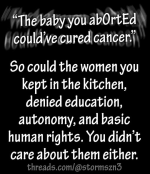
Statistically speaking, they were far more likely to have become a serial killer (since there a few of them and nobody has really cured cancer yet)
And of course, rather than curing cancer they could have become another Hitler..