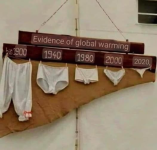
Anthropogenic Global Warming ... how hot is it ?

Potentially, a plug-in hybrid could add more atmospheric Carbon per mile if charged from commercial electric power supplied from a coal-burning power plant.
OTO if charged from a hydro-electric source, the Carbon footprint should be smaller than that of a conventional gasoline burning internal combustion engine (I.C.E.).


Replacing gasoline with Hydrogen seems like a fabulous idea. The "exhaust" is H2O. BUT !
There are problems.
We're having trouble storing Hydrogen. It's a small molecule, and thus easily leaks from pressurized confinement.
Another problem, we can "manufacture", produce Hydrogen with electrolysis of water. BUT !
We only get about 70% of the energy put into that process back out again when such Hydrogen is used as fuel.
We'll need a more efficient means of collecting Hydrogen to render it a viable global automotive fuel.

Yes there are some drawbacks.
What Iceland did was to generate the hydrogen at the filling stations, so the only leaks were from the cars themselves.
Which are not impractical.
A tank of hydrogen takes months to leak out.

While a 30% loss of energy sounds bad, it actually is better than the loses from generating electricity, transmitting it, storing it in batteries, retrieving it from batteries, and then turning it back into kinetic energy.

But a bio fuel like palm oil would be clean because the carbon released is less than the carbon absorbed while the tree grows.
 
" a bio fuel like palm oil would be clean because the carbon released is less than the carbon absorbed while the tree grows." R5 #581
Is palm oil substantially different in that regard from other plant-based fuels?

I gather cellulosic ethanol is a will-o'-the-wisp. A tawny port isn't ?
It's not going to solve the U.S. energy problem, but seems to me if lawn owners could harvest their lawn clippings into a mower-mounted collector,
and dump the lawn clippings into an automated digester / distiller. Lawn clippings in, fuel-grade ethanol out.

Currently mowers mulch the clippings in situ. I suspect diverting the clippings into the digester / distiller first, before then returning the dross to the lawn, might require periodic soil amendment.
Whether the energy dynamic is "worth it", I don't know. BUT !

In the previous millennium I read, to maintain an inexhaustible supply of firewood for a home, by continually rotating tree growth & harvest cycles,
requires about 20 acres. Seems to me that mirrors your palm oil formula for Carbon.
 
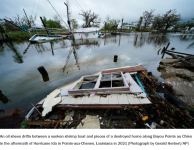
You don't have to be on the coast to be exposed to floods. This pic is of a river in Southern Ontario (well inland and miles from the lake as well). That train trestle is a good 20 or more feet above the normal river level.

1776964284070.png
 
"You don't have to be on the coast to be exposed to floods. This pic is of a river in Southern Ontario (well inland and miles from the lake as well). That train trestle is a good 20 or more feet above the normal river level." S2 #583
The complication is verifying cause & effect.
Humanity has been dealing with floods since Noah. So pointing to floods as evidence of anthropogenic global warming is unpersuasive to some.

Anthropogenic global warming is not as demonstrably direct as switching on a light.
It's monitored by experts apply statistical modeling calculations beyond the skill level of most laymen.

Two substantial complications:
- This leaves collective public opinion to experts to shape. And since public officials have proven themselves so untrustworthy, private sector expert are confronted by an intrinsic bias against them,
compounded by a message many would prefer to ignore or deny.

- It creates opportunity for pseudo-science con-men to make contradictory claims.

There is a third. By the time the dire predictions are proved undeniably true, it may be too late to do much about it.
 
Is palm oil substantially different in that regard from other plant-based fuels?

I gather cellulosic ethanol is a will-o'-the-wisp. A tawny port isn't ?
It's not going to solve the U.S. energy problem, but seems to me if lawn owners could harvest their lawn clippings into a mower-mounted collector,
and dump the lawn clippings into an automated digester / distiller. Lawn clippings in, fuel-grade ethanol out.

Currently mowers mulch the clippings in situ. I suspect diverting the clippings into the digester / distiller first, before then returning the dross to the lawn, might require periodic soil amendment.
Whether the energy dynamic is "worth it", I don't know. BUT !

In the previous millennium I read, to maintain an inexhaustible supply of firewood for a home, by continually rotating tree growth & harvest cycles,
requires about 20 acres. Seems to me that mirrors your palm oil formula for Carbon.

The main advantage of palm oil is it needs no refining, but it is a diesel fuel and won't work in internal combustion with a spark plug.
But ethanol certainly is also a solution.
 
"But ethanol certainly is also a solution." R5 #585
An aqueous solution?
I'll drink to that. 🥂

Brazil / Australian Tree Sap Is Diesel Fuel
The botanical name of this wonder tree is Copaifera langsdorfii and is normally grown in Brazil. However, the area of North Queensland in Australia provides the proper environment for the tree to flourish in. The trees can apparently produce fuel for 70 years, and the sap that is derived from them can power a vehicle as long as it is used within 3 months of being extracted. https://greenerideal.com/news/5585-diesel-fuel-growing-in-australian-trees/
 
A few years ago we were reading articles about trucks being modified to run on used cooking oil. That hasn't stopped but it no longer seems to be front page news.
 
"A few years ago we were reading articles about trucks being modified to run on used cooking oil. That hasn't stopped but it no longer seems to be front page news." S2 #587
Perhaps related:

Paraphrase of Paul Harvey:
The good news is, by the year 2000 80% of our drinking water will come from sewage treatment plants.
The bad news is, there won't be enough of it to go around.


I'm OK w/ running spent cooking oil as diesel engine fuel.
But we'll have to eat a lot more french fries to generate the amount of used cooking oil needed to meet the diesel fuel demands of the U.S. automotive market.

Also note, it's widely reported that for engines running on such fuel, the exhaust smells like food. a two fer ?
 
Back
Top