I keep reading about social media bans for kids but no-one has been able to tell me how they'll be enforced.
That is one of the problems, since it is handy for kids to have cellphones, in order to get messages, allow parents to track them, etc.

I keep reading about social media bans for kids but no-one has been able to tell me how they'll be enforced.
My son's former boarding school instituted a policy that said all cellphones had to be turned in to their housemaster/housemistress before classes started in the morning and wouldn't be returned until after the last class of the day. Students were getting around this by the simple expedient of purchasing a second phone (often paid for by their parents).That is one of the problems, since it is handy for kids to have cellphones, in order to get messages, allow parents to track them, etc.

Can either of you help clarify?My son's former boarding school instituted a policy that said all cellphones had to be turned in to their housemaster/housemistress before classes started in the morning and wouldn't be returned until after the last class of the day. Students were getting around this by the simple expedient of purchasing a second phone (often paid for by their parents).
I remember speaking to the Headmaster about this and he said that no matter what rule the school put in place the kids were always two steps ahead of them.
Can either of you help clarify?
Faraday cage
n.
A container made of a conductor, such as wire mesh or the metal frame of an aircraft, forming an equipotential shield around what it encloses and protecting it from external electric fields. Also called Faraday shield.
[AfterMichael FARADAY, who constructed one in 1836.]
The American Heritage® Dictionary of the English Language, Fifth Edition copyright ©2022 by HarperCollins Publishers. All rights reserved.
Perhaps you've seen B&W vid of a person inside one of these while high voltage, synthetic lightning is applied to the outside.
The notion being, if during construction of a school building electrical conductor is built into the external shell of the building, would that block cell-phone signals?
I thought it should, but it seems (even if against FAA regs) passengers at altitude can use cell-phones to communicate with Earth. Todd Beemer comes to mind.
I figured by now they were building cinemas like that. Apparently not?
My reason for asking: if that worked, inside the Faraday school the smartphone becomes a PDA (remember "Palm Pilot"?).
Reportedly occasionally an airliner is stricken by lightning mid-flight. It seems passengers & crew are spared electrical shock from lightning *, but that delicate avionics can succumb to the voltage transient, EMP.
* From the Aluminum skin on the fuselage. Not sure what happens if they switch to Carbon fiber.
"Good point in that I got hooked on Pinterest, and not only are the short videos addictive, but you can just keep scrolling forever.
I lose track of time constantly." R5 #157
In one of the most expensive advertising venues in the solar system?"Bad Bunny plans to wear a dress ..." #160

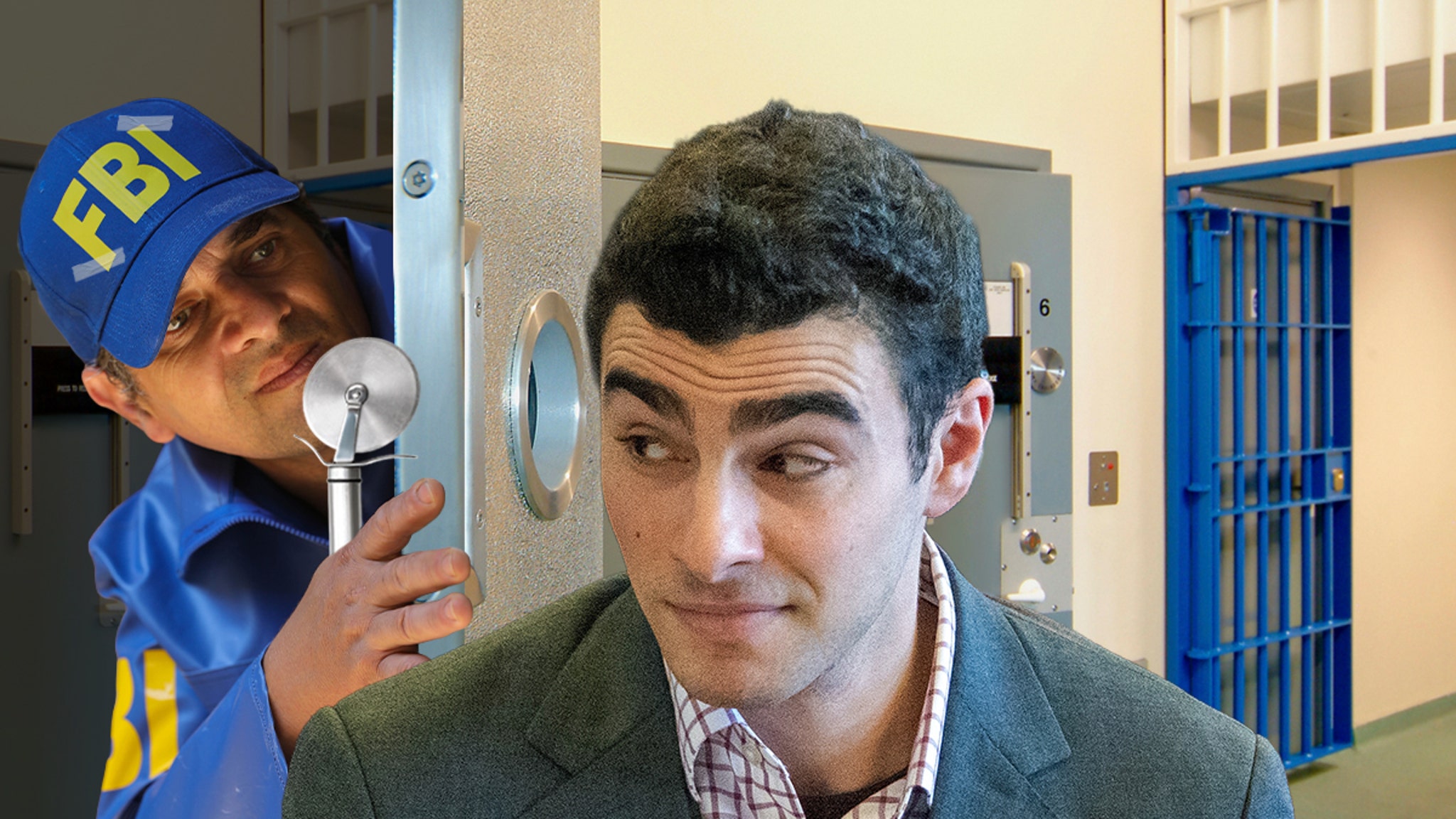
 www.tmz.com
CEO of the American health insurance company UnitedHealthcare Brian Thompson was shot and killed in Midtown Manhattan, New York City, on December 4, 2024.
Killing of Brian Thompson - Wikipedia
en.wikipedia.org
Luigi Mangione now in prison for this murder.
A Minnesota man was charged Thursday with impersonating an FBI agent after he showed up at a federal prison in New York City claiming to have a court order to release an inmate, identified by a law enforcement source as accused killer Luigi Mangione.
Mark Anderson, 35, was arrested at the Metropolitan Detention Center in Brooklyn late Wednesday after prison workers asked to see his credentials and he produced a Minnesota driver’s license and “claimed to be in possession of weapons,” according to a complaint filed in U.S. District Court for the Eastern District of New York.
Anderson also claimed “that he was an FBI Agent in possession of paperwork ‘signed by a judge’ authorizing the release of a specific inmate,” the complaint says.
The court document does not name the inmate.
“Anderson also displayed and threw at [Bureau of Prisons] officers numerous documents,” the complaint says. “They appear to be related to filing claims against the United States Department of Justice.”
In his backpack, BOP workers found a barbecue fork and a “round steel blade” that resembled a pizza cutter.
source: NBC
Jan. 29, 2026, 3:05 PM GMT-5 / Updated Jan. 30, 2026, 9:28 AM GMT-5
By Ryan J. Reilly, Emma Caughlan, Chloe Atkins and Corky Siemaszko
According to a criminal complaint -- cited by NBC News -- Anderson was arrested after prison workers asked for his credentials ... and he only handed over an MN driver's license.
Anderson allegedly claimed he was an FBI agent and was "in possession of paperwork 'signed by a judge' authorizing the release of a specific inmate." We've confirmed Luigi is that specific inmate.
Man With Pizza Cutter Allegedly Tries to Break Luigi Mangione Out Of Jail
Luigi Mangione has a ton of fans rooting for his release ... and at least one of them who allegedly tried to take matters into his own hands by busting him out!
How much if any involvement did Mangione have in plotting this embarrassingly botched prison break attempt?
If none, on whose initiative was it executed?
For what purpose? What was Anderson's motive?
The fox supervises hen-house security?"What is so very odd is that United Healthcare has murdered millions of people by denying obvious claims that could have saved their lives." R5 #167
Is this an actionable antitrust issue?"Since United Healthcare runs a monopoly of owning both the insurance companies and the hospitals, they are violating the contracts with those paying in, and illegally denying legal payouts." R5 #167
So who then?"But no individuals can afford the legal teams it would take to use the courts legally." R5 #167
The FBI authentication identification, a Minnesota driver's license? dim bulb"Since we have all seen videos of police pulling over federal agents who then show metal ID tags, the impersonator should have at least made something like that." R5 #167
In case he needed a snack mid-crime?"The pizza cutter and barbecue fork are even more bizarre." R5 #167
The fox supervises hen-house security?
What's the low cost / high benefit solution? Get government out of the insurin' bidness, and back to its rightful role as regulator of the private sector providers?
Is this an actionable antitrust issue?
So who then?
The FBI authentication identification, a Minnesota driver's license? dim bulb
In case he needed a snack mid-crime?
Or in case he blundered into a pizza party?
Anderson undermines my confidence in bad guys.
Mexican recreational drug kingpin Joaquin "El Chapo" Guzman escaped a maximum security prison on a motorcycle, through an underground tunnel. Anderson's answer to that is a barbecue fork?
The combination of per capita healthcare costs, and patient life expectancy determine my opinion on that."So it is my opinion that Europe has the right solution, and have the health care industries work for the people directly, and not for the insurance companies." R5 #170
The beneficiary is the middleman, the one represented by the lobbyists that wrote the legislation for our legislators, common practice in such legislation."There is no advantage to allow a middleman to insert themselves between the doctors and patients." R5 #170
I get my healthcare through the VA. It's a mixed bag."So run the health care provider through a public framework directly." R5 #170
I don't recall having that problem, but I have little use for healthcare generally."Insurance forces you to prepay, and once you have done that, it is always inherently difficult to force justice for payouts later." R5 #170
I wouldn't prejudice it, which ever model produces most favorable healthcare outcomes at lowest per capita cost."We do not need to make a profit from health care." R5 #170
You just have to look north of the border to Canada to see that. Not only does that country have greater life expectancies than the US but they insure EVERYONE at roughly half the US cost per capita.The combination of per capita healthcare costs, and patient life expectancy determine my opinion on that.
I haven't read much about it lately, but when it was prominent in the news the U.S. reportedly had both higher per capita costs, and also less favorable patient outcomes. If true, seems to me considering change is warranted.
There are few plausible explanations for such disparity, none of them flattering to the U.S. policy makers responsible."You just have to look north of the border to Canada to see that. Not only does that country have greater life expectancies than the US but they insure EVERYONE at roughly half the US cost per capita." S2 #172
The combination of per capita healthcare costs, and patient life expectancy determine my opinion on that.
I haven't read much about it lately, but when it was prominent in the news the U.S. reportedly had both higher per capita costs, and also less favorable patient outcomes. If true, seems to me considering change is warranted.
The beneficiary is the middleman, the one represented by the lobbyists that wrote the legislation for our legislators, common practice in such legislation.
I get my healthcare through the VA. It's a mixed bag.
I don't recall having that problem, but I have little use for healthcare generally.
I wouldn't prejudice it, which ever model produces most favorable healthcare outcomes at lowest per capita cost.
In my opinion, similar deal with other private alternatives such as prisons.
Whichever provides humane warehousing of these sequestered humans at lowest per capita cost.
The private sector may not be a panacea.
But privatizing space by public / private cooperation at NASA has reduced ocean floor littering of spent lower rocket stage housings.
I thought doctors left that to their administrative staff."The difficulty for the doctors is increased exponentially when they are forced to learn all the different systems the insurance companies require be use in order to get authorization for a procedure the doctor already knows is appropriate." R5 #174
50 years ago I might have found that a little less implausible."However, with most things, like health care, innovation is not the purpose or useful goal." R5 #174
I thought doctors left that to their administrative staff.
I'm all for standardization.
50 years ago I might have found that a little less implausible.
But the rate of change is increasing exponentially. Diseases previously regarded as incurable are not merely being treated, but cured.
In 2026, while healthcare should not be subordinated, innovation can literally cooperate, refining the art, and providing healthcare simultaneously.
Indeed."With health care, innovation happens at university research centers" R5 #176
Right, the street corner VD clinic isn't likely to find a new cure for cancer."... not average providers" R5 #176
I've never applied for a grant. Perhaps you or S2 have."... and is not profit motivated." R5 #176
This may not constitute - now we can buy more Leer Jets ! - type profit,"... and is not profit motivated." R5 #176
The difficulty for the doctors is increased exponentially when they are forced to learn all the different systems the insurance companies require be use in order to get authorization for a procedure the doctor already knows is appropriate.
With universal health care doctors no longer need that massive back office to process payments. Not only don't they have to deal with multiple insurance companies (each with their own accounting systems) they don't have to chase after patients for payment. They just send the bills directly to the universal insurer (and they don't have to argue with insurance company claims people as to what is and is not covered).I thought doctors left that to their administrative staff.
"The difficulty for the doctors is increased exponentially when they are forced to learn all the different systems the insurance companies ..." R5 #174
Thank you R5 & S2,"With universal health care doctors no longer need that massive back office to process payments.
That's a substantial reduction in the doctor's overhead." S2 #178
Indeed.
Right, the street corner VD clinic isn't likely to find a new cure for cancer.
But they too benefit from lowering operating costs by improving operations.
Simple example, perhaps not developed at university research centers, having patients complete forms online, to reduce hard-copy backlog.
I've never applied for a grant. Perhaps you or S2 have.
It's not a mirror image of Girl Scouts selling cookies (for profit).
But without grant money, university labs would be less robust innovators.
Today there are no human aboard automobiles including tractor trailers on public roadways.
iirc the inception of this "driverless" technology was catalyzed by university grants, and a competition between universities,
to produce an automobile that could autonomously navigate a stretch of unoccupied desert.
University entries included automobiles as small as a motorcycle, up to a Humvee.
This may not constitute - now we can buy more Leer Jets ! - type profit,
but may for example enable universities to lower tuition, because grant funding helps carry the cost of the university lab.