

Elon Musk's SpaceX Starlink satellite network now includes over 8,000 satellites orbiting Earth.
How many Starlink satellites are in orbit?
As of Oct. 30, 2025, there are currently 8,811 Starlink satellites in orbit, of which 8,795 are working, according to Astronomer Jonathan McDowell, who tracks the constellation on his website.
The current V2 Starlink satellite version weighs approximately 1,760 lbs (800 kilograms) at launch, almost three times heavier than the older generation satellites (weighing in at 573 lbs or 260 kg), according to Spaceflight Now.
Starlink is the name of a satellite network developed by the private spaceflight company SpaceX to provide low-cost internet to remote locations.
A Starlink satellite has a lifespan of approximately five years and SpaceX eventually hopes to have as many as 42,000 satellites in this so-called megaconstellation.
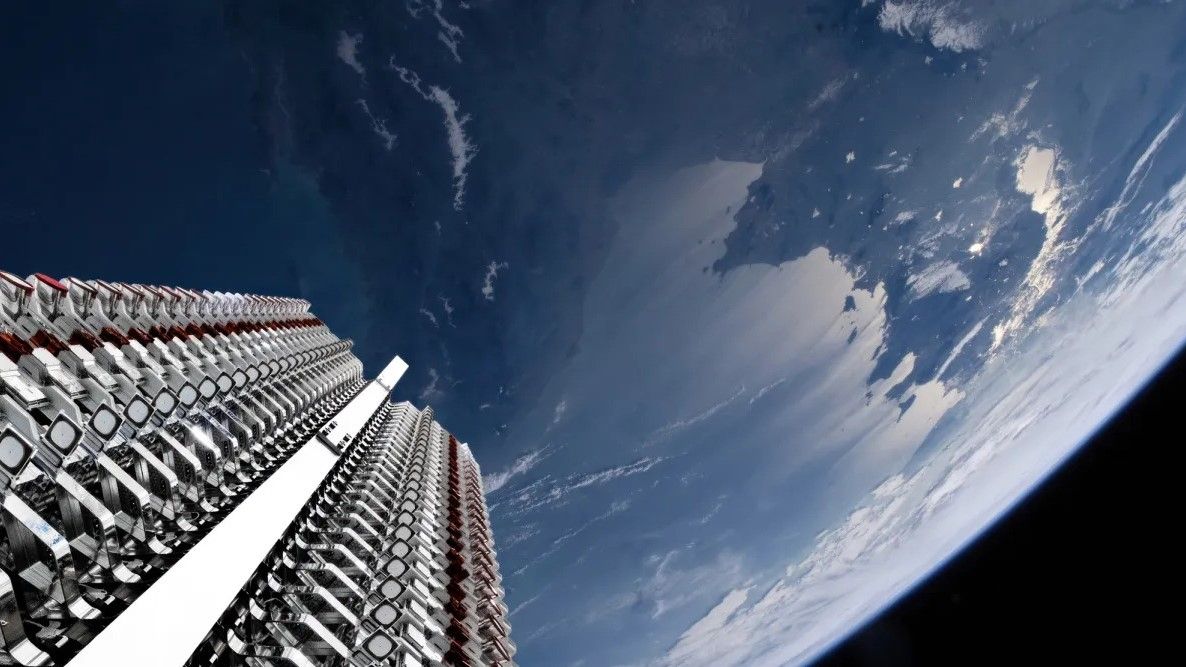
 www.space.com
"Low-cost internet to remote locations" seems like a good idea. Where's the problem?
a) For such a system to function commercially, there's more than merely launching thousands of satellites into orbit. There must be planet based infrastructure connecting satellite traffic to the Internet. That's not inexpensive, as you already know if you're reading this.
b) What is the per subscriber break-even cost for Starlink?
That all?
- nope -
Starlink's satellites, as other satellites including the ISS do, reflect sunlight, and thus can leave streaks on images gathered by our Earth-based astronomical telescopes.


That all?
- nope -
SpaceX plans to refresh the Starlink megaconstellation every five years with newer technology. At the end of their service, the old satellites will be steered into Earth's atmosphere where they will burn up. That is certainly commendable when it comes to space debris prevention, however, there is another problem.
The vast amount of satellites that will be burning in the otherwise pristine upper layers of the atmosphere could alter the atmospheric chemistry and have unforeseen consequences for life on the planet.
www.space.com
So does Starlink's 5 year satellite upgrade threaten the extinction of humanity, similar to dinosaur extinction?
Seems unlikely. BUT !!
It's a non-zero risk. Right?
So how much of a gamble are we obliged to risk, so Elon Musk can become the solar system's first $Trillionaire? "Where do you draw the line?"
How many Starlink satellites are in orbit?
As of Oct. 30, 2025, there are currently 8,811 Starlink satellites in orbit, of which 8,795 are working, according to Astronomer Jonathan McDowell, who tracks the constellation on his website.
The current V2 Starlink satellite version weighs approximately 1,760 lbs (800 kilograms) at launch, almost three times heavier than the older generation satellites (weighing in at 573 lbs or 260 kg), according to Spaceflight Now.
Starlink is the name of a satellite network developed by the private spaceflight company SpaceX to provide low-cost internet to remote locations.
A Starlink satellite has a lifespan of approximately five years and SpaceX eventually hopes to have as many as 42,000 satellites in this so-called megaconstellation.
Starlink satellites: Facts, tracking and impact on astronomy
Are Starlink satellites a grand innovation or an astronomical menace?
"Low-cost internet to remote locations" seems like a good idea. Where's the problem?
a) For such a system to function commercially, there's more than merely launching thousands of satellites into orbit. There must be planet based infrastructure connecting satellite traffic to the Internet. That's not inexpensive, as you already know if you're reading this.
b) What is the per subscriber break-even cost for Starlink?
That all?
- nope -
Starlink's satellites, as other satellites including the ISS do, reflect sunlight, and thus can leave streaks on images gathered by our Earth-based astronomical telescopes.
That all?
- nope -
SpaceX plans to refresh the Starlink megaconstellation every five years with newer technology. At the end of their service, the old satellites will be steered into Earth's atmosphere where they will burn up. That is certainly commendable when it comes to space debris prevention, however, there is another problem.
The vast amount of satellites that will be burning in the otherwise pristine upper layers of the atmosphere could alter the atmospheric chemistry and have unforeseen consequences for life on the planet.
Starlink satellites: Facts, tracking and impact on astronomy
Are Starlink satellites a grand innovation or an astronomical menace?
So does Starlink's 5 year satellite upgrade threaten the extinction of humanity, similar to dinosaur extinction?
Seems unlikely. BUT !!
It's a non-zero risk. Right?
So how much of a gamble are we obliged to risk, so Elon Musk can become the solar system's first $Trillionaire? "Where do you draw the line?"